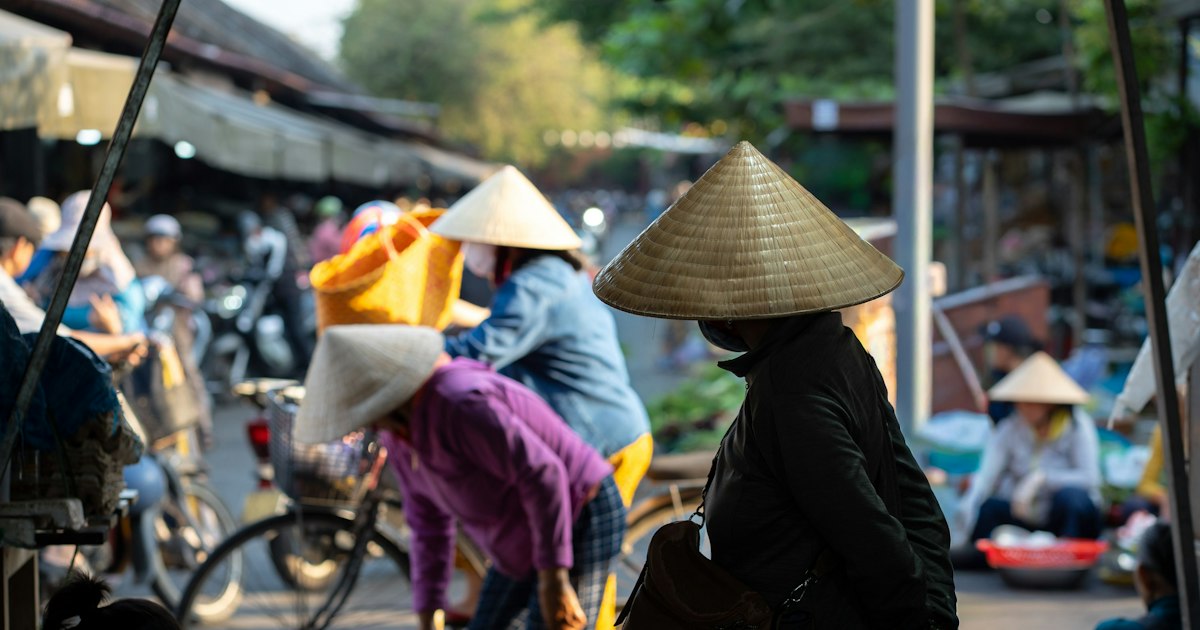
Photo by Pete Walls on Unsplash
Most visitors to Kyushu never make it past Fukuoka and Nagasaki, which is exactly why Yobuko Asaichi is worth the detour. This small harbor market in Karatsu, Saga Prefecture, has been running since the Edo period and is still counted among Japan’s handful of great morning markets — a working fish market, not a tourist reconstruction, where local grandmothers haggle over mackerel next to tanks of live squid pulled from the Genkai Sea that same morning. It’s compact, it’s cheap, and it rewards anyone willing to show up early.
What Makes Yobuko Asaichi Special
Yobuko is a small fishing port on the Genkai Sea coast, about 10km northwest of central Karatsu. The morning market sets up along a single street roughly 400 meters long, lined with stalls selling whatever came in on the boats that night: squid, mackerel, horse mackerel (aji), sea bream, shellfish, dried fish, local vegetables, and seaweed. The town’s calling card is squid — Yobuko ika — prized for being firm and almost translucent when served alive within minutes of being caught. You’ll see it swimming in blue plastic tanks outside nearly every restaurant along the harbor.
This isn’t a market built for photos first; it’s a genuine supply chain for the town, which is part of its charm. Vendors are used to tourists but conduct business in Japanese, often with simple hand gestures or a calculator for prices — don’t expect English menus at the stalls themselves (restaurants nearby are more used to visitors).
Getting There from Fukuoka and Karatsu
There’s no train directly to Yobuko, so the trip takes a bit of planning:
- From Fukuoka (Hakata/Tenjin): Take a Showa Bus highway bus bound for Karatsu (around 70–80 minutes, roughly ¥1,200–1,500 one-way), then transfer to a local Showa Bus bound for Yobuko (around 30 minutes, roughly ¥500–600). Buses to Yobuko are not frequent — check the timetable before you leave so you’re not stranded waiting an hour.
- From Karatsu Station: JR Karatsu Station connects to Fukuoka via the Karatsu Line/Chikuhi Line. From the station, local buses to Yobuko take about 25–30 minutes.
- By car: This is genuinely the easiest option. It’s about 50–60 minutes from Fukuoka via the Nishi-Kyushu Expressway, and there’s free or low-cost parking near the market and harbor. If you’re renting a car anywhere in Kyushu, Yobuko is one of the better reasons to do it.
Realistically, budget a half-day round trip from Fukuoka, or pair it with other stops in Karatsu so the bus transfers feel worthwhile.
Best Time to Visit: Hours and Season
The market runs every morning, roughly from 7:30 AM to noon, but it is very much a “the early catch gets the squid” situation. Vendors start packing up mid-morning once the best stock sells out, and by late morning several stalls are already closed. Aim to arrive by 8:00–9:00 AM for the fullest selection and to actually see live squid in the tanks rather than empty coolers.
Squid is available most of the year, but quality and visible activity in the tanks tend to peak from late spring through autumn (roughly May–October), when the Genkai Sea squid catch is strongest. Winter trips are still worthwhile for other seafood — just temper expectations if ikizukuri (live sashimi) is the main goal.
Weekday mornings are noticeably calmer than weekends, when domestic day-trippers and tour buses arrive. If you want the market to feel more like a real town errand than a tourist stop, go on a weekday.
What to Eat and Buy
Squid is the reason most people come, and it shows up in three main forms:
- Budget: Grilled or dried squid snacks from the market stalls, generally ¥300–800 depending on size — easy to eat while walking the street. This is the same spirit as the whole-squid grilling culture you’ll find at ikayaki stalls elsewhere in Japan, except here the squid is often still alive seconds before it hits the grill.
- Mid-range: Ikizukuri (live squid sashimi) at one of the small harbor-front restaurants, typically ¥1,500–3,500 for a single squid serving depending on size and season. Many places serve the tentacles still moving on the plate — a genuine spectacle the first time you see it, and part of what Yobuko is known for.
- Splurge: A full seafood course at a sit-down restaurant — squid sashimi, tempura, grilled fish, and shiokara (salted fermented squid) — generally ¥5,000 and up per person. Several restaurants along the harbor road do this as a set lunch, which is an easier way to sample multiple squid preparations than ordering individually.
Beyond squid, the market is a good place to pick up dried fish, seaweed, and local vegetables if you’re self-catering nearby, though these aren’t practical souvenirs for travelers heading straight back to a hotel room without a kitchen.
Common Mistakes to Avoid
- Arriving after 10:30 AM. The market is often described by its opening hours, but the best stalls and freshest squid thin out well before closing time. Treat “noon” as the hard outer limit, not the target.
- Assuming a restaurant table will be free on the spot. On weekends and in peak squid season, the popular ikizukuri restaurants near the harbor can have a short wait. If you have a specific restaurant in mind, go straight there before browsing the stalls.
- Only bringing cards. Market stalls and many small restaurants are cash-only or cash-preferred. Bring enough yen in small denominations.
- Underestimating bus frequency. The Yobuko local bus doesn’t run every few minutes like city transit. Check return times when you arrive so you’re not waiting an hour at the end of the trip.
- Treating it like a big attraction. This is a small, working market street, not a sprawling complex — most visitors cover it in 1–1.5 hours, which is worth knowing so you can plan the rest of the day around it rather than losing a full morning.
Pairing Yobuko with the Rest of Karatsu and Saga
Yobuko works best as part of a longer loop rather than a standalone trip. Central Karatsu, with its castle (Maizuru Park) and pottery kilns producing Karatsu-yaki ceramics, is a natural add-on since you’ll likely pass through on the bus anyway. If you’re basing yourself in the wider Nagasaki–Saga region, Yobuko also pairs well with a visit to Shimabara’s castle town and canals, another underrated coastal stop in the area that most Kyushu itineraries skip.
If you end up staying in Karatsu or Fukuoka for dinner after your morning at the market, it’s worth brushing up on how izakaya ordering and seat charges work — Kyushu’s seafood izakaya are excellent, and knowing how otoshi and nomihodai pricing works (covered in this guide to izakaya ordering) will save you from surprise charges on the bill. And if you’re routing back to a city base the same night, double-check the last bus or train — Japan’s shuden cutoff times catch out more travelers in rural areas like this than in Tokyo, since local service simply stops running earlier.
Yobuko isn’t going to be the headline of anyone’s Japan trip, but for a few hours on a quiet morning, it offers something increasingly rare: a market that exists for the town first, with visitors as an afterthought.