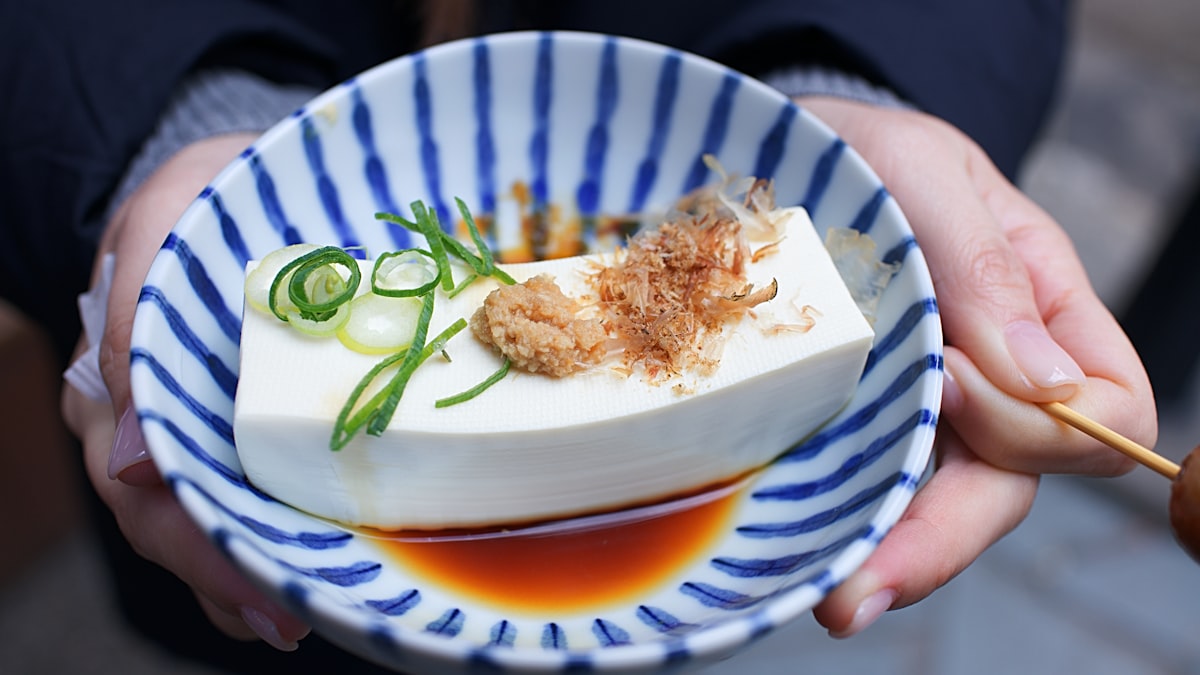
Eating vegetarian or vegan in Japan is very doable — but there’s a hidden catch called dashi. Here’s how to eat well without stress.
The dashi problem
Japan’s foundational stock, dashi, is usually made with bonito (fish) flakes. It’s in miso soup, many noodle broths, simmered dishes, and sauces — so “vegetable” dishes often aren’t vegetarian. Even a plain-looking bowl can hide fish. Knowing this is half the battle.
Naturally veg-friendly foods
- Shojin ryori — Buddhist temple cuisine, entirely plant-based and exquisite (great in Kyoto and Koyasan).
- Tofu & yuba dishes, especially in Kyoto.
- Vegetable tempura, edamame, and pickles (ask about the dipping sauce).
- Zaru soba — cold buckwheat noodles (confirm the dipping broth).
- Inari sushi and vegetable maki (kappa/avocado).
Convenience-store & chain wins
- Konbini onigiri (umeboshi/kombu), salads, edamame, and fruit.
- An increasing number of vegan ramen and curry spots in big cities.
- Indian restaurants are a reliable veg fallback everywhere.
Phrases that help
- “Watashi wa bejitarian desu” — I’m vegetarian.
- “Niku, sakana, dashi nashi de dekimasu ka?” — Can you make it without meat, fish, or dashi?
- Carry a printed card listing what you can’t eat. More in our phrases guide.
Tips for a smooth trip
- Use vegan-restaurant apps/maps to pin spots in advance.
- Book accommodation with a kitchen if you’re strict — supermarkets have great produce and tofu.
- Big cities are easiest; rural areas need more planning.
With a little prep, plant-based travelers eat brilliantly here. Build it into our first-timer tips.
What eating vegetarian typically costs
- A shojin ryori temple meal runs JPY 3,000-8,000 depending on the temple and course elaborateness, generally pricier than an average meal but a genuine culinary highlight, not just a dietary accommodation.
- Vegan-specific restaurants in Tokyo and Kyoto run JPY 1,500-3,500 for a full meal, roughly in line with mid-range dining generally, though there are simply fewer of them outside major cities.
- Self-catering with supermarket tofu, vegetables, and rice can bring daily food costs well under JPY 2,000, a practical fallback in areas with limited vegetarian restaurant options.
Common mistakes to avoid
- Assuming a menu item labeled “vegetable” is dashi-free — this is the single most common trap; many visually vegetable-only dishes are cooked in or served with a fish-based broth or sauce, so asking directly is safer than reading the menu alone.
- Relying only on English-language reviews to find vegan spots — Japanese-language apps and maps (which a hotel concierge can help translate) often reveal far more options than English-focused travel sites.
- Not preparing for rural areas — small towns and traditional ryokan often have fixed, meat/fish-heavy set menus with little flexibility; calling ahead to arrange a vegetarian kaiseki substitute is worth doing before you arrive, not after.
Vegetarian-friendly regions and cities
Kyoto stands out as the easiest city for vegetarian and vegan travelers thanks to its deep shojin ryori and tofu cuisine tradition, followed by Tokyo’s growing international food scene; more rural and coastal regions built around seafood specialties (much of Kyushu and Hokkaido) require noticeably more advance planning.
Building a translation card for restaurants
A simple printed or phone-saved card explaining your restrictions in Japanese, including the specific mention of dashi and fish flakes (katsuobushi), removes most of the ambiguity that spoken English can run into with busy kitchen staff — many long-term vegetarian residents of Japan recommend this over relying on conversation alone, especially outside major tourist areas.