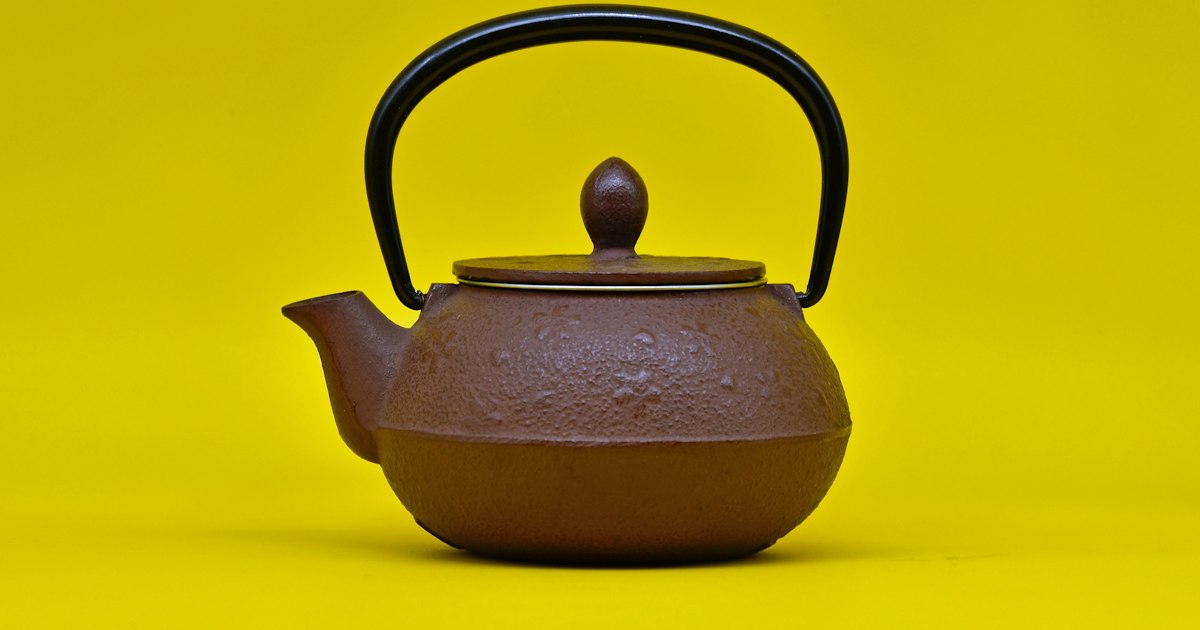
Photo by Geoff Oliver on Unsplash
If you’ve ever had green tea poured from a small, unglazed reddish-brown teapot at a ryokan or a friend’s house in Japan, there’s a good chance it was Banko-yaki. Made in and around Yokkaichi in Mie Prefecture, Banko-yaki (万古焼) isn’t the pottery style tourists usually chase — it doesn’t have the rustic cachet of Hagi ware or the collector prestige of Imari — but it’s arguably the pottery most Japanese households actually use every day. This guide covers what makes it special, where to buy it, what it costs, and how not to ruin a good teapot once you get it home.
What Makes Banko-yaki Different
Banko-yaki’s signature product is the shidei (紫泥, “purple mud”) teapot: unglazed, dense, iron-rich clay fired to a deep reddish-brown or near-purple color. The high iron content is said to react with tannins in tea, softening bitterness and rounding out the flavor — which is why serious sencha and gyokuro drinkers in Japan often specifically seek out a Banko kyusu rather than a glazed one. Yokkaichi is widely credited as Japan’s largest production center for kyusu (teapots), supplying a large share of the teapots sold nationwide, most of them from small family workshops rather than big factories.
The other thing Banko-yaki is known for is donabe — the heavy clay pots used for nabe hot pot, rice cooking, and steaming. Local clay bodies are often blended with petalite (a lithium mineral), which gives the fired pot unusual resistance to thermal shock, so it can go straight onto a gas flame without cracking. If you’ve shopped for a donabe at a department store anywhere in Japan, odds are decent it came from this region even if the label doesn’t shout it.
Where It’s Made and How to Get There
The production area centers on Yokkaichi City and neighboring Yokkaichi-Kuwana, about 25–40 minutes from Nagoya. The easiest route is the Kintetsu Nagoya Line limited express from Kintetsu Nagoya Station to Kintetsu Yokkaichi Station — around 30 minutes, roughly ¥1,500 including the limited express surcharge (a regular express train takes a little longer and costs about ¥500 less). From Osaka or Kyoto, it’s a longer Kintetsu ride (around 1.5–2 hours) or a JR/Shinkansen-plus-local combination via Nagoya. If you’re basing yourself in Nagoya for a night, see our guide to business hotel chains in Japan for practical, well-located options near the station.
Once in Yokkaichi, the kiln district (the old Banko-yaki production area) is a short bus or taxi ride from the station, and several workshops welcome walk-in visitors, though hours vary by shop and many close on Sundays or Mondays — call ahead or check in Japanese via the shop’s listed phone number if you’re set on a specific kiln.
Where to Buy It
The single best one-stop option is the Banko Yaki Kaikan (万古陶磁器会館, Banko Ceramics Hall) in Yokkaichi, a showroom-style building where multiple local kilns display and sell their work under one roof — useful if you want to compare shidei teapots side by side before buying, typically open roughly 9:00–17:00 on weekdays with reduced weekend hours. Staff are used to foreign visitors asking basic questions about teapot care, though English fluency varies.
For a livelier visit, time your trip to the annual Banko-yaki Matsuri (Banko Pottery Festival), usually held in early May around Golden Week near the Banko Shrine and kiln district, where dozens of workshops sell directly at discounted festival prices — this is the single best time to find budget pieces and factory seconds. Outside festival season, Yokkaichi’s shopping streets near the station and a few shops in central Nagoya (including department store ceramics floors) carry Banko-yaki alongside other regional pottery. If you’re also interested in how other regions approach pottery, it’s worth comparing notes with our guide to Hagi ware in Yamaguchi, which covers a very different, glaze-focused tea-ceremony tradition.
Budget, Mid-Range, and Splurge Picks
Banko-yaki is refreshingly affordable compared to prestige wares. A small, simple unglazed kyusu (around 200–300ml, good for one or two cups) typically runs ¥2,500–¥5,000 at kiln-direct shops or the festival. Mid-range pieces — hand-thrown by a named maker, with a ceramic mesh strainer built into the spout rather than a cheap removable metal one — land in the ¥8,000–¥20,000 range and make genuinely nice gifts. At the top end, teapots by recognized Banko-yaki artisans (some holding “Dento Kogeishi,” or traditional craftsman, certification) can run ¥30,000–¥80,000 or more, particularly for larger pots with intricate hand-carved or hand-painted decoration. Donabe hot pot vessels span a similarly wide range: roughly ¥3,000–¥6,000 for an everyday single-person size, up to ¥15,000+ for large family-size pots from well-known kilns.
Common Mistakes to Avoid
- Washing with detergent. Unglazed shidei clay is porous and absorbs flavor over time — that’s part of what makes it good at tea. Soap residue gets absorbed too. Rinse with hot water only and let it air dry.
- Assuming it’s dishwasher- or microwave-safe. Most traditional unglazed kyusu are neither; ask the shop explicitly if you plan to use it daily and want that convenience.
- Ignoring the strainer type. Banko teapots use either a built-in ceramic mesh (fired into the clay, more traditional, slightly harder to clean) or a removable stainless mesh (easier to clean, slightly less “authentic”). Neither is wrong, but know which you’re buying — it affects both cleaning and how fine the tea leaves need to be.
- Buying a donabe without asking about seasoning. Some donabe need an initial “medium” (a rice-water pre-soak/boil) before first use to seal the clay. Shop staff will tell you if yours does; skip this step and you risk cracking on first use.
- Overpacking fragile pieces. If you’re buying mid-trip rather than at the end, most Banko-yaki shops will wrap pieces securely for carry-on travel, but ask for extra padding or a box — these are genuinely more fragile than they look in your suitcase.
Best Time to Visit
Early May, for the Banko-yaki Matsuri, is the single best window if your schedule allows it — good prices, maker demonstrations, and a far wider selection than any single shop. Outside that, any weekday works well for visiting the Banko Yaki Kaikan or individual kilns, since weekends can mean reduced hours at smaller family workshops. If pottery and traditional craft shopping is a theme of your trip, it pairs naturally with a stop to see Hakata Ningyo clay dolls in Fukuoka or to try a proper tea ceremony in Kyoto or Tokyo once you’ve got a teapot to use at home.