Photo by Aasing Gwok on Unsplash
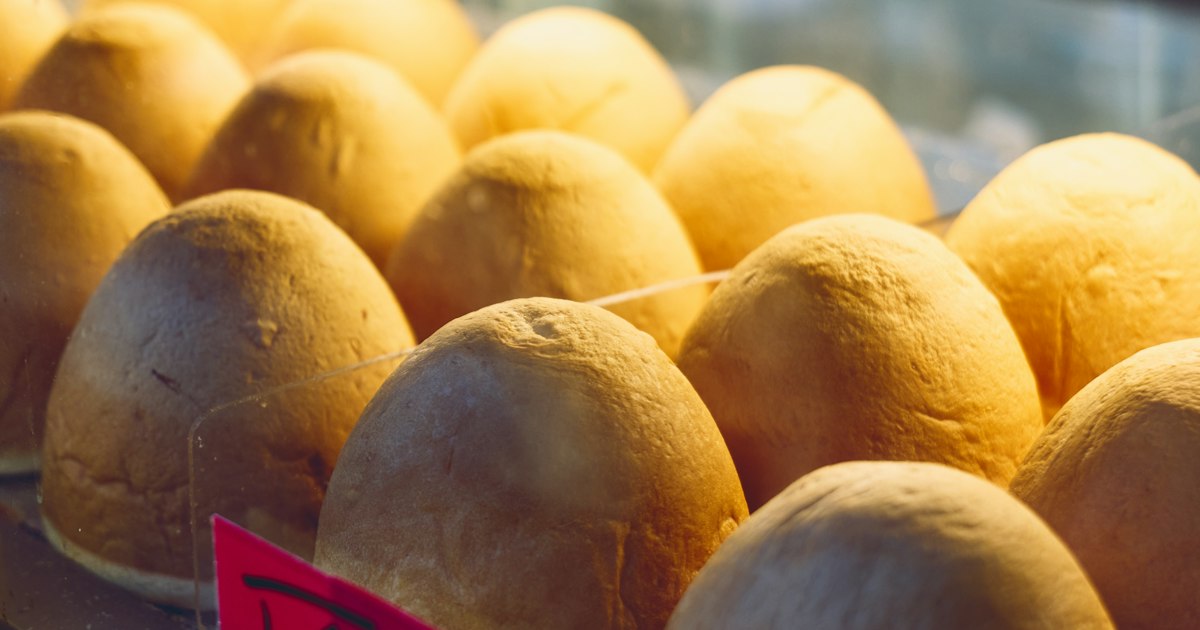
Walk into almost any convenience store, train station kiosk, or neighborhood bakery in Japan and you’ll spot a golden, football-shaped bun behind the glass. That’s kare pan (カレーパン) — bread stuffed with thick Japanese-style curry, coated in panko breadcrumbs, and deep-fried or baked until the crust shatters. It’s one of the country’s great grab-and-go foods: cheap, filling, and available at 2am just as easily as at lunchtime. Here’s how to find the good ones, what to pay, and how to eat one without wearing it.
What Is Kare Pan, Exactly?
Kare pan starts with a soft, slightly sweet yeast dough wrapped around a spoonful of Japanese curry — thicker and milder than Indian or Thai curry, closer to a curry-flavored stew. The filled dough is rolled in panko, then deep-fried (furai, フライ) for a shatteringly crisp shell, or baked (yaki, 焼き) for a lighter, less greasy version that’s become more common at convenience stores in the last decade. Inside, the curry stays hot and a little runny, which is exactly why the first bite matters — more on that below.
Fillings vary by maker: plain beef or pork curry is standard, but you’ll also find katsu kare pan (with a piece of fried pork cutlet inside), cheese curry pan, and seasonal versions with keema (minced meat) or vegetable curry.
The Birthplace Debate: Morishita’s Cattlea Bakery
Most food writers in Japan point to a single shop as the origin of kare pan: Cattlea (カトレア), a small bakery in Morishita, in Tokyo’s Koto Ward, that dates back to the 1920s. The story goes that the bakery’s owners wanted to adapt the already-popular Western-style curry rice into a portable bread, inspired by cutlet sandwiches (katsu) that were dipped and fried. The result — curry wrapped in dough, breaded, and deep-fried — became the template every convenience store version still follows today.
Cattlea is a short walk from Morishita Station (Toei Shinjuku and Oedo Lines) and still sells its original-recipe curry pan for roughly ¥220–250. It’s a tiny, old-school operation: they bake in limited batches and routinely sell out by early afternoon, and they’re closed on Sundays and Mondays. If you want to try the “original,” go early on a weekday and treat it as a bonus stop on a Tokyo itinerary rather than the main event — there isn’t much else to see in the immediate area, so it pairs well with a morning in nearby Kiyosumi Shirakawa or a visit to the Edo-Tokyo Museum area.
Convenience Store Kare Pan: The Budget Classic
For most visitors, the easiest and cheapest way to try kare pan is at a 7-Eleven, Lawson, or FamilyMart. Expect to pay around ¥140–190, and most chains stock both a fried and a baked version side by side. These are made fresh daily and restocked a few times a day, so morning and early-evening shelves tend to have the newest batches. If you’re staying at a budget chain like the ones covered in our guide to business hotel chains, there’s almost certainly a convenience store within a block or two, making kare pan one of the easiest breakfasts in the country — just be aware most are sold cold or at room temperature, not hot off the fryer.
Bakery and Specialty Shop Kare Pan: Mid-Range to Splurge
Independent bakeries (pan-ya) and chain bakeries like Vie de France or Saint Marc Café sell a step up from the convenience store version, usually ¥250–350, often made fresh that morning and still warm. Department store basement food halls (depachika) — the kind you’ll find under flagship stores in districts like Nihonbashi — frequently carry artisan versions from well-known bakeries, sometimes ¥350–500, with richer dough or premium fillings like Hokkaido beef curry or cheese-and-curry combinations. These make a good mid-afternoon snack while exploring a shopping district, and they’re worth the upgrade if you’ve only had the convenience-store version so far.
For a genuine splurge, some specialty curry-bread shops in Tokyo and Osaka sell katsu kare pan or double-filling versions for ¥400–600, baked to order so the crust is still crackling when you buy it. These shops often have limited stock and close whenever they sell out, so there’s no fixed “best time” beyond simply going earlier in the day.
How to Eat It Right (and Common Mistakes)
- Don’t eat it stone cold. Curry filling congeals and the panko loses its crunch. Convenience stores sell kare pan unheated by default — ask staff to warm it (“atatamete kudasai”) if a microwave or oven is available at the register.
- Bite from the end, not the middle. The curry is loosest in the center; biting there is how shirts get ruined. Start from a tip and work inward.
- Hold it over the wrapper or a napkin. Treat it like a taco — some filling will escape no matter how careful you are.
- Don’t confuse it with age-pan or korokke pan. Age-pan is a sweet fried bread coated in sugar or cinnamon with no curry inside; korokke pan is filled with a potato croquette, not curry. They sit near each other on convenience store shelves and look similar in low light.
- Fried vs. baked isn’t just a health choice — it’s a texture choice. If you only try one, go fried first; it’s the version that made the food famous.
When and Where to Fit It Into Your Trip
Kare pan has no real season — it’s sold year-round and makes just as much sense in August as in January, though a hot, fresh one on a cold day is hard to beat. It’s also genuinely good travel food: dense enough to hold you over, cheap enough to buy two, and sturdy enough to survive a bag. It’s a solid alternative to an ekiben box if you’re boarding a shinkansen and don’t want to deal with chopsticks and a tray — unwrap, eat, done. Pick one up at the station convenience store on your way to the platform rather than searching for a specific bakery against a departure clock.
If you’re building a broader cheap-eats itinerary, kare pan sits comfortably alongside other quick, inexpensive Japanese staples — it’s worth comparing against a sit-down option like the chains in our gyudon chains comparison when you’re deciding between a five-minute stand-and-eat snack and an actual seated meal.
The Bottom Line
You don’t need to plan a special trip around kare pan — it will find you at nearly every convenience store you pass. But if you want the full range, start cheap with a conbini version to understand the basic flavor, upgrade to a bakery or depachika one for better dough and filling, and if you’re in eastern Tokyo anyway, swing by Cattlea in Morishita for the shop most food historians credit with inventing the whole category. At ¥140 to ¥600 depending on where you buy it, it’s one of the lowest-risk, highest-reward snacks in the country.