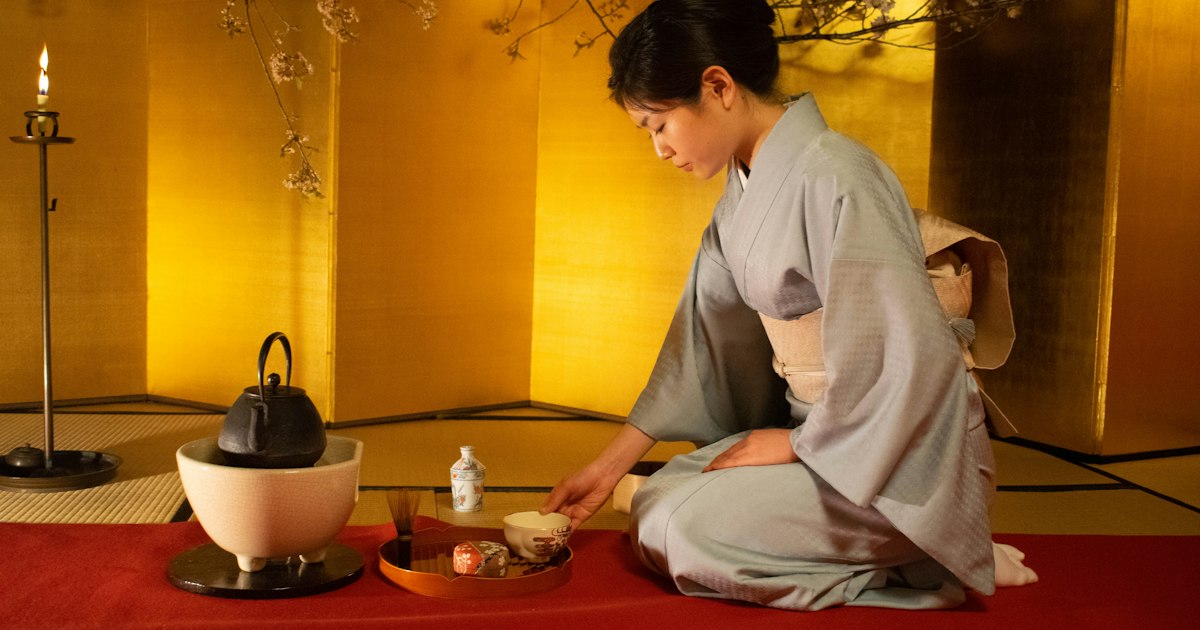
A tea ceremony looks simple from the doorway — someone kneels, whisks a bowl of matcha, hands it over. In practice it’s a tightly choreographed ritual built around hospitality, seasonal awareness, and a surprising amount of etiquette you’re not expected to know in advance. That’s the point: a good host walks you through it. Here’s what actually happens, what it costs in Kyoto versus Tokyo, and how to avoid the handful of mistakes that trip up almost every first-timer.
What Actually Happens During a Tea Ceremony
Most visitor-facing ceremonies run 45–75 minutes and follow the same basic shape: you’re seated (usually on a low stool or in seiza-style kneeling, often with a cushion offered if your knees object), served a small seasonal wagashi sweet, and then shown how to receive, rotate, and drink a bowl of whisked matcha. The host explains each gesture — why you bow before drinking, why you turn the bowl so you’re not sipping from its “front,” why you wipe the rim after. Many Kyoto and Tokyo studios aimed at tourists run this almost entirely in English, and some let you whisk your own bowl after watching a demonstration, which is the part most people enjoy most.
This is a watered-down but genuine version of chanoyu, the tea ceremony tradition formalized by Sen no Rikyu in the 16th century and still taught through schools like Urasenke, whose headquarters (Konnichian) is in Kyoto. A full, traditional ceremony with a kaiseki meal can run four hours; nothing marketed to tourists goes anywhere near that long.
Kyoto: Where to Try It and What It Costs
Kyoto has the highest concentration of English-friendly tea houses, many clustered near Kiyomizu-dera and Gion. Camellia Tea Ceremony runs two locations in this area and charges roughly ¥2,500–¥5,500 depending on whether you just watch or also practice whisking your own bowl; sessions run on a fixed schedule throughout the day, book a slot online in advance. En Tea Ceremony Experience, also near Kiyomizu-dera, is similarly priced and popular enough that same-day walk-ins often get turned away in spring and autumn. For something more contemplative, Jotokuji Temple’s Ju-An experience pairs a short zazen meditation session with tea, which suits visitors who want the ceremony folded into a quieter, more spiritual visit rather than a standalone activity.
If you want to see where tea culture is actually sold and taught rather than performed, central Kyoto’s old merchant streets (and the Teramachi arcade) have working tea shops selling matcha, whisks (chasen), and tea bowls at real prices — worth a browse even if you’re not doing a ceremony.
Tokyo: Where to Try It and What It Costs
Tokyo’s options split into two categories: casual garden teahouses and dedicated ceremony studios. Hamarikyu Gardens, near Shiodome Station, has the Nakajima-no-Ochaya teahouse sitting over a pond — garden admission is ¥300, and a matcha-and-wagashi set inside the teahouse runs about ¥720. It’s not a guided ceremony with etiquette instruction, just an authentic, inexpensive way to drink proper matcha in a beautiful setting, and it’s open daily (check seasonal hours, roughly 9:00–17:00). Happo-en Garden in Minato also runs a more formal seated tea ceremony experience with English explanation, generally in the ¥2,000–¥4,000 range for a standard session. For a closer equivalent to Kyoto’s tourist-oriented studios, operators like Tea Ceremony Juan and Maikoya run bookable sessions near Asakusa and Shibuya, typically ¥3,000–¥6,000, often combinable with kimono rental.
Tokyo’s traditional merchant district of Nihonbashi is also worth knowing about if you want to buy real tea ceremony utensils rather than souvenirs — its flagship department stores carry proper tea bowls, whisks, and ceremonial-grade matcha tins alongside the kimono and lacquerware sections.
Budget, Mid-Range, and Splurge Options
- Budget (¥300–¥1,000): A garden teahouse like Hamarikyu — real matcha and a sweet, no formal instruction, no reservation needed.
- Mid-range (¥2,500–¥6,000): A group session at a dedicated studio in Kyoto or Tokyo, 45–75 minutes, English-guided, usually includes making your own bowl of tea. This is the sweet spot for most first-time visitors.
- Splurge (¥10,000–¥20,000+): A private ceremony with a certified tea master, sometimes paired with kimono rental and a kaiseki-style light meal, or a small-group session inside a historic machiya townhouse. Worth it if tea ceremony is the main reason you’re in Kyoto rather than one stop among many.
Best Time to Go and How to Book
Tea ceremony itself isn’t strongly seasonal — sessions run year-round — but the sweets and the garden settings change with the season, so spring (cherry blossoms) and autumn (foliage) are the most visually rewarding times, and also the busiest for booking. Book at least a few days ahead for popular Kyoto studios during March–April and October–November; same-day availability is more realistic in summer and winter. If you’re splitting your trip between the two cities, the Shinkansen between Kyoto and Tokyo takes under three hours, so it’s entirely feasible to do a Kyoto morning ceremony and still make a Tokyo evening plan the same day.
Common Mistakes First-Timers Make
The most common error is clothing: tight skirts, short shorts, or stiff jeans make kneeling or sitting on a low stool genuinely uncomfortable for 45+ minutes. Wear loose, comfortable pants or a longer, flexible skirt. Second, remove or minimize jewelry and watches before the session — hosts will ask anyway, since metal can scratch antique tea bowls. Third, don’t wear strong perfume or cologne; part of the ritual is appreciating the tea’s aroma, and heavy scent is considered genuinely rude in this context, more so than in most other Japanese social settings. Finally, resist the urge to photograph every step mid-ceremony — most studios allow photos before or after but ask you to put phones away during the actual tea-making, similar to the etiquette expected at a kabuki theatre performance, where quiet attention is part of what you’re paying for.
Getting There and What to Wear
Most Kyoto studios near Kiyomizu-dera and Gion are a 5–15 minute walk from the Gion-Shijo or Kiyomizu-Gojo bus stops, but the approach streets are narrow, uneven, and packed with pedestrians during peak hours — if you’re pressed for time or it’s raining, taking a taxi directly to the entrance is often faster and less stressful than navigating the crowds on foot. In Tokyo, Hamarikyu Gardens and Happo-en are both a short walk from their nearest stations (Shiodome and Shirokanedai, respectively), so public transit works fine. Whatever you wear, bring socks without holes — shoes come off before you step onto the tatami, and bare feet aren’t appropriate in a formal tearoom.
Done once, a tea ceremony is a pleasant 45-minute cultural curiosity. Done with even a little background on what the gestures mean, it becomes one of the more genuinely moving things you can do on a Japan trip — a few minutes where someone has thought carefully about exactly how to make you feel welcome.