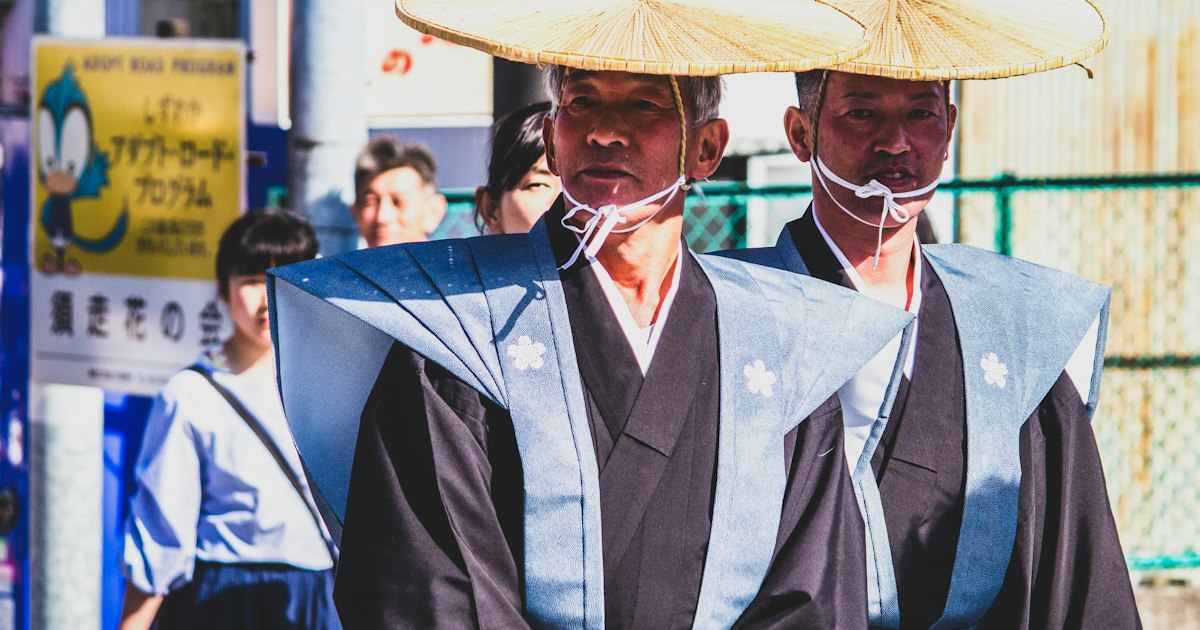
Photo by enkuu smile on Unsplash
If you’re in Japan in March and spot young women crossing a university campus in brightly colored kimono with long pleated “skirts” underneath, you’ve stumbled onto one of the most photogenic traditions in Japanese academic life: the hakama graduation outfit. Originally a men’s garment for samurai and scholars, the hakama has become the near-universal uniform for female university graduates on their sotsugyoshiki (graduation ceremony) day — and a growing number of exchange students, researchers, and even tourists now rent one for the experience. Here’s what it actually is, what it costs, and how to book a rental without getting overwhelmed by Japanese-only websites.
What exactly is a hakama outfit?
The graduation hakama look is actually two garments worn together: a furisode or regular kimono on top, and the hakama — a wide-legged, pleated garment that sits at the waist like a long skirt — layered over it. It’s finished with a decorative obi (sash), a pair of fur-trimmed or lace-up boots (a Meiji-era fashion statement that has stuck), and often a hair accessory with silk flowers. Men occasionally wear hakama too, usually in a more subdued haori-and-hakama combination in navy or black, but it’s overwhelmingly a women’s graduation tradition today.
The style dates back to female students at girls’ schools in the late 1800s who adapted men’s hakama for modern education — practical for sitting and moving, but still formal. It’s worn almost exclusively once: on the day you graduate from a Japanese university or graduate school.
When you’ll actually see (or need) one
Japan’s academic year ends in March, and the vast majority of university graduation ceremonies happen in the last week of March, with a smaller secondary round for graduate schools in late September. If you’re an exchange student finishing a program, this is the window you need to book in. If you’re simply a visitor who wants the experience — many rental studios now offer “graduation hakama” as a standalone photo-shoot package, no actual graduation required — you can do it any time of year, though demand (and sometimes price) spikes in March as real graduates book out the best inventory.
How much it costs
Rental pricing is fairly standardized across studios, bundled into a single package that includes the kimono, hakama, obi, boots, hair styling, and sometimes light makeup:
- Budget (¥8,000–¥12,000): A basic set with a simpler kimono pattern, self-dressing or quick studio dressing, and no professional hairstyling — common at campus-adjacent rental counters that cater to students on a budget.
- Mid-range (¥13,000–¥20,000): The most common choice — includes professional dressing (which takes 20–40 minutes), a styled updo with ornaments, boots, and often a short photo session included in the price.
- Splurge (¥25,000–¥40,000+): Premium or antique-fabric kimono, a dedicated hair and makeup artist, a full outdoor photo shoot with a photographer, and sometimes a second outfit change.
Most packages are same-day return — you wear it to the ceremony or shoot and bring it back that evening or the next morning. Studios near universities in Tokyo (Waseda, Keio, Tokyo University areas), Kyoto, and Osaka are the easiest to find, since they’re built around the March graduation rush.
Where to actually book one
Finding a rental shop isn’t hard once you know the names to search for. Chains like Kyoto Kimono Rental Wargo, Rental Kimono Okamoto, and Vasara operate multiple branches in Kyoto, Tokyo (Asakusa especially), and Osaka, and all offer graduation hakama sets alongside their standard kimono rentals for tourists. Search by shop name plus “hakama” on Google Maps, since most have English-language booking pages and same-day walk-in slots, though reserving 1–2 weeks ahead is safer during late March.
If you’re a current student at a Japanese university, check your school’s co-op (gakusei seikatsu kyodo kumiai) first — many universities run discounted hakama rental drives for their own graduates in the weeks before the ceremony, often 20–30% cheaper than public rental shops because they batch-order inventory. Ask at the student affairs office in January or February; slots fill quickly.
For fabric and sewing enthusiasts who want to understand the textiles involved — or hunt for your own kimono fabric as a souvenir rather than renting — Nippori Fabric Town in Tokyo is worth a detour; several shops there sell kimono-weight fabric and notions.
Buying instead of renting
Renting is almost always the right call for a one-day event, but if you fall in love with the look and want to own a set — whether a genuine vintage hakama or a good furisode to pair with one — Japan’s resale market is excellent for this. Komehyo and Japan’s luxury resale shops regularly stock secondhand kimono and formal wear at a fraction of new prices, and staff can advise on sizing and fabric quality even if you’re not fluent in Japanese.
Common mistakes to avoid
- Booking too late in March: The week before graduation is the single busiest rental period of the year nationwide. Popular patterns and your size range (especially larger Western sizes) sell out of inventory first — book 2–4 weeks ahead if your ceremony date is fixed.
- Underestimating dressing time: Professional hakama dressing takes 30–45 minutes and most studios want you there well before your ceremony’s photo call. Build in buffer time, and don’t schedule a tight train connection right after — Japan’s transfer rules are lenient if you do miss a train, but it’s one less thing to worry about if you simply leave earlier.
- Forgetting the boots are genuinely restrictive: The lace-up boots look great in photos but are not built for long walks or stairs. If your campus is hilly, ask the rental shop about swapping to zori sandals for comfort, especially if you’ll be standing for a long ceremony.
- Skipping hair prep: Updos hold better on hair that isn’t freshly washed the morning of. If you want your hair camera-ready, it’s worth looking into Japanese hair care products a few days beforehand rather than the morning-of.
- Not confirming return time and condition policy: Ask explicitly whether same-day return is required and what happens if it rains — some shops provide a plastic kimono cover free of charge, others charge a cleaning fee for a soiled hem.
Whether you’re closing out a degree in Japan or just want the photos to prove you once wore full hakama regalia under cherry blossoms, it’s one of the more accessible “traditional costume” experiences in the country — book early, budget around ¥15,000 for a solid mid-range set, and give yourself more dressing time than you think you need.