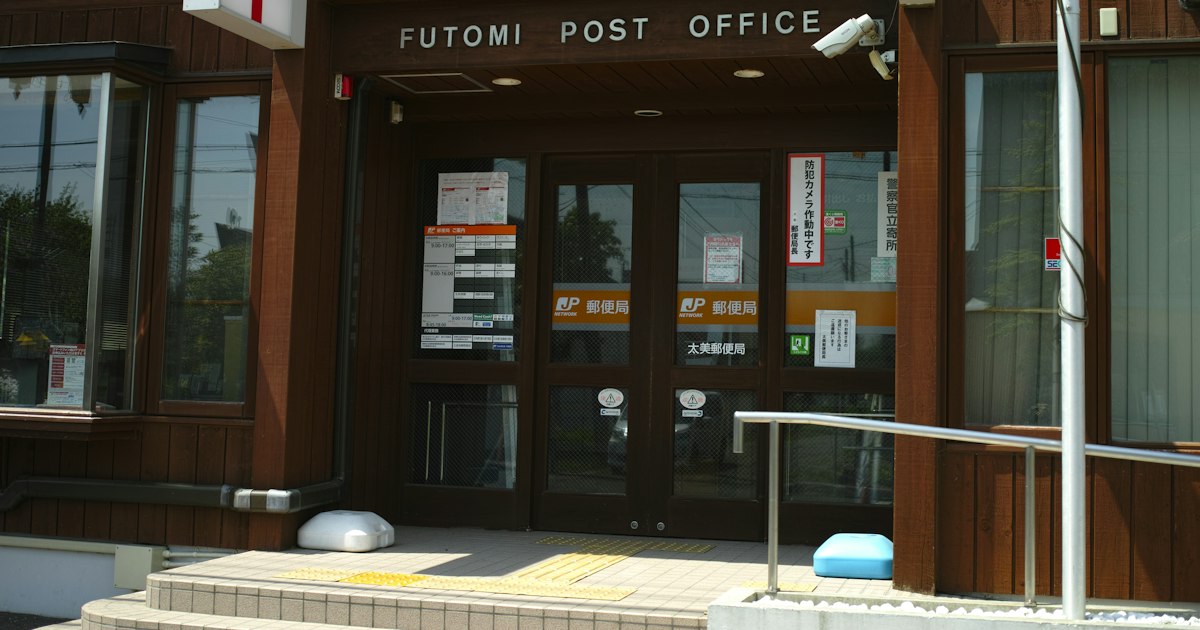
Photo by Magic Mary on Unsplash
If you’ve only researched 7-Eleven’s Seven Bank ATMs for cash in Japan, you’re missing one of the most reliable backup options in the country: Japan Post Bank, known locally as Yucho Ginko (ゆうちょ銀行). With a machine in nearly every post office — including small branches in towns where you won’t find a single convenience store — Japan Post Bank ATMs are often the only international-card-friendly cash point for miles. Here’s exactly how they work, what they cost, and where the common mistakes happen.
Which Cards Actually Work
Japan Post Bank ATMs accept foreign-issued cards carrying the Visa, Plus, Mastercard, Cirrus, JCB, American Express, Discover, or UnionPay logos. Debit and credit cards both work, as long as the card has a PIN set up for cash withdrawals — if your card only has a signature-based PIN for purchases, call your bank before you leave to confirm a withdrawal PIN is active. Chip cards are standard; if your card is stripe-only (rare these days), most machines still have a swipe slot as a fallback.
One thing to double-check with your own bank: some smaller credit unions and prepaid travel cards aren’t linked to an international network at all, even if they show a Visa or Mastercard logo for purchases. Test the card at an airport ATM on arrival rather than finding out it fails in a rural town with no backup option.
Step-by-Step: Making a Withdrawal
- Insert your card and, when prompted, select the “English” button (usually top-right of the screen or a flag icon).
- Choose “Withdrawal” from the English menu — it’s often listed before the Japanese-only banking menus for domestic customers.
- Enter your PIN using the physical keypad, not the touchscreen.
- Select or type the amount in yen. Many screens offer preset buttons (¥10,000 / ¥30,000 / ¥50,000) plus a custom amount option.
- Take your cash, then your card, then the receipt — the machine dispenses them in that order and some travelers walk off after the cash and forget the card.
Fees, Limits, and Exchange Rates
Japan Post Bank charges its own flat fee for international card withdrawals — currently around ¥220 per transaction, posted on a sticker near the screen. On top of that, your home bank or card issuer will likely add its own foreign transaction fee and/or ATM fee, so check your card’s terms before you go. A few travel-focused debit cards (Wise, Charles Schwab, Revolut’s linked cards, etc.) reimburse or waive these foreign fees, which makes a real difference if you’re withdrawing cash multiple times during a two-week trip.
Many machines cap a single withdrawal around ¥100,000, and your home bank may impose a lower daily limit of its own. If you need more than the per-transaction cap, you can usually repeat the withdrawal immediately — just know each repeat triggers another flat fee. The exchange rate applied is your card network’s rate at the time of the transaction, not a rate set by the ATM; always decline if the screen asks “Would you like to convert to your home currency?” (dynamic currency conversion) since the ATM’s own conversion rate is reliably worse than your card network’s.
Where to Find Them and Opening Hours
Every post office in Japan has at least one ATM, and post offices exist in places convenience stores don’t bother opening — small fishing towns, mountain villages, and rural train junctions. If you’re exploring somewhere like the Noto Peninsula or the countryside around Mount Aso, the local post office ATM may be your only reliable cash option once you’re outside the main town center.
Hours vary significantly by branch. Smaller post offices typically run their ATM on business hours only — roughly 9:00 to 17:00 or 18:00 on weekdays, often closed or very limited on weekends. Larger urban branches and main post offices in big cities extend this considerably, sometimes from around 7:00 to 23:00 or close to 24 hours on weekdays, with shorter weekend windows. There’s no universal rule, so glance at the hours sticker on the machine itself before relying on it late at night or on a Sunday — it’s the single most common letdown with these ATMs.
Common Mistakes to Avoid
- Assuming all post office ATMs are 24/7. Unlike Seven Bank machines, many close with the branch or shortly after.
- Forgetting the card after the cash dispenses. The machine returns items in a specific order — cash first.
- Accepting the ATM’s currency conversion offer. Always choose to be charged in Japanese yen (JPY), not your home currency.
- Relying on a single card. Carry a backup card from a different network in case one is flagged for suspected fraud — common with foreign card use abroad.
- Withdrawing too little, too often. With a flat per-transaction fee, pulling ¥10,000 five times costs five times the fee compared to one ¥50,000 withdrawal.
Japan Post Bank vs. 7-Eleven: Which to Use When
Seven Bank ATMs inside 7-Eleven stores are genuinely 24/7 and concentrated in cities, making them the better default for late-night withdrawals in Tokyo, Osaka, or any major station area. Japan Post Bank earns its place as the backup plan: it’s the one you’ll be grateful for in smaller towns, near traditional craft workshops, or on day trips to places like Lake Biwa where convenience store density drops off. A sensible strategy is to withdraw a slightly larger sum each time — enough for a few days of meals, transport, and souvenir shopping — rather than treating either network as guaranteed to be open when you need it.
It’s also worth having cash on hand before big-ticket purchases where card payment or QR codes aren’t always accepted, such as at some local repair shops or when negotiating at a Don Quijote suitcase sale. For everyday purchases, though, digital payment has largely caught up — see our guide to using PayPay and Rakuten Pay as a tourist for when you can skip the ATM line entirely and pay by phone instead.