Photo by Maxx Gong on Unsplash
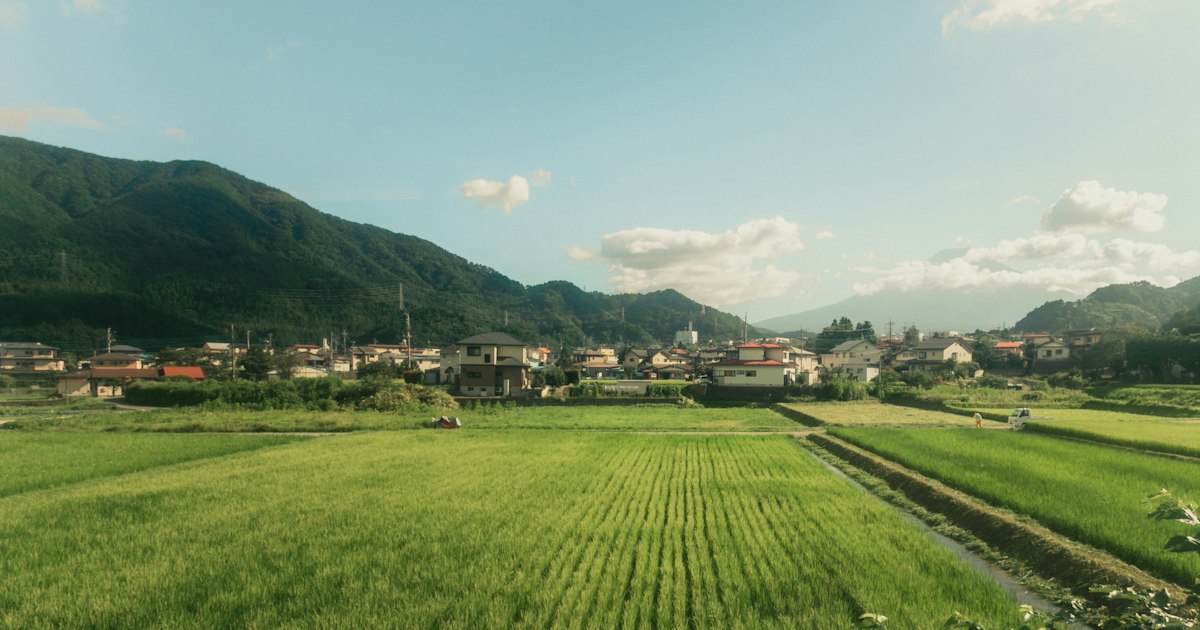
Tono sits in a quiet valley in Iwate Prefecture, about an hour by local train from the Tohoku Shinkansen line, and it has spent the last century building a reputation as Japan’s unofficial capital of folklore. This is where kappa — the green, pond-dwelling tricksters of Japanese legend — are said to still live in the rivers, where L-shaped farmhouses with thatched roofs sit between rice paddies, and where a 1910 book of collected ghost stories put a small farming town permanently on the folklore map. It’s not a place with blockbuster sights; it’s a place you slow down in. Here’s how to actually plan the trip.
What Makes Tono Japan’s Kappa Capital
Tono’s fame traces back to “Tono Monogatari” (The Legends of Tono), a 1910 collection of local folk tales assembled by ethnologist Kunio Yanagita from stories told by a Tono resident, Kizen Sasaki. It became the founding text of Japanese folklore studies, full of kappa, zashiki-warashi (house spirits), and mountain gods. The town has leaned into that identity ever since — kappa statues turn up on street corners, manhole covers, and shop signs, and the local tourism board markets Tono as a living folklore museum rather than a single attraction. The appeal is atmospheric: narrow river paths, old farmhouses, and small shrines where the stories feel plausible rather than kitschy.
Getting to Tono From Tokyo or Sendai
From Tokyo, take the Tohoku Shinkansen (Hayabusa) to Shin-Hanamaki Station, roughly 2 hours 40 minutes. From there, transfer to the JR Kamaishi Line local train to Tono Station — about 1 hour, roughly ¥770 one way. The catch: the Kamaishi Line is a rural single-track line with only around 8-10 trains a day in each direction, so check the timetable before you leave Tokyo and build your day around it rather than assuming you can just show up and go. Hanamaki Station (one stop before Shin-Hanamaki on the Kamaishi Line) also connects, and there are direct highway buses from Morioka and Hanamaki that run a bit more flexibly than the train. From Sendai, it’s about 2.5 hours via Shinkansen to Shin-Hanamaki and the same local transfer.
Because Tono’s sights are spread across 5-10 km of countryside, renting a car at Shin-Hanamaki or Hanamaki Station is genuinely worth it — local buses around Tono run only a handful of times a day, and taxis from the station add up fast if you’re visiting more than one site.
The Must-See Kappa and Folklore Sites
Kappa Fuchi (Kappa Pool), a shaded bend in the river behind Joken-ji Temple, is the town’s signature kappa spot — a small shrine to the local kappa deity sits on the bank, and it’s free to visit. For a bit of fun, the temple’s adjacent shop sells a novelty “kappa fishing license” (around ¥300) that lets you legally dangle a fishing rod baited with cucumber at the pool, in the unlikely event a kappa bites. It’s silly, it’s cheap, and it’s the most photographed five minutes in town.
Tono Furusato Village (Tono Furusato Mura) is an open-air museum of relocated Edo-period farmhouses set among rice paddies, with staff in period dress and seasonal activities like straw-rope making or soba pounding. Admission is around ¥550 for adults, open roughly 9:00-17:00 (shorter hours, to around 16:30, from December through March), with occasional winter closures — check ahead if visiting in the colder months. Tono Denshoen, a separate folklore park closer to the town center, is smaller and cheaper (around ¥320), with a working waterwheel and storytelling sessions in Japanese.
Rural Magariya Farmhouses and the Countryside
The region’s signature architecture is the magariya — an L-shaped farmhouse where the stable for horses was built directly into one wing of the house, a design unique to this part of Iwate. Several original and relocated examples are preserved at Furusato Village and scattered around the valley, and simply driving or cycling the backroads between rice paddies, past wooden storehouses and small roadside shrines, is as much the point of visiting Tono as any single ticketed site. Bicycle rental is available near Tono Station for travelers not driving.
Best Time to Visit
June brings freshly planted, vividly green rice paddies and is also when Tono’s hop fields — this is one of Japan’s largest hop-growing regions, supplying major domestic beer brewers — start to climb their trellises. September and October are the strongest months overall: harvest season turns the paddies gold, the weather cools, and the Tono Matsuri festival (early September) brings parades and traditional horse-mounted archery (yabusame) to the town center. Winter is quiet and atmospheric but several outdoor sites reduce hours or close, and snow can complicate the rural roads. Summer is lush but humid, and mosquitoes near the rice paddies and riverbanks are persistent — if you’re prone to bites, it’s worth packing something effective; our guide to Japan’s mosquito repellent aisle covers what actually works and is sold in local drugstores.
Where to Eat and What to Buy
Tono’s food leans hearty and rural: hittsumi (hand-torn wheat dumplings in a miso or soy broth) is the local comfort dish, similar in spirit to the stick-rice hot pots found elsewhere in Tohoku — if you enjoy this kind of regional one-pot cooking, it’s worth also reading about kiritanpo in neighboring Akita. Local soba, made with buckwheat grown in the surrounding hills, is widely available and reasonably priced (bowls typically ¥700-900). For souvenirs, kappa figurines and charms are sold at nearly every shop near the station and Kappa Fuchi, and Tono-brewed beer using the valley’s own hops makes a distinctive, packable gift. The Sarugaishi River that runs through town is also a legitimate spot for freshwater fishing beyond the novelty kappa license — if that interests you, check our guide to rental gear and licenses for fishing in Japan before you go, since real river fishing requires an actual permit from the local fishing cooperative.
Common Mistakes and Practical Tips
The biggest mistake visitors make is treating Tono like a city day trip with frequent transit — it isn’t. Check the Kamaishi Line timetable both directions before you leave your hotel, since missing the last train back to Shin-Hanamaki can mean an expensive taxi or an unplanned night. Second, don’t expect convenience-store density; Tono is a small town, and card acceptance is inconsistent at smaller shops and farmhouses-turned-cafes, so carry cash. If you need to withdraw yen once you’re out here, Japan Post Bank ATMs are the most reliable option in rural areas like this one — our guide on how foreign cards actually work at Japan Post Bank ATMs is worth reading before you arrive, since not every machine in small towns accepts international cards the same way. Finally, budget at least a half-day, ideally a full day, to see Tono properly — trying to squeeze it into a quick stop between Shinkansen connections rarely does it justice, and the whole appeal of the place is unhurried countryside, not a checklist of sights.