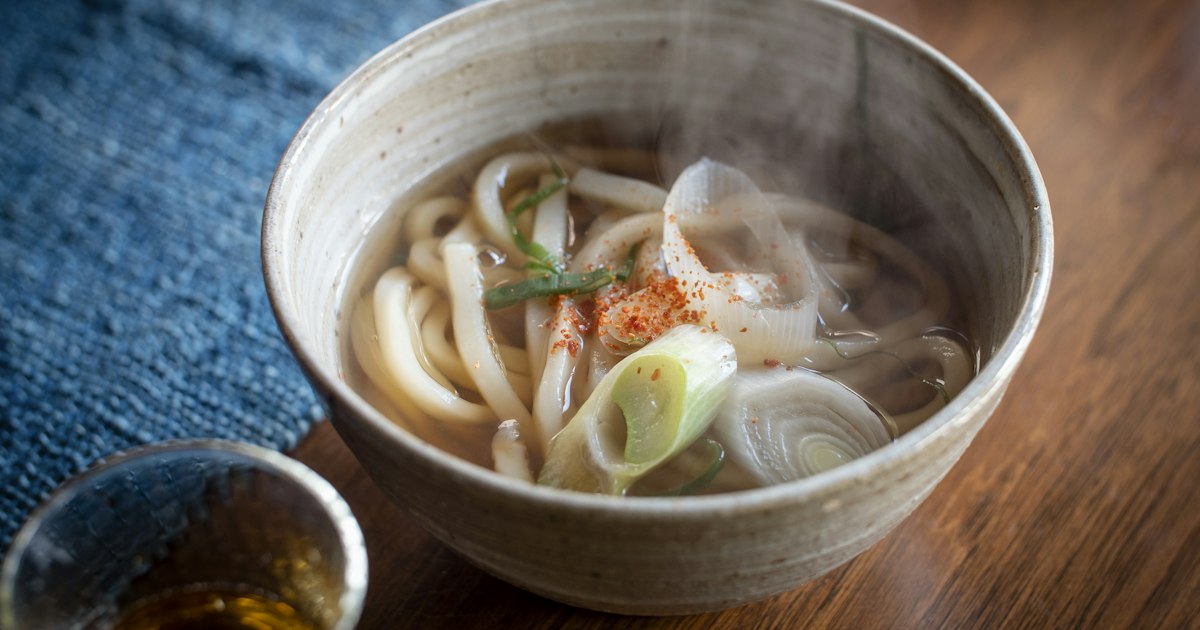
Photo by Jinomono Media on Unsplash
If you’ve walked past a glass storefront in Japan with cooks visibly rolling and cutting noodles by hand, you’ve probably seen Marugame Seimen. It’s one of the easiest, cheapest, and most satisfying meals you can have in Japan — but the self-serve ordering line trips up almost every first-time visitor. Here’s exactly how it works, what to order, and what it costs.
What Marugame Seimen Is (and Why the Name Doesn’t Match the Address)
Marugame Seimen (丸亀製麺) is a nationwide udon chain with well over 800 locations across Japan, run by the Toridoll Holdings group. The name references Marugame, a city in Kagawa Prefecture famous as the heartland of Sanuki udon — but the chain itself didn’t start there. It launched in Kanagawa Prefecture in the early 2000s, built around the idea of making Sanuki-style udon fresh, in-house, at every single store, with the noodle-making process visible to customers through an open kitchen window. That’s the chain’s whole pitch: thick, chewy, fresh-cut noodles at convenience-store prices.
You’ll find locations attached to train stations, inside shopping mall food courts, and as standalone roadside restaurants. In Tokyo, there are branches near Shibuya, Shinjuku, and most major hubs — if you’re navigating the city by train, our guide to the Tokyo Metro vs Toei subway systems is worth a skim so you’re not stuck figuring out transfers on an empty stomach.
How the Self-Serve Line Actually Works, Step by Step
Every Marugame Seimen runs on the same tray-line system, modeled on a cafeteria. Here’s the order of operations:
- Grab a tray at the entrance — trays and chopsticks are stacked right there.
- Tell the first staff member your udon order. They’ll ask hot or cold (atsui/tsumetai) and the size — typically small (nami), medium (naka), or large (dai). This is the one spot where English menus with photos are usually posted, so you can just point.
- Watch them cut and boil your noodles to order — this is the fun part, and the reason the noodles taste different from most chains.
- Move down to the tempura and side-dish counter. Trays of tempura, onigiri, and inari sushi sit under a heat lamp. Use the tongs provided, pick what you want, and set it on your tray yourself.
- Pay at the register at the end of the line. The cashier rings up everything on your tray at once. Cash, IC cards (Suica/Pasmo/ICOCA), and credit cards are all accepted at most locations now.
- Help yourself to condiments — grated ginger, shichimi chili pepper, and tenkasu (crispy tempura bits) are usually free and self-serve, sitting near the drink and water station after the register.
- Find a seat, eat, then bus your own tray to the return window near the exit when you’re done. Scrape remaining liquid into the designated bin and stack the dishes — staff won’t clear your table for you.
What to Order: Udon Styles and Approximate Prices
Prices vary slightly by location and have crept up with inflation, but as a rough guide (small size, tax included):
- Kake udon (plain noodles in hot dashi broth) — around ¥320-390. The cheapest, most basic order.
- Kamatama udon (hot noodles tossed with raw egg and soy sauce, no broth) — around ¥470-530. A textural, less soupy choice.
- Niku udon (simmered sweet-savory beef on top) — around ¥590-690.
- Curry udon — around ¥590-690, thick curry broth that splashes easily, so tuck a napkin in if you’re wearing anything nice.
- Zaru udon (cold noodles with dipping sauce) — a good pick in summer, roughly ¥390-470.
Upsizing from small to medium is usually free or just a few dozen yen; large typically adds ¥100-150. If you’re hungry, there’s no shame in going large — portions at “small” are genuinely small by Western standards.
Tempura, Onigiri, and the Free Condiment Bar
The tempura counter is where the bill adds up and where the fun is. Individual pieces generally run ¥100-200 each: chikuwa (fish cake) tempura and kakiage (vegetable fritter) tend to be on the cheaper end, around ¥105-130, while ebi (shrimp) tempura runs closer to ¥160-200. Onigiri and inari sushi are usually ¥130-170 each. A full meal — udon plus two tempura pieces plus a drink — typically lands somewhere between ¥700 and ¥1,000, which is extraordinary value for a freshly made meal in Japan.
Don’t skip the condiment station after the register. The free tenkasu (crispy tempura scraps) and grated ginger genuinely improve a plain kake udon, and there’s usually a self-serve tea or water dispenser so you don’t need to buy a drink.
Common Mistakes First-Timers Make
The line moves fast and the staff expect you to know the drill, so a few things catch visitors off guard:
- Not deciding hot/cold and size before reaching the counter. Decide while you’re still in line — hesitating holds everyone up.
- Trying to pay at the noodle counter. You don’t pay until the very end, after tempura. Keep your tray moving.
- Missing the tempura counter entirely because it looks like a side display rather than part of the ordering line — it’s not optional decoration, it’s self-serve and you can take as little or as much as you want.
- Forgetting to return the tray. Look for the conveyor-belt-style return window; abandoning a tray on the table is a minor faux pas.
- Assuming all locations are identical. Smaller roadside or rural branches sometimes have a shorter tempura selection or slightly different hours than big-city, station-adjacent ones.
When and Where to Go
Most locations open around 10:00 or 11:00 AM and close between 9:00 and 11:00 PM, though hours vary by store — it’s worth checking the specific branch if you’re planning a very early or late visit. The lunch rush, roughly 12:00-1:00 PM on weekdays, is the one time the line genuinely backs up, especially at branches near office districts or train stations. Arriving just before noon or after 1:30 PM gets you a much shorter wait. Udon itself isn’t seasonal, but cold zaru and bukkake styles are especially popular — and refreshing — in Japan’s hot, humid summer months (June-September), while curry and kamatama udon see more orders in winter.
Budget, Mid-Range, and Splurge Versions of the Same Meal
Marugame Seimen is already budget food, but there’s still a range: a true budget run is a small kake udon with free tenkasu stirred in — often under ¥400. A satisfying mid-range meal is a medium niku or kamatama udon plus one tempura piece, landing around ¥700-900. The “splurge” version, relatively speaking, is a large curry or niku udon with two or three tempura pieces and an onigiri, which can reach ¥1,200-1,400 — still remarkably cheap for a made-to-order meal.
If you’re building out a broader noodle itinerary around Japan, Marugame Seimen’s fresh Sanuki-style udon pairs well with regional specialties worth seeking out elsewhere, like Morioka’s jajamen with miso meat sauce, Nagasaki’s seafood-loaded champon, or Hokkaido’s Sapporo soup curry if curry udon won out over kake on your first visit.