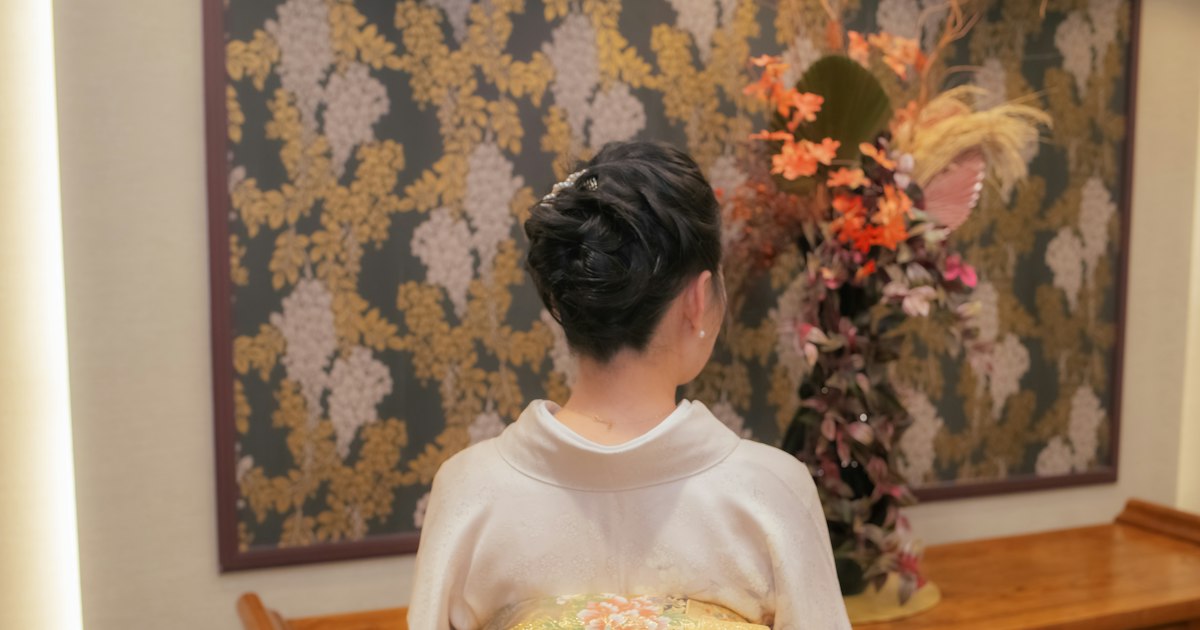
Photo by Karori Production on Unsplash
Long before Western belts arrived in Japan, the obi was already doing the job of cinching a waist, anchoring an outfit, and making a quiet statement about taste. These days you don’t need a kimono to own one. Vintage shops, flea markets, and fashion-forward boutiques across Japan sell obi as standalone accessories—wrapped over a trench coat, knotted around straight-leg jeans, or worn as a wide waist-cincher with a plain dress. This guide covers the types worth knowing, where to actually buy one, what to expect to pay, and the mistakes that make a beautiful textile look like a Halloween costume instead of an outfit.
The Four Obi Types You’ll Actually Encounter
Obi come in a confusing range of widths and formalities, but for everyday fashion purposes you only need to know four:
- Fukuro obi – the most formal, about 30cm wide and 4m+ long, often densely woven with gold or metallic thread. Beautiful but heavy and stiff; better as wall art or a statement piece than a daily belt.
- Nagoya obi – everyday formal wear, pre-sewn narrower at one end to make tying easier. A good middle-ground weight for repurposing as a sash.
- Hanhaba obi – “half-width,” roughly 15–17cm wide and 3.6m long, originally for yukata and casual kimono. This is the one most people buy for fashion use: soft, light, and easy to wind around a waist two or three times.
- Heko obi – a soft, almost scarf-like sash, often in silk crepe, used by children and with yukata. Good for a loosely tied, bow-style look.
If you’re shopping with “everyday belt” in mind, look for hanhaba or lighter nagoya obi first—fukuro obi are gorgeous but genuinely hard to wear outside formal kimono styling.
Where to Buy: Budget, Mid-Range, and Splurge
Budget (¥300–¥3,000): Secondhand and recycle kimono shops are the best value by far. Chains like Tansu-ya have multiple locations in Tokyo (Asakusa, Harajuku), Kyoto (Gion), and Osaka, with used hanhaba and nagoya obi often priced between ¥1,000 and ¥3,000, sometimes less for worn or stained pieces that still look fine once tied. Flea markets go even lower—bins of loose, slightly damaged obi for ¥300–¥500 are common.
Mid-range (¥3,000–¥15,000): Vintage and antique kimono boutiques sell cleaner, better-condition obi with intact silk and no stains, often curated by color or pattern. Shimokitazawa and Koenji in Tokyo have several small shops like this mixed in among the secondhand clothing stores, and Kyoto’s Nishijin district (the historic weaving neighborhood) has shops selling both new and quality used obi at these prices.
Splurge (¥20,000–¥300,000+): New fukuro and nagoya obi from established weavers—especially Nishijin-ori from Kyoto or Hakata-ori from Fukuoka—are genuine textile art, hand-woven with silk and sometimes gold thread. Department store kimono floors (Takashimaya, Mitsukoshi) carry these, with staff who can explain the weaving technique. This tier makes more sense as an heirloom or display piece than a casual accessory.
Best Time to Shop: Flea Market Dates
Japan’s best obi hunting happens at recurring temple and shrine flea markets, not regular shops, so timing matters:
- Toji Temple Kobo-ichi (Kyoto) – the 21st of every month, largest on weekends.
- Kitano Tenmangu Tenjin-ichi (Kyoto) – the 25th of every month.
- Oedo Antique Market (Tokyo International Forum) – held on select Sundays, roughly 9:00–16:00; check the current month’s schedule since it isn’t weekly.
Vendors at these markets often have stacks of folded obi you can dig through, and prices are negotiable, especially late in the day. Spring (March–May) and autumn (September–November) also bring more secondhand kimono stock onto the market generally, since that’s when families clear out closets ahead of seasonal wardrobe changes. If you’re mapping out how to reach these markets by train, the Tokyo Metro vs. Toei Subway guide is useful for the Tokyo International Forum stop near Yurakucho and Tokyo Station.
How to Wear One Without Looking Like a Costume
The trick to making an obi read as modern fashion rather than a kimono accessory worn wrong is to break it away from the rest of the kimono ensemble entirely. A few approaches that work:
- Wide waist belt – fold a hanhaba obi in half lengthwise and wrap it twice around the waist over a simple dress or oversized shirt, tying a flat knot or bow at the side or back rather than the traditional center-back knot.
- Sash over outerwear – wrap a nagoya obi over a coat or blazer and tie loosely at the front; the stiffness of the fabric holds its shape well.
- As a bag strap or accent – some vintage shops sell obi already cut and finished into bag straps or headbands, which sidesteps the “am I wearing this right” question entirely.
Pairing an obi with other traditional footwear like geta or zori sandals pushes the look back toward full kimono styling—fine if that’s the intent, but if you want the “everyday fashion” effect, keep the rest of the outfit entirely Western: jeans, sneakers, a plain tee.
Common Mistakes
- Buying fukuro obi for casual wear. They’re stiff, heavy, and formal-looking—gorgeous on a kimono, awkward over everyday clothes.
- Skipping the smell and stain check. Secondhand obi can carry mothball odor or faint mildew smells; air it outside for a day or two before wearing, and check the fold lines under bright light for stains that don’t show in shop lighting.
- Not asking about silk vs. polyester. New obi are sometimes polyester (cheaper, machine-washable, less drape) rather than silk; shop staff will tell you honestly if you ask “kinu desu ka?” (is this silk?).
- Assuming all obi are the same length. A too-short obi won’t wrap twice around a Western waist comfortably—measure or ask length (nagasa) before buying if you’re larger than a typical Japanese kimono size.
Buying Secondhand Obi From Abroad
If you’ve already left Japan or can’t find the pattern you want in person, Mercari Japan has an enormous secondhand kimono and obi market, often cheaper than in-store because sellers are clearing out family collections. The beginner’s guide to buying on Mercari Japan from abroad walks through the proxy-shipping services needed to get items sent internationally, which is exactly the workaround you’ll need for an obi purchase after your trip. Search terms like “半幅帯” (hanhaba obi) or “名古屋帯” (nagoya obi) will surface far more listings than searching in English.
Whether you spend ¥500 at a temple flea market or ¥50,000 on a hand-woven Nishijin piece, an obi is one of the few souvenirs that’s genuinely wearable the moment you get home—no alterations, no occasion required, just a length of beautiful fabric and a knot.