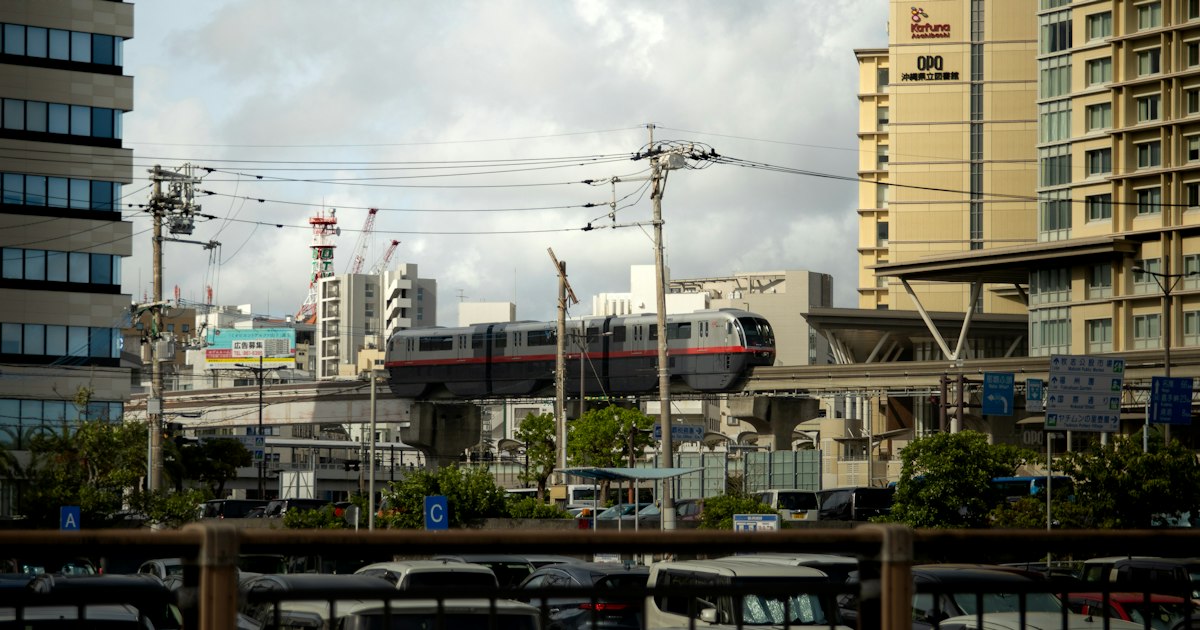
Photo by Bigfoot STNGR on Unsplash
Okinawa doesn’t have bullet trains or a subway map thick with colored lines — it has one monorail, and it happens to be exactly the right size for a visitor base in Naha. The Yui Rail (ゆいレール) is a single elevated line that strings together the airport, the main shopping street, and the island’s most famous castle ruins in about half an hour. If you’re spending even one day in Naha before heading to the beaches, here’s how to actually use it.
What the Yui Rail Is and Why You’ll Use It
The Yui Rail is Okinawa’s only rail line, run by the Okinawa Urban Monorail company. It opened in 2003 and was extended in 2019, and it now runs 19 stations from Naha Airport Station to Tedako-Uranishi Station in neighboring Urasoe City, covering about 17 kilometers end to end in roughly 30 minutes. It’s elevated above the streets for its entire length, which has the nice side effect of giving you a free scenic ride over Naha’s rooftops and the harbor.
For visitors, its usefulness comes down to geography: the airport, the Kokusai Dori shopping strip, and Shuri Castle — the three things almost everyone in Naha needs to reach — all sit directly on this one line. Everywhere else in Okinawa (the beaches, Churaumi Aquarium, the northern resorts) requires a rental car, highway bus, or taxi, since the monorail doesn’t extend beyond the Naha/Urasoe area.
Fares, Passes, and IC Cards
Fares are distance-based, starting at around ¥270 for the shortest hops and topping out at roughly ¥370 for riding the full line. If you’re making more than two or three trips in a day, the unlimited-ride passes are usually the better deal: a 1-day pass runs about ¥800 and a 2-day pass about ¥1,400 (adult prices), sold at ticket machines and the counter at Naha Airport Station. The 2-day pass also comes with small discounts on admission to Shuri Castle and a handful of other attractions, so it’s worth asking about at the counter.
On IC cards: Okinawa has its own card, OKICA, which gives a small fare discount over cash tickets if you plan to live here a while. For a short visit, though, the better news is that the Yui Rail now accepts all ten of the major nationwide IC cards — Suica, PASMO, ICOCA, and the rest — so whatever card you’ve already loaded up in Tokyo or Osaka will simply tap through the gates in Naha too. That’s a relatively recent change; for years Okinawa’s rail was a notable exception to Japan’s otherwise interoperable IC network, so it’s a mistake that still trips up repeat visitors who remember the old rules. If you’re coming from Tokyo and curious why cards and gates work differently from one operator to the next in the first place, the quirks of overlapping transit systems are explained in our guide to Tokyo Metro vs Toei Subway.
Key Stations for Visitors
You don’t need to memorize all 19 stops — a handful matter for most trip plans:
- Naha Airport Station — connected directly to the domestic terminal by a short walkway, and the starting point for almost every visitor’s trip.
- Asahibashi / Miebashi — the closest stops to Naminoue Shrine, a small cliffside shrine with its own torii gate and a quiet beach beneath it. If you’re starting a goshuincho shrine stamp book on this trip, Naminoue is a good first stamp before you head further into Kyushu or the mainland.
- Makishi — the stop for Kokusai Dori, Naha’s main shopping and dining street, and the Heiwa Dori covered market behind it, good for Okinawan souvenirs like sea-salt snacks, bitter-melon (goya) products, and awamori liquor.
- Omoromachi — home to the DFS Galleria duty-free mall and the Naha Main Place shopping center, plus the Okinawa Prefectural Museum.
- Shuri — the stop for Shuri Castle, former seat of the Ryukyu Kingdom and a UNESCO World Heritage site. Note that the castle itself is not right outside the station exit — it’s a 15 to 25 minute uphill walk (or a short taxi/bus ride), which catches a lot of first-time visitors off guard.
Hours, Frequency, and Common Mistakes
Trains run roughly from 6:00am to 11:30pm, departing every 10 to 15 minutes, with slightly more frequent service during the morning and evening rush. That’s a far cry from the 2-3 minute intervals you’d see on a Tokyo subway line, so it’s worth checking the posted timetable rather than assuming a train will show up the moment you reach the platform.
The most common visitor mistakes are easy to avoid once you know them:
- Missing the last train. Service stops around 11:30pm, earlier than big-city rail lines, so plan your evening around it or budget for a taxi back.
- Assuming Shuri Castle is at the station. Build in the uphill walk, or grab the shuttle bus that runs from Shuri Station to the castle’s park entrance on weekends and peak season.
- Not checking luggage space. Trains have limited luggage racks and no dedicated baggage car — if you’re heading straight from the airport with big suitcases, consider a taxi for that one leg and use the monorail once you’re unencumbered.
- Treating it as island-wide transport. The Yui Rail only covers Naha and part of Urasoe. Reaching the northern beaches or the aquarium requires a bus or rental car.
Families traveling with young kids will find most stations reasonably accessible, with elevators at every platform, though facilities vary station to station — our guide to nursing rooms, stroller access, and diaper changing in Japan is worth a look before you land if you’re traveling with an infant.
Connecting to Buses and the Rest of Okinawa
Because the monorail’s reach is limited, it works best as a hub rather than your only transport. Naha Bus Terminal, next to Asahibashi Station, is the main jumping-off point for highway buses to the northern resort areas, Churaumi Aquarium, and other parts of the island. If your itinerary includes the beaches around Chatan or the Motobu Peninsula, plan to pair the Yui Rail (for getting around Naha itself) with a rental car or long-distance bus for everything beyond it.
Best Time to Ride
Okinawa’s climate makes timing matter more here than on a typical mainland city trip. Summer (June through September) is hot and humid, and the elevated, partly open-air platforms offer little shade, so riding in the earlier morning or after sunset is far more comfortable. Typhoon season (roughly August through October) can occasionally suspend monorail service for safety; if a typhoon warning is issued, check the operator’s site or ask your hotel before heading to the station, since service can pause for hours at a time. Spring (March-April) and the cooler months from November through February are the most pleasant for a day of station-hopping between Kokusai Dori and Shuri Castle without the heat working against you.