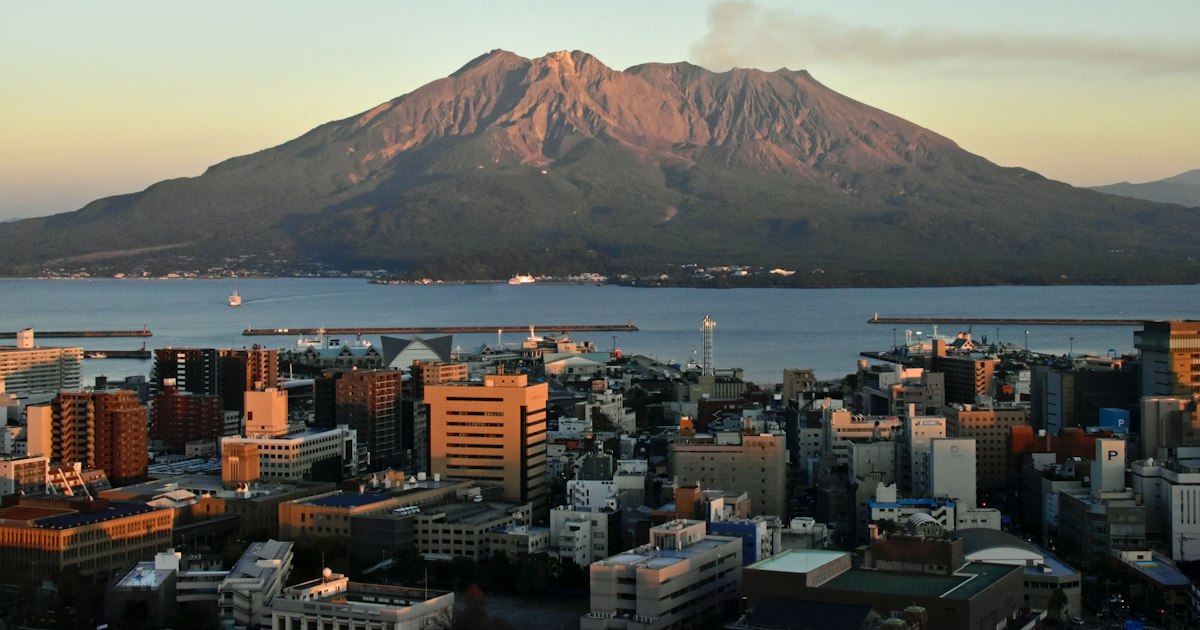
Photo by Geoff Oliver on Unsplash
Kagoshima is the only city in Japan where an active volcano smokes directly across the harbor from the downtown shopping arcades, and where residents sweep volcanic ash off their porches the way other cities sweep up fallen leaves. Pair that with Kagoshima Prefecture’s status as Japan’s biggest producer of shochu, and you get a destination that feels distinct from anywhere else in the country — equal parts geology lesson, food trip, and small-city charm. Here’s how to see Sakurajima properly and drink like a local while you’re at it.
Getting to Kagoshima
The Kyushu Shinkansen connects Hakata (Fukuoka) to Kagoshima-Chuo Station in about 1 hour 20 minutes on the fastest Mizuho services, with one-way reserved-seat fares around ¥10,500–11,000. From Tokyo or Osaka, flying into Kagoshima Airport is faster overall — roughly 1 hour 45 minutes from Haneda — though the airport sits about 40 minutes from downtown by limousine bus (around ¥1,800 one-way). Kagoshima-Chuo is the city’s transport hub; from there, the Kagoshima City View sightseeing bus loops past most major sights, including Sengan-en, for a flat fare of around ¥200 per ride or ¥600 for a one-day pass.
Sakurajima: Riding the Ferry to an Active Volcano
Sakurajima sits in Kagoshima Bay and has been erupting in small, frequent bursts for decades — it’s one of the most active volcanoes in Japan, and minor ash emissions are a near-daily occurrence rather than a rare spectacle. The ferry to the island departs from Kagoshima Port, about 15–20 minutes by bus or taxi from Kagoshima-Chuo Station (not from the station itself, which trips up first-timers). The crossing takes just 15 minutes and, unusually for a Japanese day trip, the ferry runs 24 hours a day, with departures every 10–15 minutes during the daytime — so there’s no need to clock-watch for a “last boat.” Fare is a flat ¥200 per adult, paid in cash after you disembark on the Sakurajima side, not before boarding.
On the island, the free Sakurajima Visitor Center (open 9:00–17:00) near the ferry terminal has clear, English-friendly displays on the volcano’s eruption history and current activity. Right outside, the free Yojin Tamateyu foot bath is a nice way to soak tired feet while staring at the crater. To get farther around the island, hop on the Sakurajima Island View loop bus (around ¥440 per ride, or a ¥500 day pass), which stops at the Arimura Lava Observatory and climbs to Yunohira Observatory, the highest point open to the public at 373 meters — this is as close as visitors are allowed to get; actual crater hikes are off-limits due to ongoing activity.
Walking the Lava Trail and Living with Ash
The Arimura Lava Trail is an easy 1.5 km walkway through solidified lava fields from the massive 1914 eruption, which was so large it fused Sakurajima to the Osumi Peninsula and turned what had been an island into a peninsula itself. Wear closed shoes — the lava rock is sharp and uneven, and sandals are a common regret here.
Ash fall is the city’s daily reality, and it’s worth planning around it rather than being surprised by it. Winds tend to carry ash away from downtown in winter and toward the city in summer, so if you want the clearest skyline views of the volcano, aim for a visit between November and February. The city hands out free, clear plastic ash-collection bags to residents for sweeping up deposits, and locals often carry a small umbrella on hazy days — less for rain than for shielding against grit in the air, a habit not unlike the convenience-store clear vinyl umbrella culture found everywhere else in Japan.
Sengan-en and the City’s Volcano Views
Back on the mainland, Sengan-en is the former seaside garden of the Shimazu clan, who ruled this region for nearly 700 years, and it’s deliberately designed to frame Sakurajima as a “borrowed scenery” backdrop across the bay. Entry to the garden plus the adjoining Shoko Shuseikan museum (housed in Japan’s oldest surviving Western-style factory building) runs around ¥1,600; the garden alone is cheaper. It’s open daily from roughly 9:00 to 17:00 and is one of the better photo spots for the volcano when ash haze isn’t in the way. Tenmonkan, the city’s main covered shopping and nightlife arcade, is a 10–15 minute walk or short tram ride from Kagoshima-Chuo and the best base for dinner, bars, and browsing.
Shochu Culture: Kagoshima’s Sweet Potato Spirit
While most of Japan drinks sake, Kagoshima Prefecture produces more shochu than anywhere else in the country, built on volcanic soil that happens to be ideal for growing sweet potatoes. The result is imo-jochu, a distilled spirit around 25% ABV with an earthy, slightly sweet character very different from rice-based spirits. Satsuma shochu (Satsuma being the old name for this region) holds a protected geographical indication, similar to Champagne or Cognac, so a bottle labeled this way is guaranteed to be made here from local ingredients.
Locals rarely drink it neat or chilled — the common styles are on the rocks, mizuwari (cut with water), oyuwari (cut with hot water, especially in winter), or maewari, where it’s pre-diluted with water the night before to mellow the flavor. Izakaya around Tenmonkan typically stock dozens of local labels and will happily recommend one if you ask for something smooth for a beginner versus something more traditionally funky. A few distilleries around the prefecture, including Hamada Shuzo (makers of the popular, fruit-forward Daiyame label), open their doors for tours and tastings — check current days and hours before heading out, as they vary by season. If you fall for a particular label and can’t find it back home, tracking down rarer bottles later through resale is realistic — our guide to buying on Mercari Japan from abroad covers how to do that.
Side Trips: Ibusuki’s Sand Baths and Chiran’s Samurai Streets
Two worthwhile half-day trips extend a Kagoshima stay. Ibusuki, about 50 minutes south by the Nanohana limited express train, is famous for sunamushi — naturally heated black sand baths where attendants bury you up to the neck on the beach. Saraku Sand Bath Hall charges roughly ¥1,100–1,500 including yukata rental. Chiran, reachable by bus in about an hour, preserves a row of Edo-period samurai residence gardens (entry around ¥530 for the set of seven) and is also home to a sobering museum dedicated to the kamikaze pilots who trained nearby during WWII.
For overnight stays near either of these spots, small family-run lodgings are common and often the best value — see our guide to booking a minshuku for how that process works if you don’t speak Japanese.
Practical Tips and Common Mistakes
Don’t expect to summit Sakurajima’s crater — no trail goes there, and the volcano is monitored for exactly that reason. Check a weather and wind forecast before committing to a “best view” day, since haze and ash can hide the mountain entirely even on a clear-feeling afternoon. Bring small bills for the ferry fare, collected on arrival rather than at the ticket window in Kagoshima. If your trip falls in late September, note that national holidays cluster that week — our overview of Japan’s Silver Week is useful for avoiding the busiest local crowds on the ferry and at Sengan-en. And if volcanic hot spring towns are your thing, Kagoshima pairs naturally with a detour to Unzen Onsen in Nagasaki, another Kyushu town built around dramatic geothermal activity.