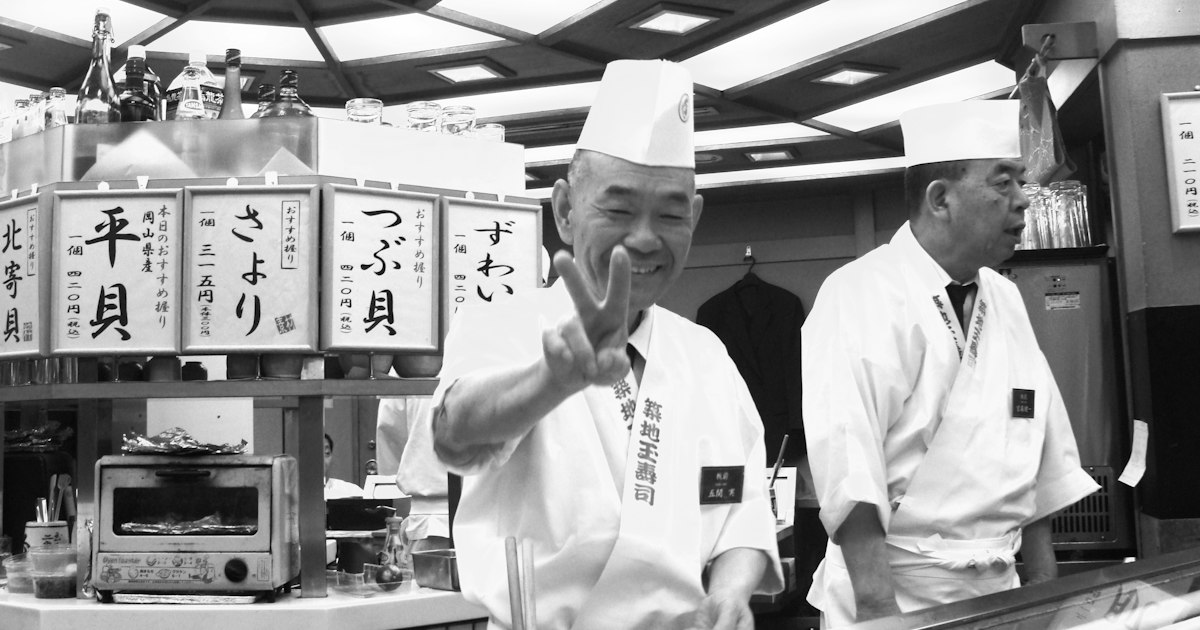
Photo by Hennie Stander on Unsplash
In a city where a single omakase dinner can run past ¥30,000, Tokyo’s standing sushi bars are the antidote: fresh, market-grade sushi eaten on your feet in fifteen minutes for the price of a casual lunch. Tachigui-zushi (立ち食い寿司, literally “stand-and-eat sushi”) strips away the ceremony of a traditional sushi counter — no reservations, no multi-course omakase, often no seats at all — and replaces it with speed, volume, and prices that make daily sushi habits realistic even on a travel budget. Here’s how the system works and where to try it.
What Tachigui Sushi Actually Is
Standing sushi bars grew out of Tokyo’s wholesale fish market culture, where workers needed good sushi fast, before or after their shifts. The format stuck because it solves a real problem: sushi is expensive mainly because of labor, rent, and the time a customer occupies a seat. Remove the seat, speed up the turnover, and a chef can serve far more customers per hour at a much lower price per plate. You’ll usually order one or two pieces at a time rather than a fixed set menu, pay as you go or settle up at the end, and eat standing at a narrow counter — sometimes under 10 minutes, sometimes lingering for 30 if the shop allows it.
Quality varies by shop, but the better-known chains use the same wholesale seafood routes as their sit-down counterparts, just with less overhead. It’s a genuinely different economic model, not a “budget” version of sushi in terms of taste.
Where to Find the Best Ones in Tokyo
Uogashi Nihon-Ichi (魚がし日本一) is the chain most associated with the format. It began near the old Tsukiji market and now has branches scattered across the city, including Shimbashi, Shibuya, Ikebukuro, and locations near Toyosu Market. Individual plates (usually one or two pieces of nigiri) typically run from around ¥100 for everyday items like tamago or kanpyo up to ¥400–¥600 for premium cuts like uni, otoro, or seasonal specials. Most branches open early — some from 7:00 or 7:30 — catering to market workers and early risers, and close by late afternoon or evening depending on the location.
Standing Sushi Bar, run by the Genki Sushi group, is the more tourist-friendly option, with English menus, credit card acceptance, and locations in Shibuya and Shinjuku within easy walking distance of the stations. It’s less about market authenticity and more about convenience for visitors who want good sushi without navigating an all-Japanese menu.
If you’re visiting the current Toyosu Market (which replaced Tsukiji’s wholesale functions in 2018), the surrounding complex and the nearby Tsukiji outer market still have several standing and quick-counter sushi options worth checking once you’re there, since opening hours and shop names shift more often than sit-down restaurants.
How to Order: A Step-by-Step Guide
The etiquette differs from a conventional sushi restaurant, and knowing it in advance avoids an awkward first visit:
- Find a spot at the counter. There are no seats, no waiting list, and often no reservations — you simply walk up to an open space.
- Order directly from the chef, usually one or two pieces at a time rather than a full set, by pointing at the display case or reading a posted price list.
- Pay as you go or keep a running tab, depending on the shop — ask “o-kaikei wa?” (how do I pay?) if you’re unsure, since some places expect cash per item and others total up at the end.
- Eat promptly and move on. Standing bars run on turnover; lingering for an hour isn’t really the point, and during lunch rush you may feel gentle pressure to free up space.
- Bring cash as a backup. Market-adjacent, old-school shops like Uogashi Nihon-Ichi can be cash-only or card-limited; the more tourist-oriented chains accept cards and sometimes IC transit cards.
Budget, Mid-Range, and Splurge Picks
Budget (¥800–� ¥1,500 total): Stick to Uogashi Nihon-Ichi basics — tamago, kappa maki, ika, and a few value nigiri — and you can eat well for the price of a convenience store meal upgrade. It’s a similar value logic to the fast-casual chains covered in our guide to ordering at Marugame Seimen, where you build a cheap meal piece by piece instead of paying for a fixed course.
Mid-range (¥2,000–¥3,500): Mix in otoro, uni, and seasonal fish at either chain, or try a few of the chef’s recommended items of the day — often chalked up separately and tied to what came in at the market that morning.
Splurge (¥4,000+): Some standing bars near Toyosu offer a short omakase-style tasting even without seats — a handful of the best cuts of the day served in sequence. It won’t match a seated ¥20,000+ omakase experience, but for a quick, high-quality seafood splurge between sightseeing stops, it’s a reasonable middle ground. If grilled river fish rather than raw sushi is more your interest, our piece on ayu, Japan’s grilled sweetfish, covers a different seasonal seafood specialty worth seeking out.
Best Time to Go, and Mistakes to Avoid
Morning is genuinely the best time for tachigui sushi, especially at market-linked shops — fish is freshest right after the wholesale auctions, and the shops themselves are often built around an early-morning customer base, closing by mid-afternoon or early evening. Arriving at 7:30–9:00am avoids both the thinnest selection (late in the day, popular cuts sell out) and the worst lunchtime crowding, which peaks around 12:00–13:00 near business districts like Shimbashi.
Common mistakes: showing up at 2pm expecting full variety (many choice items are gone), assuming every shop takes cards (many market-style ones don’t), and treating it like a sit-down restaurant by camping at the counter during a lunch rush. Another one: skipping the posted daily specials board because it’s in Japanese only — these often include the best seasonal fish, and pointing works fine if you can’t read it.
Getting There and Practical Tips
Shibuya, Shimbashi, and Ikebukuro branches sit within a five-minute walk of their respective JR or subway stations, making them easy to slot between sightseeing stops rather than a dedicated trip. If your itinerary includes a Toyosu Market morning visit, pair it with a standing sushi breakfast before heading elsewhere — the market itself is a short ride from central Tokyo via the Yurikamome line from Shimbashi. For travelers arriving or departing via Narita or Haneda, it’s worth checking our comparison of routes between Narita and Haneda if your flights land at one airport and depart from the other, since both connect reasonably well into central Tokyo where most standing sushi bars are located.
If seafood specialties are a trip theme for you, it’s also worth reading about Shimonoseki, Japan’s pufferfish capital, for a very different, more formal seafood experience outside Tokyo. But for a fast, honest, no-frills taste of what makes Tokyo’s sushi culture work — the market connections, the speed, the respect for the fish over the ceremony — a standing counter is one of the most efficient ways to spend a half hour and a few hundred yen.