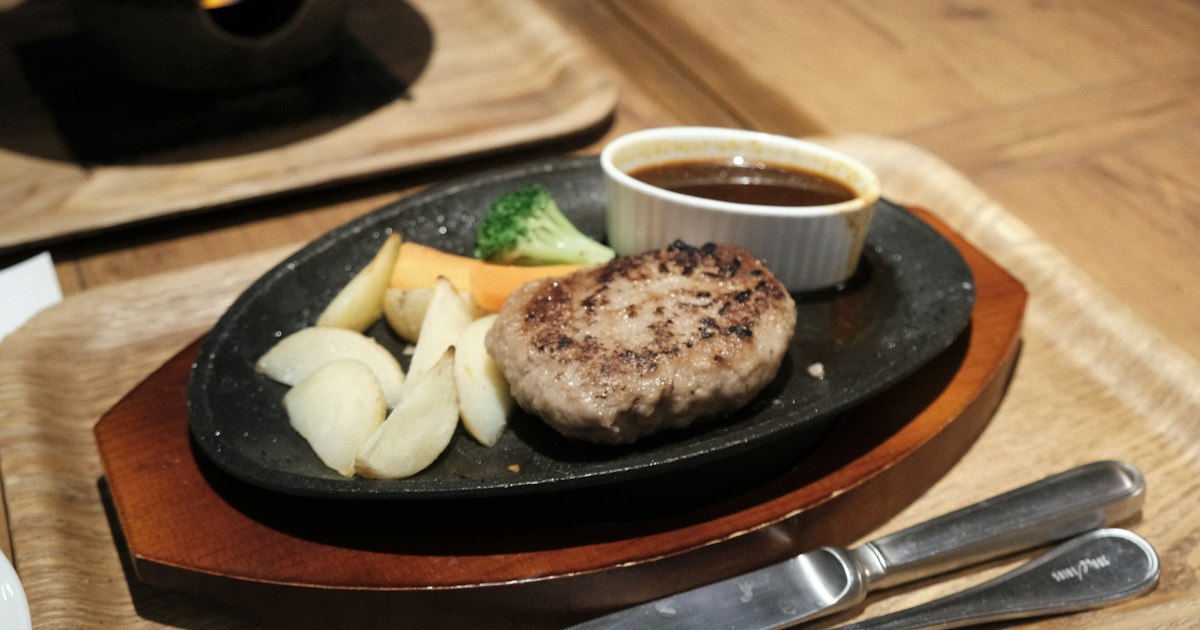
If you see “hamburger” on a Japanese menu and picture a bun, you’re in for a surprise — and a good one. Hambagu (ハンバーグ) is a thick, juicy patty of ground beef and pork served on a plate with rice, no bread in sight, usually drowned in a glossy brown sauce. It’s one of the most comforting dishes in Japan’s yoshoku repertoire, eaten by salarymen on lunch breaks and kids at birthday dinners alike. Here’s what it actually is, where to find it in different price ranges, and how to order it like a regular.
What Exactly Is Hambagu?
Hambagu belongs to yoshoku — Western-style dishes that Japanese cooks adapted after the country opened to foreign trade in the late 1800s and especially after World War II. Unlike a Salisbury steak or a burger patty, hambagu is deliberately soft: the beef-pork mix (usually 70/30 or 50/50) is bound with panko, egg, and grated onion, then pan-fried and often finished with a splash of water or stock under a lid so the inside stays pillowy rather than dense. The classic sauce is demi-glace, a sweet-savory reduction often cut with ketchup and Worcestershire sauce — a very Japanese shortcut version of French demi-glace. Other common sauces include ponzu-oroshi (citrus soy with grated daikon), wafu (soy-butter), and teriyaki.
It’s almost always served teishoku-style: a set with rice, miso soup, shredded cabbage, and a small pickle. This is a different animal from the convenience-store katsu sando world — if you want the handheld, portable side of yoshoku, that’s covered in our guide to katsu sando.
Budget Option: Family Restaurant Chains
The easiest and cheapest way to try hambagu is at a family restaurant (famiresu). Bikkuri Donkey (びっくりドンキー), found in most mid-size and large cities, is the national name for it — a hambagu set with rice and a self-serve salad bar typically runs ¥900–1,400, with larger “mega” patty sizes topping out around ¥1,700. Most locations open around 11:00 am and run through 10:00–11:00 pm, with no reservation needed. Ootoya (大戸屋) and Yayoiken (やよい軒), both teishoku chains, also carry a hambagu teishoku in the ¥900–1,100 range, and since they’re everywhere near train stations, they’re a reliable fallback if you’re hungry and don’t want to plan ahead.
Common mistake: ordering “medium” doneness out of steak habit. Hambagu isn’t served rare — it’s ground meat cooked through — so there’s no doneness choice at most of these chains. If a menu does mention doneness (a few specialty restaurants sear the outside and leave the center softer, almost tartare-adjacent), it will say so explicitly; don’t assume.
Mid-Range: Specialty Hambagu Restaurants
Tokyo has a tier of restaurants that do nothing but hambagu and steak, and the quality jump from the family chains is real. Tsukiji Hamburg, a small chain with several Tokyo branches, uses 100% beef patties (no filler pork) and grills them to order; lunch sets run roughly ¥1,200–1,800 and come with rice, soup, and a choice of sauce. These places get busy at lunch — arrive by 11:30 am or expect a short wait, especially on weekdays when office workers pack in.
At this tier, pay attention to the sauce list on the table: demi-glace is the default, but ponzu-oroshi is lighter and a good choice in summer, while wafu with grated daikon cuts through the richness if you’re eating a large patty. Cutting the hambagu in half crosswise before eating — rather than slicing off bites from one end — lets the juices (and any residual pink from the center) show, which is part of how regulars judge freshness.
Splurge: Wagyu and Hotel Hambagu
Because hambagu is defined by the meat, upgrading the beef is the obvious luxury move. Kobe and Omi beef hambagu courses at hotel restaurants or steakhouses in beef-producing regions run ¥3,000–6,000 for a set with rice, soup, and sometimes a smaller companion steak or foie gras garnish. If you’re traveling through Kansai, pairing a splurge hambagu meal with a stop in Kagoshima or another wagyu region is worth it if beef quality matters to you — Kagoshima wagyu hambagu, where available, is noticeably richer than standard mixed-meat versions.
A cheaper way to taste premium beef hambagu without the restaurant markup is the depachika (department store basement food hall) frozen or chilled bento section, where Kobe-beef hambagu bento boxes sell for around ¥1,500–2,500 — a good grab-and-go option if you’re staying somewhere with a microwave.
Hambagu on the Go: Ekiben and Bento
Hambagu shows up as an ekiben (station bento) filling at larger stations, usually paired with rice and a few sides, priced around ¥900–1,300. It’s not as iconic a station food as the rice-based bento covered in our kamameshi guide, but it’s a solid, filling option if you’re boarding a shinkansen around lunchtime and want something more substantial than a sandwich. Check the bento shelf near the ticket gates rather than inside the platform kiosks — selection and freshness are usually better before you pass through.
Best Time to Go and Practical Tips
Lunch is the best value window almost everywhere — hambagu teishoku sets are typically ¥200–400 cheaper at lunch than the same dish ordered à la carte at dinner, and specialty restaurants often add a small side or drink to the lunch set that disappears in the evening menu. Weekday lunch (12:00–1:00 pm) at popular specialty spots means a wait; going at 11:30 am or after 1:30 pm avoids it.
If you’re washing it down with a drink, hambagu pairs well with a cold beer, and Tokyo’s Ebisu neighborhood has both beer halls and a few yoshoku-leaning restaurants worth combining into one outing. One last common mistake: don’t ask for the patty “to go” expecting a sandwich — hambagu is a plated dish, and if you want a true handheld burger with a bun, you’ll want a Western-style burger chain instead, not a yoshoku restaurant.