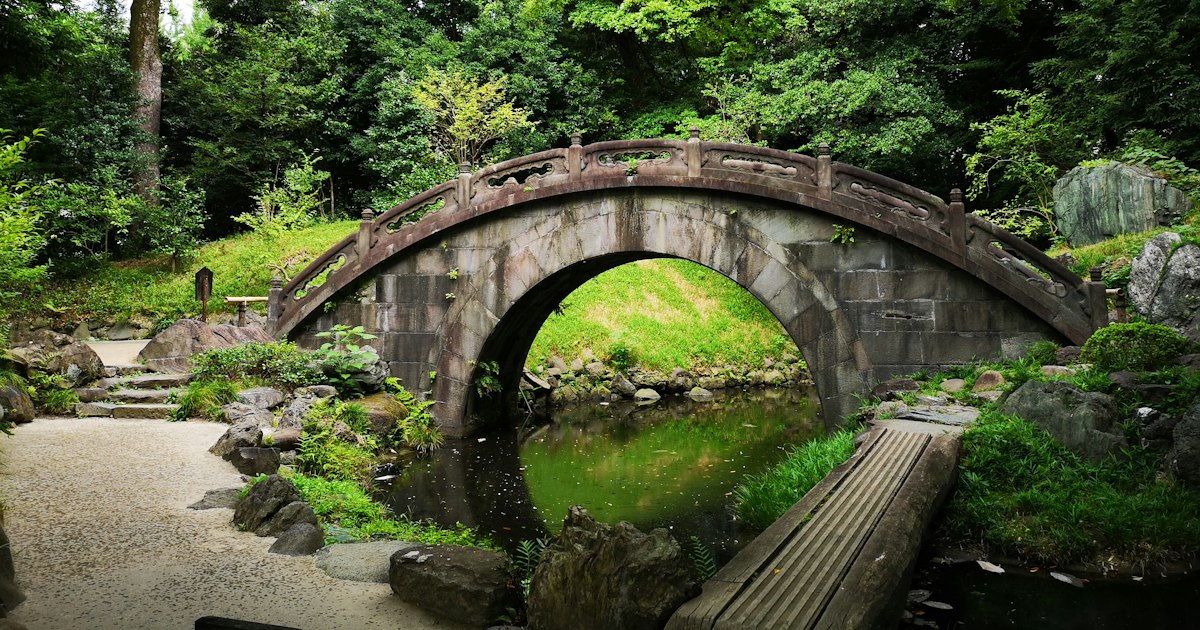
Photo by Scott Law on Unsplash
Most travelers see Yamaguchi Prefecture as a blur out the Shinkansen window between Hiroshima and Kyushu. Iwakuni deserves a stop. Its five-arched wooden bridge is one of Japan’s most photographed structures, and a few minutes’ walk away is a shrine built to honor a genetic rarity: wild albino snakes found almost nowhere else on Earth. It’s an easy half-day or full-day trip, light on crowds, and cheap enough to do on a tight budget.
Getting to Iwakuni
Iwakuni sits in Yamaguchi Prefecture, about 40km southwest of Hiroshima, and there are two practical ways in. The fastest is the Sanyo Shinkansen to Shin-Iwakuni Station — about 15-20 minutes from Hiroshima Station on a Kodama or Hikari service, or reachable directly from Osaka/Kyoto if you’re traveling the Shinkansen line. From Shin-Iwakuni, a local bus (Iwakoku Bus, roughly 15-20 minutes, around 300 yen) runs to the Kintaikyo bus stop right at the bridge. The slower, cheaper option is the regular JR Sanyo Line to Iwakuni Station (about 45 minutes from Hiroshima, covered by the JR Pass), followed by a 15-minute bus or taxi ride to the bridge area. If you’re renting wheels for the trip, the coastal and mountain roads around the Seto Inland Sea near here are genuinely scenic — worth a look at our guide to renting a motorcycle or scooter in Japan if you want to extend the trip into a proper touring route rather than a straight there-and-back day trip.
Kintaikyo Bridge: what you’re actually paying for
The Kintai Bridge (“Brocade Sash Bridge”) arcs across the Nishiki River in five elegant wooden spans, built entirely with traditional joinery — no nails in the original construction method. The first version went up in 1673; floods and a 1950 typhoon destroyed it more than once, and the bridge you walk today is a 2004 reconstruction using the same carpentry techniques as the Edo-period original. Crossing costs 300 yen for adults (150 yen for children), sold as a round-trip ticket at the booth on either bank — you’re meant to cross, look around, and cross back. The wooden deck is steep and slightly uneven underfoot, so skip flip-flops; it’s also closed to strollers and wheelchairs, who use a separate flat footbridge nearby instead. Budget 15-20 minutes to cross both ways and stop for photos, though most visitors linger longer on the riverbank taking pictures from below, which is free and arguably the better photo angle.
Kikko Park, the castle ropeway, and a combined ticket
On the far bank from the train station side is Kikko Park, a pleasant, mostly flat green space with samurai-era relics, a small canal, and the entrance to the Iwakuni Castle ropeway. The ropeway (round trip about 550 yen) carries you up Mt. Shiroyama to Iwakuni Castle, a 1962 concrete reconstruction of the original 17th-century keep, torn down centuries ago under the shogunate’s one-castle-per-domain rule. The view from the top over the river bend and the city is the main reward; the castle’s interior museum is modest. If you plan to do the bridge, ropeway, castle, and the local history museums, look for the combined ticket sold at the bridge booth — it bundles several attractions for less than buying each separately and is worth asking about rather than assuming you need individual tickets.
The White Snake Shrine
This is Iwakuni’s genuinely unusual draw. The area is home to a wild population of leucistic Japanese rat snakes — true albinos with white scales and red eyes — found natively almost nowhere else in Japan. They’re protected as a national natural monument, and locally they’re treated as messengers of Benzaiten, the goddess of wealth and good fortune, which is why the city built Iwakuni Shirohebi Shrine (Iwakuni Shirohebi Jinja) near Kikko Park in 2012. The shrine itself is small and free to visit, with coin offerings and snake-motif charms for sale at the entrance. Next door, the Shirohebi no Yakata museum (admission around 200 yen) keeps several live white snakes in glass enclosures along with explanatory panels in Japanese and some English — it’s a quick 15-minute stop, but if you’re the kind of traveler who sought out Gotokuji’s sea of lucky cat statues in Tokyo, this scratches the same “specific, slightly odd, deeply local” itch.
Best time to visit
Cherry blossom season (typically late March to early April) is the single best time: the riverbanks on both sides of the bridge fill with sakura, and the arches reflected in the water make for the shots you’ve probably seen online. Early April also tends to coincide with the Iwakuni Festival, when samurai processions cross the bridge. Summer brings a fireworks festival over the river (early August, check the exact date each year since it shifts), which is popular with locals but means crowds and no evening bridge access during the show. Autumn foliage along the river, mid-to-late November, is a quieter and arguably underrated alternative to spring. Winter is the least crowded season and the bridge itself looks striking with any snow, but check hours — the bridge and park are open year-round, roughly 8:00 to 17:00 for the ticket booths, though the bridge deck itself has no gate and can be viewed anytime from the banks. Yamaguchi gets a genuine rainy season in June, so if you’re visiting then, don’t rely on a convenience-store umbrella falling apart on you — our guide to Japan’s vinyl umbrella culture covers which ones are actually worth buying.
Food, souvenirs, and common mistakes
Iwakuni has its own local specialty: Iwakuni-zushi, a pressed, layered sushi served in thick square blocks rather than individual pieces, traditionally made for festivals and found at shops near the bridge and station. The region is also known for renkon (lotus root), grown in the surrounding paddies and sold dried, pickled, or as crisp chips in souvenir shops around Kikko Park — a better takeaway gift than generic Hiroshima momiji manju if you want something distinctly Iwakuni. The most common visitor mistake is treating this as a quick photo-stop and rushing back to the station within an hour; between the bridge, the shrine, the museum, and the ropeway, a relaxed visit easily fills three to four hours, and trying to compress it means missing the castle view or the snake museum entirely. The second mistake is skipping lunch here and eating at the station — the handful of riverside restaurants near the bridge serving Iwakuni-zushi and local udon are inexpensive (most mains 800-1,200 yen) and far more atmospheric than a station kiosk.
Where to stay
Most visitors day-trip from Hiroshima and don’t need a hotel here, but if you want to catch the bridge lit up at night or attend the summer fireworks without rushing for the last train, Iwakuni has a few small, family-run minshuku near the old town that cost a fraction of a Hiroshima business hotel. If you haven’t booked one of these before, our guide on how to book a minshuku covers the process, since most don’t list on the big international platforms. For a splurge, a handful of riverside ryokan-style inns overlook the bridge directly — worth it if photography is your main reason for the trip, since you get the golden-hour view without fighting day-trip crowds on the banks.