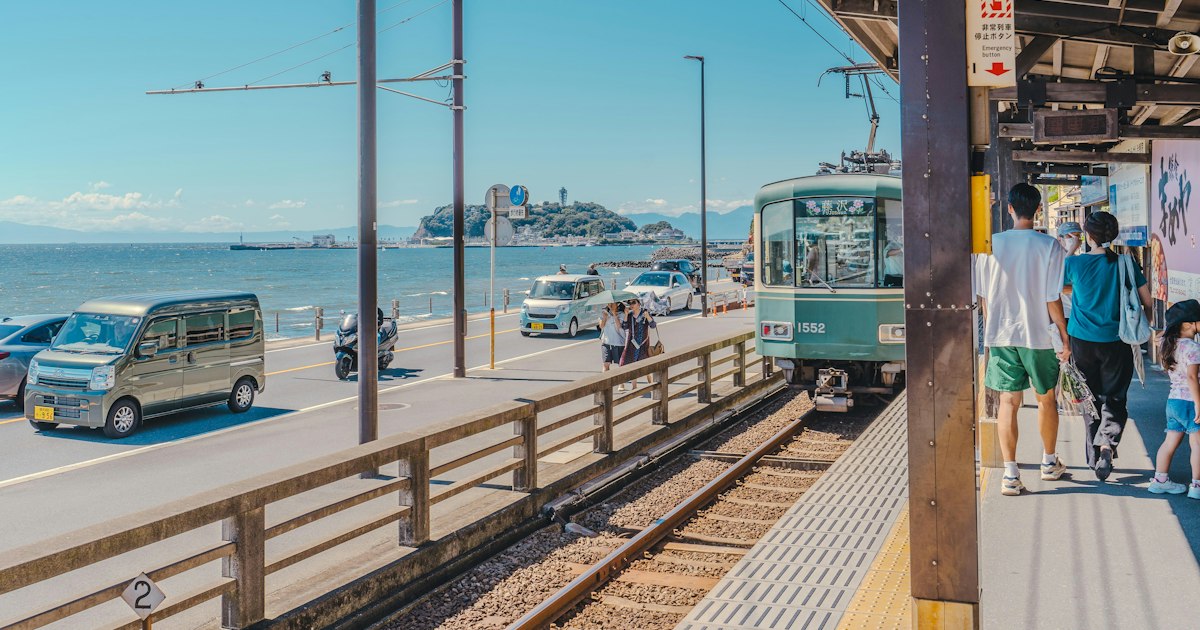
The Enoshima Electric Railway — almost everyone just calls it the Enoden — is a 10-kilometer tram-like train line that threads through back gardens, runs down the middle of a public road, and skirts right along the Shonan coast between Kamakura and Fujisawa. It’s one of the oldest electric railways in Japan, opened in 1902, and riding the full line takes about 34 minutes, which tells you everything about its pace: slow, local, and scenic rather than efficient. If you’re spending a day in Kamakura, the Enoden isn’t just transport to the next temple — it’s a big part of the reason to come.
What Makes the Enoden Worth Riding
For most of its length, the Enoden runs on a single track, with passing loops built into certain stations so trains going opposite directions can cross. That single-track design is why the line feels so intimate: the two-car trains squeeze between houses close enough that you could almost touch a laundry line from the window, then suddenly open up onto the Pacific. The most photographed stretch is the short hop around Kamakurakokomae Station, where the train runs along an open seafront with Enoshima island and, on a clear winter day, Mount Fuji visible across the water. Another well-known section is near Koshigoe, where the tracks run directly in the road lane alongside cars, making it one of the few Japanese railways that functions almost like a street tram.
Getting to the Enoden
The southern terminus is Kamakura Station, reachable in about an hour from central Tokyo on the JR Yokosuka Line (direct from Tokyo, Shimbashi, or Yokohama stations) or via the JR Shonan-Shinjuku Line from Shinjuku/Shibuya. The northern terminus is Fujisawa Station, which connects to the Odakyu Line (useful if you’re coming from Shinjuku) and the JR Tokaido Line. Most visitors start in Kamakura, sightsee their way down the line by temple, and end at Enoshima or Fujisawa, rather than riding it end to end in one go.
Fares and Passes
Enoden fares are distance-based, running roughly ¥200 for a short hop up to around ¥310 for the full line between Kamakura and Fujisawa (half-price for children). You can pay with cash, IC cards like Suica or Pasmo, or buy paper tickets at station machines — note that some of the smaller stations have only a single ticket window or machine, so during peak hours queues form fast.
If you plan to hop on and off more than two or three times, the one-day Enoshima-Kamakura Freepass (sold as an IC-linked pass, around ¥800 for adults) covers unlimited Enoden rides for the day and pays for itself quickly. Odakyu also sells a combined pass from Shinjuku that bundles the round-trip Odakyu fare to Fujisawa with unlimited Enoden rides — convenient if you’re starting from west Tokyo, though prices and conditions change periodically, so check current rates before you go.
The Best Stops Along the Line
- Hase — closest stop to Kotoku-in (the Great Buddha) and Hase-dera temple, both an easy walk from the station.
- Gokurakuji — the line passes through a short tunnel here framed by cherry trees in late March/early April; the platform itself is a popular photo stop.
- Kamakurakokomae — the ocean-view crossing made famous by the anime Slam Dunk, with Enoshima and (on clear days) Fuji visible from the platform and the pedestrian crossing beside it.
- Enoshima — the jumping-off point for Enoshima island, its shrine complex, observation tower, and seafood restaurants along the approach road.
- Fujisawa — the northern end, where you transfer back to JR or Odakyu lines.
Best Time and Timing Tips
Hydrangea (ajisai) season in June is the Enoden’s single busiest period, especially around Gokurakuji and Hase, and it overlaps with Japan’s rainy season (tsuyu) — pack more than a flimsy convenience-store umbrella, since you’ll likely be standing on exposed platforms; a sturdier clear vinyl umbrella is worth picking up locally if rain catches you off guard. Cherry blossom season (late March–early April) and clear winter days (December–February, for Fuji visibility from Kamakurakokomae) are the other peak windows. Weekday mornings before 10am are noticeably calmer than weekend afternoons, when trains can run standing-room-only and some platforms limit entry during the worst crowding.
Common Mistakes to Avoid
Don’t treat the Enoden as a fast way to get anywhere — it’s genuinely slow, and trying to cram it into a tight schedule between other Tokyo plans usually backfires. Don’t linger on the road crossing near Kamakurakokomae Station to recreate anime photos; it’s a real level crossing used by cars and a working train, and local authorities have had to intervene repeatedly because of tourists blocking it. Don’t assume every station has an IC card gate or large ticket machine — some are tiny unstaffed platforms, so keep small bills or a charged IC card on hand. And don’t skip the window seat: the views are the entire point, so if the first car you board is packed, it’s worth waiting for the next one.
Where to Stay Nearby
Budget travelers can day-trip from Tokyo and skip lodging entirely, but staying overnight lets you catch the coast at sunrise or sunset when the trains and crowds thin out. For a mid-range option with local character, a family-run minshuku in Kamakura or near Enoshima often costs less than a business hotel and comes with home-cooked breakfast. For a splurge, several hotels directly on the Shonan coast near Enoshima offer sea-view rooms. If you want to extend the trip beyond what the Enoden covers, the Shonan coast is also a popular stretch for renting a scooter and riding further along the coastal road toward Hakone or the Izu Peninsula.
The Enoden won’t save you time, and it isn’t trying to. It’s a 120-year-old seaside tram doing exactly what it’s always done, and for a few hours of your Japan trip, that’s the whole appeal.