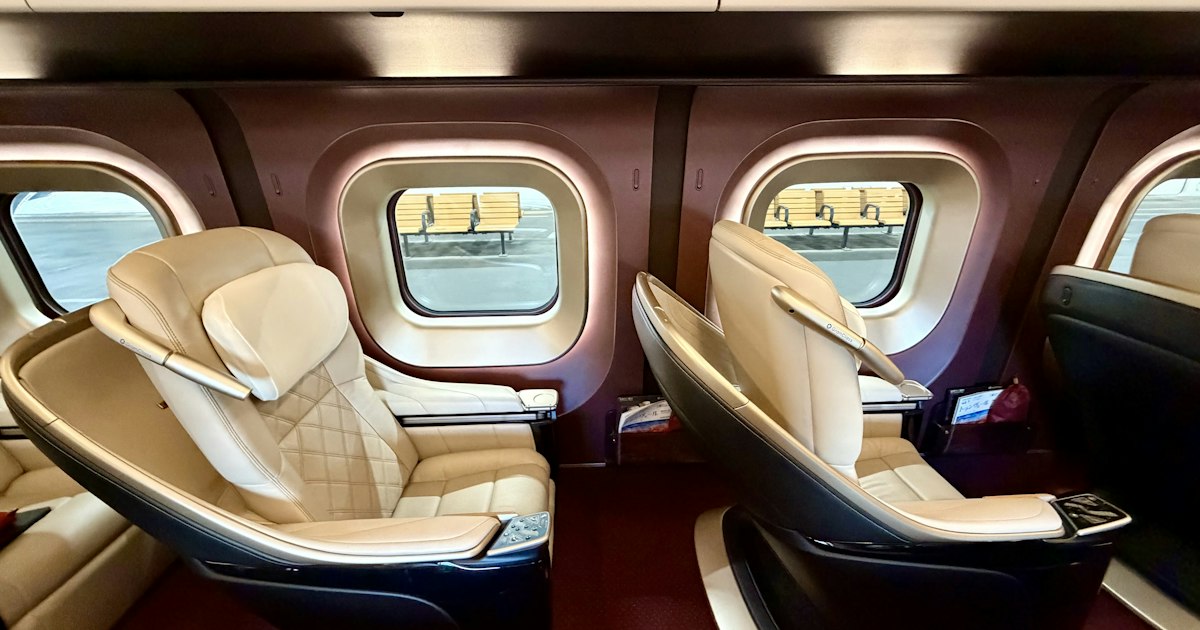
Photo by John Cameron on Unsplash
A decade ago, the trolley girl pushing a cart of coffee, beer, and ice cream down the aisle was one of the small rituals of riding the Shinkansen. That ritual is mostly gone now. Japan’s bullet train operators have spent the last few years replacing in-car sales staff with QR-code ordering systems, and on many routes they’ve eliminated food service altogether. If you’re planning a long Shinkansen leg and assuming you can just buy lunch once you’re aboard, you need an updated plan — because on a growing number of trains, you can’t.
Why the cart lady disappeared
JR Central, JR East, and JR West have all cited the same reasons for cutting trolley service: a shrinking labor pool willing to work the physically demanding job of pushing a heavy cart through swaying train cars for hours, and declining sales as more passengers pre-buy food at the station. JR Central ended trolley sales on all Tokaido Shinkansen trains (the Tokyo–Osaka line) in October 2023, replacing it with a tablet/QR ordering system in the Gran Class and Green Car coaches only. Ordinary-car passengers on the Tokaido line now get no in-seat food service at all. JR East and JR West have trimmed cart service on several Tohoku, Joetsu, and Sanyo/Kyushu routes too, though coverage varies train by train and is still being adjusted, so don’t assume last year’s experience holds for your trip.
How the QR/tablet ordering system works (where it exists)
On trains that still offer in-seat ordering — currently this means Green Car and Gran Class seats on the Tokaido Shinkansen’s N700S trains, plus some Green Car seats on JR East’s Tohoku/Hokuriku services — there’s a QR code printed on a card in the seat-back pocket or on the tray table. Scanning it opens a mobile ordering page (available in English) listing coffee, tea, beer, snacks, and a small selection of bento boxes. You order and pay by credit card through the page, and a staff member brings the item to your seat, usually within 10-15 minutes. Ordering generally closes about 30 minutes before the train reaches its final stop, and there’s often a cutoff window right after departure while the crew sets up, so don’t expect instant service in the first few minutes aboard. Menu and prices are modest — canned beer around ¥350-500, coffee around ¥300-400, simple sandwiches or snack boxes in the ¥500-900 range — and selection is deliberately limited compared to what you’d find on the platform.
Where cart service still survives
A physical trolley with a staff member is now the exception rather than the rule. As of 2026, you’re most likely to still see it on some Kyushu Shinkansen services and on certain JR West Sanyo Shinkansen runs, plus occasional seasonal or tourist-oriented trains. Even where it exists, don’t count on a full pass through every car — crews sometimes cover ordinary cars less frequently than Green Car, and a sold-out item (especially the better bento boxes or ice cream) simply doesn’t get restocked mid-journey. If you’re in an ordinary (non-Green) car on the Tokaido Shinkansen specifically, assume there is zero in-seat food service and plan accordingly.
What to do instead: buy before you board
The realistic strategy now is to treat the Shinkansen the way you’d treat a long flight — bring your own food. Every major Shinkansen station has extensive options inside the ticket gates and in the surrounding concourse:
- Ekiben (station bento):
- Convenience stores: A Newdays, 7-Eleven, or Lawson is almost always inside or right next to the gates. Onigiri (¥130-180), sandwiches, and the increasingly famous katsu sando (around ¥400-600) travel well and don’t need reheating.
- Station restaurants: If you have 20-30 minutes before departure, many stations have casual chains serving things like hambagu that you can eat quickly before boarding rather than carrying it on.
Shops inside the gates sell elaborate boxed meals specific to the region, often tied to local specialties. If you want a sit-down-worthy meal rather than a snack, this is the best use of your pre-boarding time — see our guide to kamameshi clay-pot rice ekiben and the stations famous for it for specific stalls worth seeking out, including at Tokyo, Yokokawa, and Nagano stations.
Buy drinks before boarding too. Vending machines exist in the space between cars on most Shinkansen sets, stocked with canned coffee, tea, and water (¥130-160), but they’re easy to miss if you’re not looking and some cars don’t have one nearby.
Common mistakes to avoid
The biggest mistake is assuming you’ll “just grab something on the train” the way you might remember from a previous trip — service levels have changed fast enough that even recent online reviews can be out of date. Second: don’t cut your station transfer time too close if you’re hoping to buy an ekiben, since the better stalls near Tokyo Station’s Shinkansen gates can have short queues at lunchtime rush (roughly 11:30am-1pm). Third, if you do board a Green Car with QR ordering, scan early — items sell out, especially the bento boxes, and the window for ordering closes well before arrival, not right up to the final stop. Finally, remember eating at your seat is completely normal and expected on the Shinkansen (unlike some other trains in Japan), so there’s no etiquette reason to hold off — the only constraint now is what you managed to bring with you.
Timing it around your journey
For trips of 2 hours or less — Tokyo to Nagoya, or Tokyo to Sendai, for instance — a convenience store snack is plenty. For longer hauls like Tokyo to Hakata (about 5 hours) or Tokyo to Shin-Osaka during peak holiday travel (New Year, Golden Week in early May, or mid-August Obon), buy a proper ekiben and a couple of drinks, since crowded departures mean less chance of flagging anyone down even where limited service exists. If your itinerary includes a stop in a food-forward city before a long Shinkansen leg, it’s worth timing lunch there rather than relying on the train at all.
The bottom line: the Shinkansen itself is no longer a reliable place to source your meal. Treat the station concourse as the restaurant, and the train as simply where you eat it.