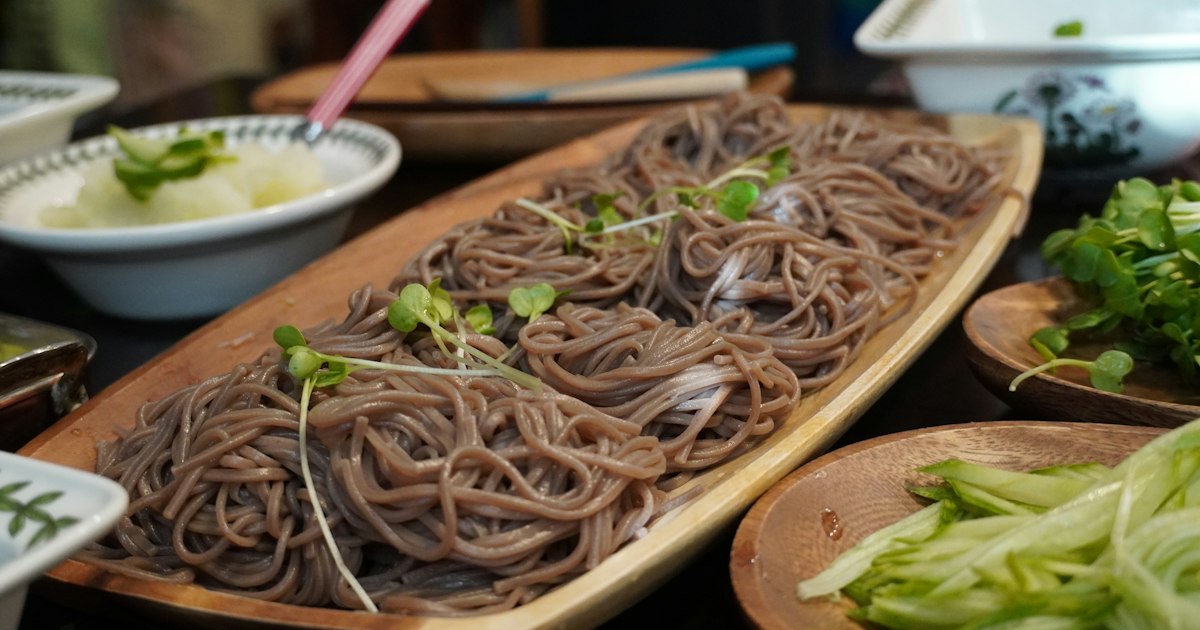
Photo by Donghun Shin on Unsplash
Walk past almost any ramen shop or neighborhood diner in Japan between May and September and you’ll spot a cloth banner reading “冷やし中華はじめました” (hiyashi chuka hajimemashita) — “we’ve started serving hiyashi chuka.” It’s one of the clearest seasonal signals in Japanese food culture, and for visitors sweating through a humid Tokyo or Osaka afternoon, it’s one of the most satisfying things you can order. Here’s what the dish actually is, where it comes from, and how to find a good bowl without overpaying or ordering the wrong thing by accident.
What Exactly Is Hiyashi Chuka?
Hiyashi chuka is chilled Chinese-style wheat noodles, tossed or chilled after boiling, then arranged under a tangle of thinly julienned toppings — usually a sheet of egg cooked into thin strips (kinshi tamago), ham or roast pork, cucumber, tomato wedges, and often imitation crab stick (kani kama) or bean sprouts. A small dollop of hot mustard (karashi) sits on the side, meant to be mixed in gradually rather than all at once. The whole thing is doused in a cold sauce — most commonly a sweet-tart soy-vinegar blend, though sesame-based and miso-based versions show up depending on the shop and region.
It’s not the same as hiyamugi or zaru soba — those are thinner wheat or buckwheat noodles served plain with a dipping sauce. Hiyashi chuka noodles are the same yellow, slightly chewy noodles used in regular ramen, just served cold with the sauce poured directly over the top rather than used as a dip.
A Contested Origin Story
Like a lot of beloved Japanese dishes, nobody fully agrees on who invented it. Two cities claim the title. In Sendai, a restaurant called Ryutei says it created the dish in 1937, arranging toppings in a deliberately colorful five-section pattern that’s still associated with “Sendai-style” hiyashi chuka today. In Tokyo’s Kanda neighborhood, the long-running Chinese restaurant Kikusui claims an even earlier version from around 1933. Both cities still serve their version proudly, and neither is likely to concede the point — which is part of the fun if you’re food-touring either city.
When to Order It — and When Not To
This is a strictly seasonal dish. Shops typically start serving it in late April or May, once daytime temperatures climb, and pull it from the menu by late September or early October. Outside that window, don’t expect to find it — asking for hiyashi chuka in January will usually just get you a polite “sorry, not right now.” If you’re traveling in summer, especially July and August when humidity makes hot ramen unappealing, this is exactly the dish to look for. Lunch is the classic time to eat it; most shops serving it keep lunch hours roughly 11:00–14:30 and reopen for dinner around 17:00–21:00, with the noodle itself available throughout service during the season.
What You’ll Pay and Where to Find It
Hiyashi chuka is refreshingly cheap for how satisfying it is:
- Budget (¥500–700): Convenience stores (7-Eleven, Lawson, FamilyMart) and supermarkets sell pre-packaged versions in the chilled noodle section every summer, sauce packet included. It’s not restaurant-quality, but it’s a legitimate, tasty option if you’re eating on the move — the same aisle where you’ll find the chilled sandwiches covered in our katsu sando guide.
- Mid-range (¥800–1,200): This is the sweet spot — your average neighborhood ramen-ya or Chinese diner (machi chuka). Expect a generous plate with egg, ham, cucumber, and tomato, soy-vinegar sauce, and usually a side of gyoza if you want to add one for another ¥400–500.
- Splurge (¥1,500–2,500+): Department store basement food halls (depachika) and higher-end Chinese restaurants dress the dish up with crab meat, shrimp, char siu pork, and sometimes a vinegar-sesame sauce with a richer, nuttier flavor. Worth it once per trip if you want the “deluxe” version.
You don’t need a reservation or Japanese menu-reading skill — most shops post a laminated photo menu, and the dish’s name is usually written clearly enough to point at even if you can’t read the kanji.
Regional Styles Worth Knowing
If you’re traveling between cities, the sauce and presentation genuinely change. Tokyo and the Kanto region generally lean toward a lighter, tangier soy-vinegar sauce. Sendai-style keeps the five-color topping arrangement and a slightly sweeter dressing. Nagoya and parts of Kansai sometimes serve a sesame-based version that tastes closer to cold tantanmen. None of these are better or worse — they’re worth trying side by side if your itinerary covers more than one region, the same way it’s worth comparing regional takes on hambagu or other yoshoku dishes as you move around the country.
Common Mistakes Visitors Make
- Dumping in all the mustard at once. The karashi blob on the side is meant to be mixed in gradually, to taste — a full dollop stirred into the whole bowl can overwhelm the dish.
- Expecting it outside summer. Menus rotate it out completely once the weather cools, so don’t plan a trip around it for a spring or winter visit.
- Confusing it with zaru soba or hiyashi udon. If you specifically want the Chinese-style egg-noodle version with toppings piled on top, say “hiyashi chuka” — soba and udon shops serve a different cold noodle experience entirely, dipping-sauce style.
- Ordering it cold on a genuinely chilly or rainy day expecting it to be filling enough. It’s a light lunch dish; if you want something heartier, pair it with gyoza or a side of fried rice.
Pairing It Like a Local
Hiyashi chuka shows up constantly at casual lunch spots and is also a staple on the summer menu at retro Tokyo drinking spots. If you’re in Tokyo and want to turn lunch into an early evening of grazing, neighborhoods built around old-school eating and drinking culture — like the ones covered in our Ebisu beer-hall guide — often have diners serving it alongside cold beer or a glass of Hoppy, the retro shochu-and-soda drink that pairs surprisingly well with vinegary summer food.
If you’re traveling by train and craving something cold on a hot platform transfer, note that chilled noodle dishes are much less common as ekiben than hot options — our guide to ordering food on the Shinkansen covers what’s actually available onboard, so you’ll know whether to grab your hiyashi chuka fix at the station before boarding instead.
The Bottom Line
Hiyashi chuka is cheap, fast, visually pretty, and exactly what your body wants during a Japanese summer. You don’t need to seek out a famous shop to get a good one — the neighborhood place with the faded cloth banner outside is usually all you need. Just go between May and September, point at the photo menu, and go easy on the mustard.