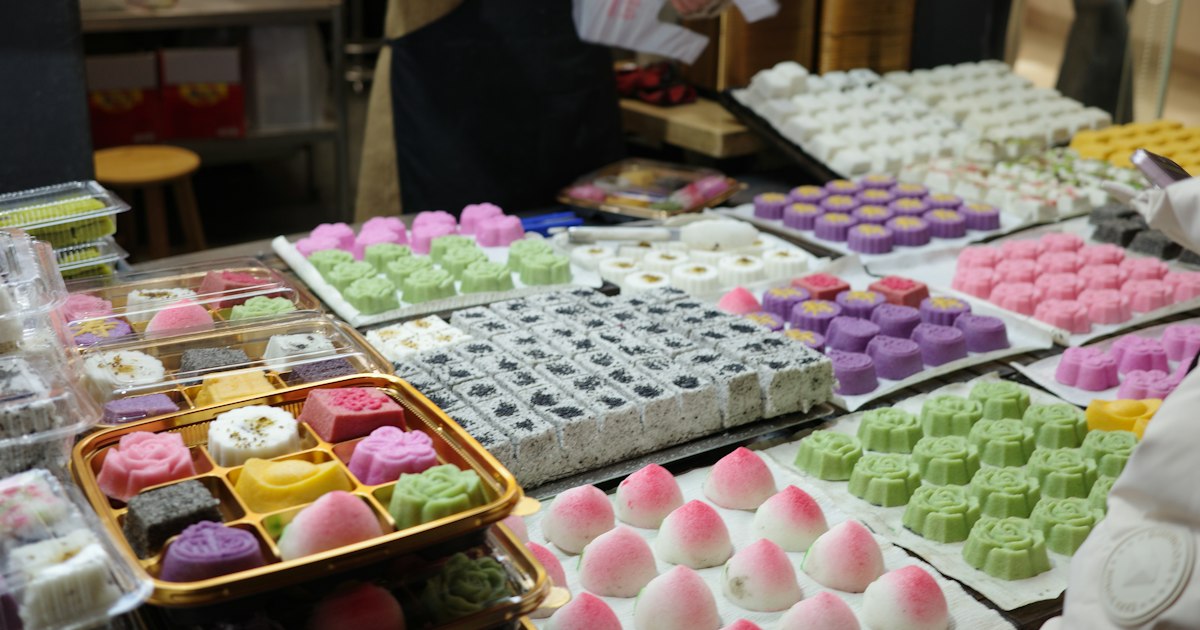
If you’ve scrolled past a photo of a pale pink mochi ball sliced open to reveal a whole strawberry nestled in red bean paste, you’ve seen ichigo daifuku — and once you’re in Japan, you’ll find it everywhere from convenience store shelves to centuries-old wagashi shops. It’s one of the easiest, cheapest, and most photogenic snacks a visitor can pick up, but timing and where you buy it matter a lot. Here’s how to find the real thing, what to pay, and how to eat it without a mochi mishap.
What Daifuku and Ichigo Daifuku Actually Are
Daifuku (大福) is a small ball of pounded glutinous rice (mochi) wrapped around a sweet filling, almost always smooth red bean paste (anko). It’s one of Japan’s oldest and most common wagashi (traditional sweets), sold year-round in every supermarket and convenience store. Ichigo daifuku (いちご大福) is the strawberry version: a whole fresh strawberry is tucked inside the anko before the mochi is wrapped around the whole thing, so each bite gives you soft rice cake, sweet-but-not-cloying bean paste, and a burst of tart fruit. It’s believed to have become popular in Japanese sweet shops in the 1980s and has stayed a seasonal favorite ever since. If you like the red-bean-and-rice-cake combination but want something closer to home-style and seasonal rather than fruit-based, the ohagi served around the equinox holidays, covered in our guide to Higan and ohagi, is a good comparison point.
Best Season and Timing
This is the detail most visitors miss: ichigo daifuku is a cold-weather item. Japanese strawberries are grown in greenhouses and peak from December through April, so shops and convenience stores roll out ichigo daifuku from around late December through Golden Week in early May, with the richest selection in February and March. By June it mostly disappears, replaced by other seasonal fruit daifuku (melon, peach) in summer. If strawberry mochi is a priority, plan a winter or spring trip — it overlaps nicely with cherry blossom season, and some shops even sell a “sakura” version with pink-tinted mochi during late March and early April. For a fruit-free, cherry-blossom-season alternative that’s available at the same time, see our piece on sakura mochi.
Budget Option: Convenience Stores and Supermarkets
The fastest and cheapest way to try ichigo daifuku is at any 7-Eleven, Lawson, or FamilyMart during the season. Expect to pay roughly ¥150–250 for a single piece, or ¥300–500 for a two- or three-pack, usually shelved in the chilled dessert section near the sandwiches. Quality varies by batch and the strawberry size can be hit or miss, but it’s a completely reasonable introduction and available at nearly any hour. Supermarkets such as Life, Seijo Ishii, and Aeon stock similar multipacks, often slightly cheaper than convenience stores, in the refrigerated wagashi aisle. Because mochi stiffens in the cold, buy it same-day if possible and let it sit at room temperature for 10–15 minutes before eating for the best texture.
Mid-Range and Splurge: Depachika and Specialty Wagashi Shops
For a noticeably better version, head to a depachika — the basement food hall of a department store. Isetan Shinjuku, Takashimaya, and Mitsukoshi Nihombashi all host counters from established wagashi makers selling fresh ichigo daifuku daily during the season, typically priced ¥300–600 per piece. These use larger, better strawberries and finer anko, and some stores let you choose white bean paste or a tofu-skin (“gyuhi”) mochi variation. It’s a nice stop if you’re already browsing the kind of specialty snacks you’d find near fashion-forward neighborhoods like the ones in our Shibuya 109 guide, since many department stores sit a short walk from major shopping districts.
Toshimaya in Sugamo: Tokyo’s Most Famous Daifuku Shop
If you want the classic, no-frills version done by people who’ve been doing it since 1781, go to Toshimaya on Jizo-dori shopping street in Sugamo, Tokyo — a neighborhood nicknamed “Grandma’s Harajuku” for its old-fashioned shopping street popular with older locals. Toshimaya is best known for its shio daifuku (salt-accented plain daifuku, around ¥160–180 each) rather than the strawberry version specifically, but during strawberry season it also sells ichigo daifuku, and lines form outside from the morning. The shop is roughly a 2-minute walk from Sugamo Station (JR Yamanote Line or Toei Mita Line), open approximately 8:30/9:00 AM to 6:00 PM, and is cash-only — bring coins, as pieces sell out by early afternoon on busy days. It’s a genuinely local experience rather than a tourist stop, and worth pairing with a stroll down the rest of Jizo-dori for other old-school snack shops.
Buying in Bulk
If you’re self-catering, staying somewhere with a kitchen, or just want to feed a group, Costco Japan sells large multipacks of daifuku and mochi (including seasonal strawberry versions) at a noticeably lower per-piece price than convenience stores — useful if you’re already planning a trip there for the bulk snacks and exclusive items covered in our Costco Japan guide. Just know that Costco’s mochi is usually frozen or has a longer shelf life than the fresh, same-day versions from a wagashi shop, so texture-wise it’s a different experience — great for convenience, not quite the same as the artisanal version.
How to Eat It (and Common Mistakes)
A few things trip up first-timers: mochi dries out and toughens quickly once refrigerated, so eat it within a few hours of purchase rather than saving it for the next day. Biting into it top-down rather than from the side can squeeze bean paste or strawberry juice out unexpectedly — hold it from underneath, in the paper or plastic cup it usually comes in, and bite from the side in two bites rather than one. If you’re buying for kids or elderly travelers, note that whole-strawberry daifuku is dense and slightly chewy, which has occasionally raised choking concerns in Japan, the same caution given around other mochi-based sweets like monaka and New Year’s rice cakes — cut it into smaller pieces for young children. Finally, don’t store it in a hot bag all day while sightseeing; the mochi softens and the strawberry can bruise, so buy it close to when you plan to eat it, ideally as a last stop before heading back to your hotel.