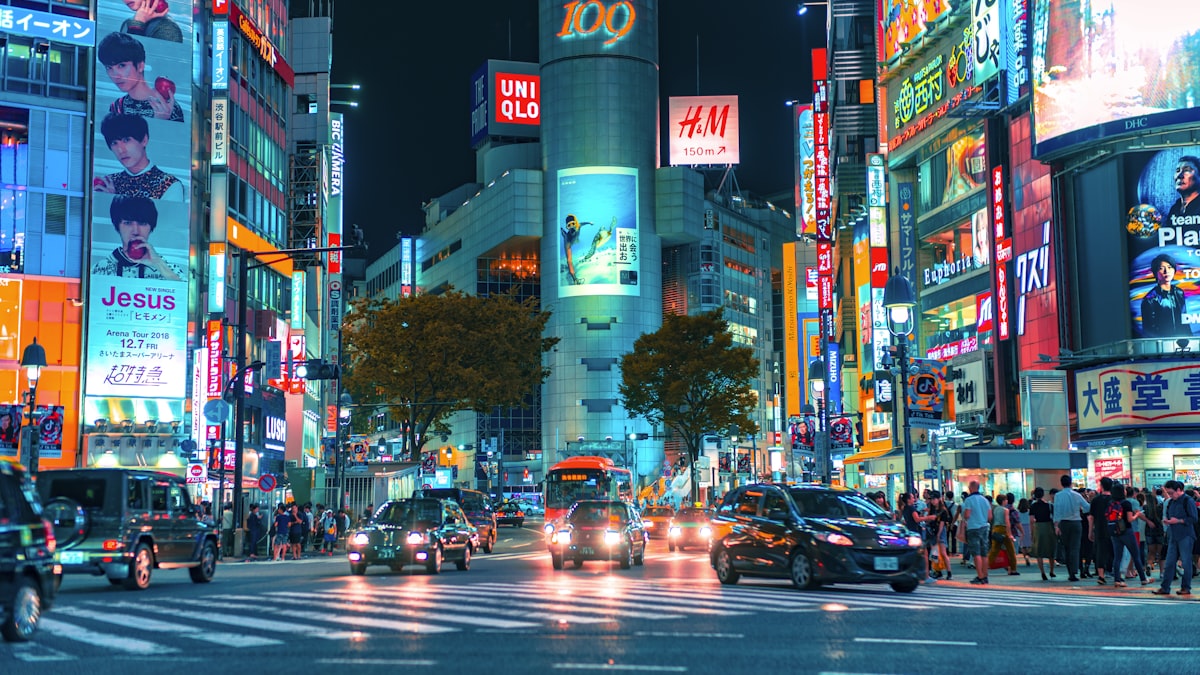
Shibuya is Tokyo at its most electric — the famous scramble crossing, neon, shopping, and nightlife. Here’s how to make the most of this must-visit district.
The essentials
- Shibuya Crossing — the world’s busiest pedestrian crossing; watch it from the Starbucks or a viewing deck.
- Hachiko statue — the famous loyal-dog meeting spot outside the station.
- Shibuya Sky — a stunning open-air rooftop observation deck (book ahead).
- Shibuya Scramble Square & Hikarie — shopping and city views.
Shopping
- Shibuya 109 — iconic youth-fashion tower.
- Don Quijote — souvenirs and everything else; see our Donki guide.
- Loft & department stores for lifestyle goods.
- Nearby Harajuku is a short walk for more shopping.
Food & nightlife
- Nonbei Yokocho — a tiny alley of atmospheric bars.
- Center Gai — packed with cheap eats and izakaya.
- Everything from ramen to izakaya; see must-try Japanese food.
Getting there & tips
- Shibuya Station is a major hub — grab an IC card; the station is famously complex, so allow time.
- The crossing and Shibuya Sky are best at dusk when the neon lights up.
- Combine with Harajuku and Yoyogi Park for a full day; see our Tokyo guide.
What things cost
- Shibuya Sky costs JPY 2,000-2,500 for adults (advance online tickets are usually a bit cheaper than same-day); sunset time slots sell out first and are worth booking days ahead.
- A meal at one of Center Gai’s casual chains runs JPY 800-1,500; Nonbei Yokocho’s tiny bars typically charge JPY 500-1,000 per drink with a modest table charge at some spots.
- Shibuya 109’s stock skews toward Japanese youth fashion brands not widely sold abroad, with prices generally in line with mid-range fast fashion (JPY 2,000-8,000 per item).
Common mistakes to avoid
- Trying to photograph the crossing from ground level during peak times — the crowd itself blocks most good shots; the Starbucks second floor or Shibuya Sky’s lower observation areas give a much better angle without fighting the crowd for space.
- Booking Shibuya Sky for a midday slot expecting the famous glowing city view — the sunset and post-sunset slots are dramatically more atmospheric than a daytime visit, and they cost the same.
- Assuming Shibuya 109 has plus-size or larger Western sizing widely available — sizing runs smaller than many Western brands; trying items on before buying is worthwhile rather than assuming based on your usual size.
Pairing with a Harajuku-Shibuya day
Shibuya connects directly to Harajuku via a 10-15 minute walk through the backstreets of Cat Street, making it easy to combine Meiji Shrine’s forest calm, Harajuku’s youth fashion, and Shibuya’s energy into one well-paced day that moves from quiet to loud rather than the reverse.
Late-night Shibuya
The area around the station stays lively well past midnight, with izakaya and ramen shops that keep serving into the early hours — a useful thing to know if your flight schedule or jet lag has you wide awake at 1am and hunting for a hot meal, which is a genuinely normal thing to do in this part of Tokyo.