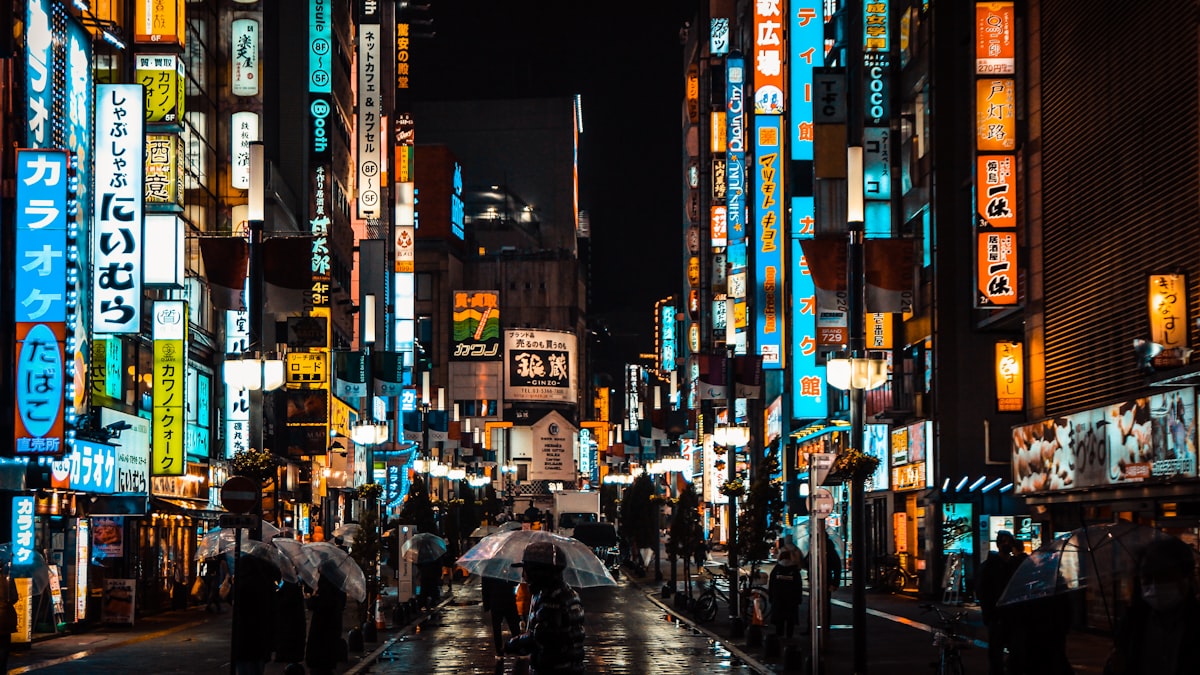
Shinjuku packs skyscrapers, neon nightlife, tranquil gardens, and the world’s busiest station into one district. It’s overwhelming and wonderful — here’s how to navigate it.
What to see & do
- Tokyo Metropolitan Government Building — free observation decks with panoramic city (and Fuji on clear days) views.
- Shinjuku Gyoen — a gorgeous large garden, stunning in cherry blossom season.
- Omoide Yokocho — “memory lane,” a nostalgic alley of tiny yakitori bars.
- Golden Gai — a warren of tiny themed bars (some have cover charges/regulars-only).
- Kabukicho — the famous nightlife/entertainment quarter (lively; stay aware at night).
Shopping
- Huge department stores and electronics giants (Yodobashi, Bic Camera) — see our electronics guide.
- Don Quijote and countless fashion floors; bring your passport for tax-free.
Navigating Shinjuku Station
It’s the world’s busiest station with dozens of exits — note your exit name (e.g., “South” or “East”) rather than just the line. Grab an IC card and allow extra time when transferring.
Tips
- The free government-building observatory is a great budget alternative to paid decks.
- Golden Gai is best late evening; some bars welcome tourists, others are locals-only — look for English-friendly signs.
- Combine with nearby Harajuku and Shibuya; see our Tokyo guide.
What things cost
- The Tokyo Metropolitan Government Building’s observation decks are free — one of the best value-for-money views in the entire city, rivaling paid decks that charge JPY 2,000-3,000 elsewhere.
- Omoide Yokocho yakitori skewers run JPY 150-350 each; a satisfying meal of several skewers and a drink runs JPY 2,000-3,000 per person in the tiny, atmospheric alley bars.
- Golden Gai bars often charge a cover fee (JPY 500-1,500) on top of drink prices — ask before sitting down if a bar doesn’t post pricing, since policies vary widely bar to bar.
Common mistakes to avoid
- Wandering into a Golden Gai bar without checking for tourist-friendly signage — some of the tiny bars are genuinely locals/regulars-only and may turn away walk-ins; those welcoming visitors usually post English menus or signs near the door.
- Losing track of which Shinjuku Station exit you need — with over 200 exits across the station complex, using a specific named exit (not just “Shinjuku Station”) in directions and maps saves real confusion.
- Visiting Kabukicho alone late at night without normal city caution — it’s generally safe but has more aggressive touting than most of Tokyo; politely declining and continuing to walk is the standard, effective response.
A one-day Shinjuku plan
Morning at the free observatory for clear-day Fuji views, a relaxed midday walk through Shinjuku Gyoen, an early evening browse of the electronics and department stores, dinner in Omoide Yokocho, and a late-evening bar or two in Golden Gai if that scene appeals — a full, varied day without leaving one district.
Shinjuku as a transit hub for day trips
Shinjuku Station is also the departure point for several popular day trips, including direct buses and trains to Kawaguchiko and Hakone — if your itinerary includes a Fuji-area excursion, basing your hotel near Shinjuku can simplify those early-morning departures considerably.