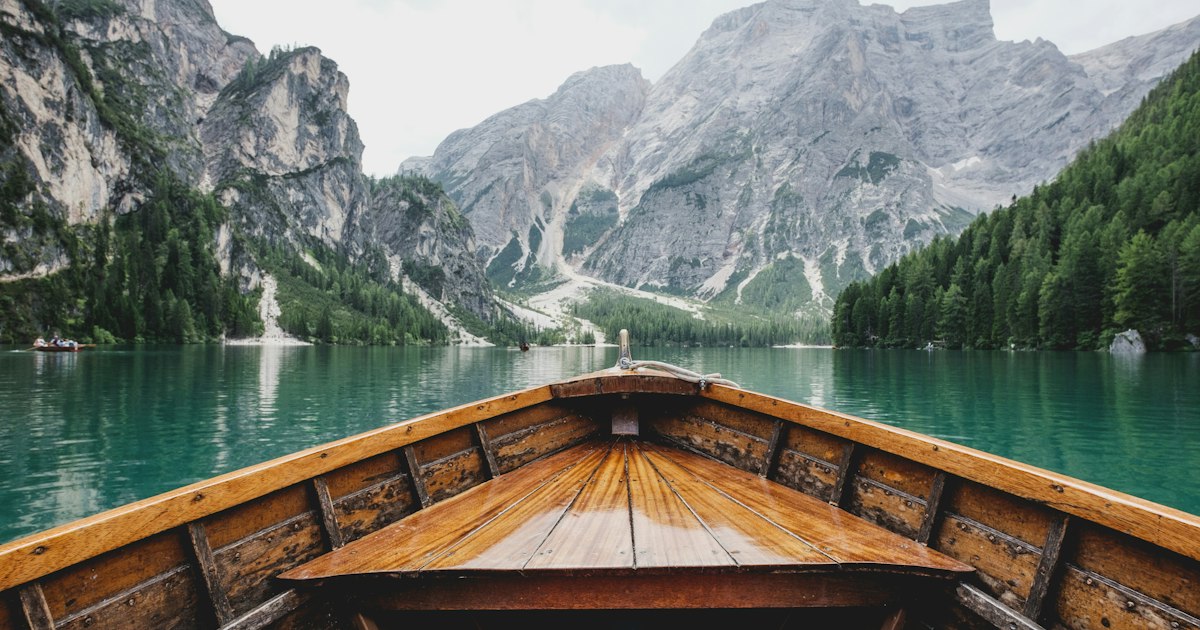
Photo by Luca Bravo on Unsplash
Japan’s trains are so good that most visitors never consider renting a vehicle, let alone a campervan. But the moment you want to chase a sunrise over a coastline, sleep near a hot spring with no town attached, or carry your own kitchen into rural Tohoku or Hokkaido, a campervan stops being a novelty and starts being the most efficient way to travel. The country has also built a nationwide support system for exactly this kind of trip — the michi-no-eki road station network — which makes campervan travel in Japan far more structured than “wild camping” implies. Here’s what the license rules actually require, what a rental costs, and how to use road stations the way Japanese RV travelers do.
Do You Need a Special License?
No special license class is needed for the campervans foreign tourists typically rent. Almost every rental campervan in Japan — whether it’s a compact kei-class camper or a converted Toyota Hiace or Nissan Caravan — has a gross vehicle weight under 3,500kg, which falls under Japan’s standard passenger vehicle license category (futsu). If your home license qualifies you to drive an ordinary car, it qualifies you for these vehicles too.
What you do need is paperwork. Visitors from most countries must carry an International Driving Permit (IDP) issued under the 1949 Geneva Convention, obtained in your home country before departure — Japan does not issue these on arrival, and rental counters will turn you away without one. A handful of countries (Germany, France, Switzerland, Belgium, Monaco, Taiwan) have a bilateral arrangement letting their citizens drive with an official Japanese translation of their home license instead of an IDP; everyone else needs the genuine IDP alongside their physical home license, since Japan checks both together. Confirm your IDP’s validity window — typically one year from issue — covers your whole trip.
Choosing Your Campervan: Size, Price, and What You Actually Get
Rental fleets split roughly into three tiers. Budget travelers look at kei-class campers — tiny, boxy vans built on a kei-car chassis, sleeping one or two people on a fold-flat bed with a portable stove but no fixed kitchen or toilet. These run around ¥15,000–20,000 per day and are easiest to park and drive on narrow rural roads, but headroom is tight and they’re not built for four adults.
Mid-range renters get a Hiace- or Caravan-based conversion: a proper bed for two to four, a small sink, a stovetop, sometimes a fridge, and enough height to stand and change clothes. Expect ¥25,000–40,000 per day depending on season and how new the fit-out is. This is the sweet spot for a week-long loop and the size most people picture when they imagine a Japanese campervan — it’s also the category covered in more detail in our companion guide to renting a camper van in Japan with a mobile kitchen and bed, which goes deeper on what’s actually inside these vehicles.
At the top end, larger motorhomes with a toilet, shower, and generator exist but are a minority of the rental fleet and run ¥45,000–70,000+ per day; they’re also harder to maneuver on mountain passes and in old town centers with narrow lanes, so most renters are better served sizing down and using road station or onsen facilities instead.
How Michi-no-Eki Road Stations Work (and Where You Can Sleep)
Michi-no-eki (“road stations”) are a nationwide network of over 1,200 government-registered rest stops, roughly one every 20–30km on major rural routes. Each has free 24-hour parking, free toilets, and usually a shop selling local produce and a simple restaurant — hours for the shop and restaurant are typically around 9:00–17:00, though the parking lot and toilets stay open all night.
Many campervan travelers park overnight at michi-no-eki, and it’s broadly tolerated as long as you’re quiet, don’t run a generator late at night, leave no trash, and move on by mid-morning before the shop opens for business. This is not the same as camping — there are no power hookups, no showers, and no official permission to “camp”; you’re simply resting in a parking lot, which Japanese law allows for driver fatigue. For an actual shower, use a local sento or onsen (typically ¥400–600 for a public bathhouse, more for an onsen), which doubles as the best way to feel human on a multi-day loop. Don’t confuse michi-no-eki with a dedicated RV park (called an “auto camp” or “RV park” in Japan) — those exist too, charge ¥2,000–4,000 a night, and do offer electricity and water hookups if you want them.
Planning a Route: Three Road Trips Worth the Rental
A campervan earns its cost on routes where trains thin out. A Hokuriku loop from Fukui works well: pick up near Fukui or Kanazawa, detour inland to the Fukui Prefectural Dinosaur Museum in Katsuyama, then cut east into Gifu’s mountains to the canal town of Gujo Hachiman — neither is a quick day trip by train, but they’re an easy two-hour drive apart with a michi-no-eki roughly every half hour along the way.
In Tohoku, a coastal loop from Akita up the Oga Peninsula to see the Namahage folklore sites is classic campervan territory — remote, scenic, and poorly served by train schedules that run a handful of times a day.
And in Hokkaido, which has the country’s highest density of RV travelers and dedicated RV parks, a loop around the coast or through Daisetsuzan is the single most popular campervan trip in Japan, with michi-no-eki spaced generously along even minor roads.
Costs to Budget Beyond the Daily Rate
The quoted daily rate rarely includes everything. Budget separately for: mandatory insurance (¥2,000–3,500/day, and strongly worth upgrading to the “zero deductible” tier); a one-way fee if you return the van to a different depot (often ¥10,000–30,000); fuel (campervans are thirsty — budget ¥15–18/km in gas); and highway tolls, which are not cheap in Japan and add up fast on long hauls — a Tokyo–Osaka run alone can run ¥10,000+ in tolls one way. Renting an ETC card from the counter (usually ¥300–500/day plus the tolls themselves charged to it) is far easier than fumbling cash at toll booths.
Common Mistakes First-Time Campervan Renters Make
- Trying to get an IDP after landing. It doesn’t exist here — apply through your home country’s automobile association weeks before departure.
- Treating michi-no-eki as a campsite with amenities. No showers, no power, no official camping status — just parking, toilets, and courtesy.
- Forgetting vehicle height. Campervans run 2.5–3m tall; some multi-story parking garages, drive-throughs, and older covered roads won’t clear that, so check clearance signs before pulling in.
- Booking a camper for winter in snow country without checking tires. Reputable rental companies fit winter tires seasonally in snowy regions, but confirm it at booking — don’t assume.
- Not booking early for Golden Week (late April–early May) or Obon (mid-August). Campervan fleets are small nationwide, and both michi-no-eki parking and rental vans fill up weeks in advance.
- Skipping the walkaround at pickup. Photograph every existing scratch and check that the gas stove, water tank, and fridge actually work before you drive off — rural depots have less slack for mid-trip fixes than city car rental counters.
Done right, a campervan trades the speed of the shinkansen for a kind of access no rail pass gives you: the ability to wake up parked beside a coastline or a mountain pass that doesn’t have a station name.