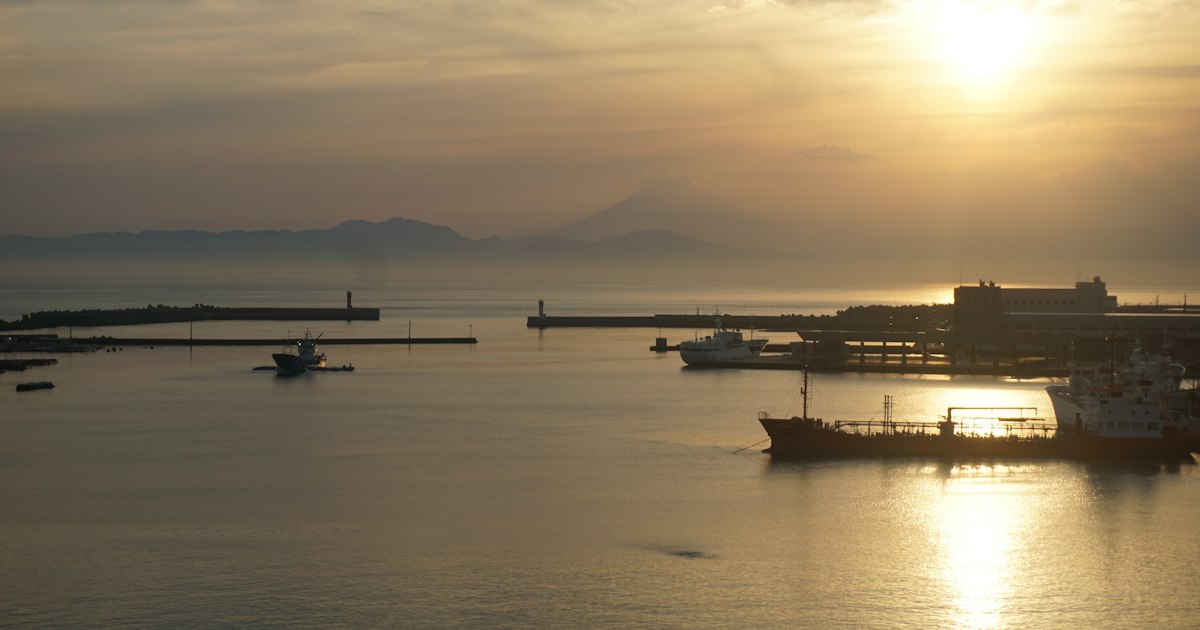
Photo by wanderplans.com on Unsplash
Most visitors to Hiroshima Prefecture split their time between the Peace Memorial Park and Miyajima’s floating torii, and never hear the name Tomonoura. That’s a shame, because this small fishing port on the Seto Inland Sea has barely changed since the Edo period — stone lanterns still mark the harbor, wooden merchant houses still lean over narrow lanes, and the tides still move fishing boats in and out of a 300-year-old stone quay. It’s also the town where Hayao Miyazaki holed up in 2005 while developing Ponyo, and the cliffside views and cluttered harbor geography show up, lightly disguised, throughout the film. Tomonoura rewards a half-day visit with almost none of the crowds you’ll fight at Japan’s bigger “preserved townscape” destinations.
Why Tomonoura, and why Ponyo fans care
Tomonoura sits at the mouth of the Seto Inland Sea, a body of water so tide-dependent that sailing ships historically had to wait here for favorable currents before continuing toward Osaka or Shimonoseki — which is exactly why the port grew rich and built the stone infrastructure you can still see today. Miyazaki reportedly stayed for roughly two months at a harborside guesthouse while sketching the town, its fishing boats, and its sea cliffs, and the setting fed directly into Ponyo on the Cliff by the Sea (2008). The studio never officially pinned every location to a real-world spot, so treat the connection as inspiration rather than a shot-by-shot map — but standing on the breakwater watching the tide pull at the boats, the resemblance is unmistakable.
How to get there
Tomonoura has no train station of its own — it’s a bus or car trip from JR Fukuyama Station, which sits on the Sanyo Shinkansen line (about 50 minutes from Osaka on a Sakura or Kodama, around 20–30 minutes from Hiroshima). From Fukuyama Station’s south side, catch a Tomotetsu bus bound for “Tomo-ko” (鞆港); the ride takes about 30 minutes and costs roughly ¥500–550 one-way, paid in cash or with an IC card as you exit. Buses run at least two or three times an hour on weekdays, less often on weekends, so check the posted timetable rather than assuming a quick turnaround. If you’re road-tripping the Seto Inland Sea coast — something increasingly popular with travelers who’ve looked into renting a campervan or RV in Japan — Tomonoura is an easy, parkable stop, though the old town’s lanes are narrow and some are closed to cars entirely, so use one of the pay lots near the port rather than trying to drive in.
What to see in the old town
Tomonoura rewards slow walking more than a checklist, but a few sites anchor a visit:
- Jōyatō stone lantern — an 1859 stone lighthouse standing right at the harbor’s edge, one of the oldest and tallest surviving Edo-period stone lanterns in Japan and the single most photographed spot in town.
- Taichōrō at Fukuzenji Temple — a wooden guest hall whose open veranda frames a view over the harbor and islands that a Joseon-dynasty Korean envoy once called the most beautiful scenery in Japan. Entry is a small fee (around ¥200), and the view alone justifies the climb up from the port.
- Tomo Castle ruins and the local history museum — on the hill above the harbor, with a small folk-history museum inside; modest admission, closed on Mondays.
- Ōta Residence — a former sake brewer’s merchant house, now a small museum you can walk through to see how a wealthy Edo-period trading family actually lived.
Sensuijima: the island just offshore
A tiny passenger ferry crosses from Tomonoura port to Sensuijima island in about five minutes, running frequently and cheaply (a few hundred yen round trip). The island has swimming beaches on its far side in summer and a quiet hiking path up to Senkōji temple, where a wooden observation deck looks back over the port and out across the Inland Sea — arguably the best sunset viewpoint in the area. If you’ve enjoyed watching Japan’s coastline from the water on something like the Osaka Suijo Bus, this short hop has the same appeal at a fraction of the scale and cost.
What to buy: Homeishu and local sake
Tomonoura’s signature product is homeishu, a sweet, mildly medicinal herbal liqueur that’s been brewed here since the 1600s using a shochu base infused with more than a dozen botanicals. Several old shopfronts along the harbor street sell it in small tasting cups before you buy, with bottles typically running ¥1,000–2,000 depending on size. It travels well in checked luggage (it’s a liqueur, not a tincture, so no special declaration is needed) and makes a more distinctive souvenir than another box of standard-issue omiyage sweets.
Best time to visit and common mistakes
Spring (cherry blossoms along the waterfront, mild temperatures) and early autumn are the most comfortable seasons; midsummer is hot and humid with little shade in the old town, though it’s also when Sensuijima’s beaches are worth the trip. Tomonoura hosts a Gion-style summer festival in late July with floating lanterns and fireworks over the harbor — a good reason to visit if your dates line up, but expect the last buses back to Fukuyama to be packed.
The most common mistake is treating Tomonoura as a quick photo stop on the way to somewhere else. Buses back to Fukuyama Station thin out in the early evening, and missing one means a long wait or an expensive taxi, so check the return timetable before you wander off toward Sensuijima or up to Taichōrō. The second mistake is skipping food: there’s no convenience store cluster here, so eat at one of the small harborside restaurants serving fresh Seto Inland Sea seafood (a set lunch runs roughly ¥1,200–2,000) rather than hoping to grab something later. Finally, don’t expect English signage at the level of Kyoto or Tokyo — a translation app helps, and shop owners selling homeishu are generally happy to explain the product with gestures and a tasting cup even without shared language.
Pairing it with the rest of your trip
Tomonoura works well as a half-day add-on if you’re already routing through Hiroshima or Okayama. Travelers continuing on to Okayama sometimes combine it with Kojima Jeans Street for a denim-shopping detour, since both are reachable from the same stretch of the San’yō rail corridor. If sleepy, preserved townscapes are your thing, it’s also worth comparing Tomonoura’s seaside version of old Japan with inland examples like Chiran’s samurai garden town in Kagoshima — different region, different history, but the same reward for travelers willing to go a little out of their way.