Photo by Yeh Xintong on Unsplash
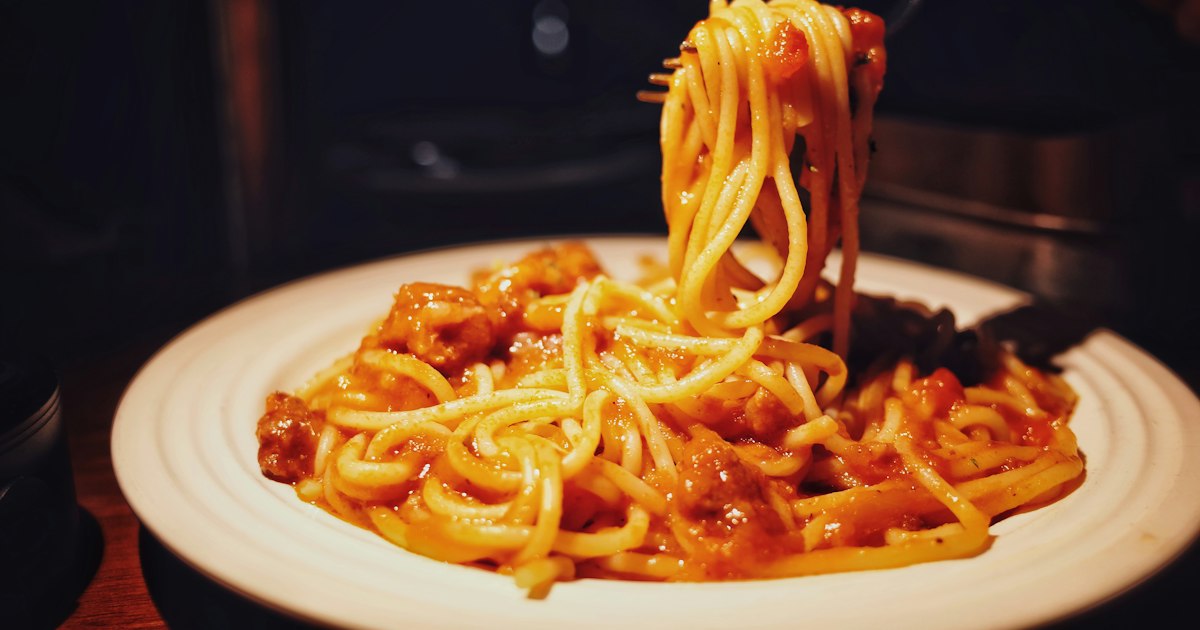
If an Italian menu in Japan has a dish called “napolitan,” don’t expect anything from Naples. It’s spaghetti tossed in a thick ketchup sauce with sausage, onion, green pepper, and sometimes mushroom, usually topped with a dusting of parmesan and a shake of Tabasco at the table. It’s one of the most purely Japanese dishes you can order precisely because it was invented to taste foreign — and these days it’s harder to find than it used to be, which makes tracking it down at an old-school kissaten (Japanese-style coffeehouse) a genuinely worthwhile detour.
What Napolitan Actually Is
Napolitan is softer, slightly overcooked spaghetti pan-fried with butter or oil, ketchup, sliced hot dog or sausage, onion, and green bell pepper. There’s no tomato, basil, or olive oil in sight — the sauce is ketchup reduced on the pan until it clings to the noodles and caramelizes slightly at the edges, giving it a sweet-tangy, faintly smoky flavor that’s closer to a diner’s fried rice than to Italian pasta. Most kissaten serve it with a side of coleslaw or a small salad, a wedge of lemon, and a bottle of Tabasco on the table so you can spike it yourself.
Expect to pay 700–1,100 yen at an old kissaten, versus 1,000–1,600 yen at a dedicated spaghetti specialist or hotel coffee lounge that plates it more elaborately (some wrap the whole thing in a thin omelet, called “omu-napolitan”). A few department store basement restaurants and Yokohama hotel grills push it to 1,800–2,200 yen for a version with extra shrimp or a fried egg on top.
Where the Dish Actually Came From
The most-cited origin story is Hotel New Grand in Yokohama, where a chef in the late 1940s is said to have improvised a ketchup-based pasta for Allied occupation forces who wanted something like spaghetti but couldn’t get fresh tomatoes reliably. Around the same era, Kabuto brand ketchup spaghetti mixes and American-style diner food were spreading through Japan’s postwar coffeehouse culture, and napolitan became a fixture of the kissaten “lunch set” alongside pilaf and curry rice. It’s not Neapolitan at all — the name is a loose, almost decorative gesture at “something Italian-sounding,” the same impulse that gave Japan “Vienna coffee” and “German potato.” If you’re curious about that kissaten world more broadly, the morning-service culture around Nagoya’s ogura toast comes from the same lineage of showa-era coffeehouses serving comfort food built around imported staples.
Where to Actually Eat It
Yokohama is the pilgrimage site. Hotel New Grand (2 Yamashitacho, Naka-ku; a 7-minute walk from Nihon-odori Station on the Minato Mirai Line, or about 10 minutes from JR Kannai Station) still serves “Spaghetti Napolitan” in its coffee lounge, roughly 1,900–2,200 yen, as the dish’s most direct link to its origin story. It’s open daily, generally 11:00–21:00 for the café, though hotel restaurant hours shift seasonally, so it’s worth checking same-day.
Tokyo has several long-running kissaten worth seeking out: Ginza’s older coffeehouses and the Jimbocho/Kanda area (a book and curry district also worth a stop — see BookOff’s secondhand media hunting if you’re browsing nearby) have multiple shops serving napolitan for 800–1,200 yen. Many of these are small, cash-friendly, mom-and-pop operations with no English menu — pointing at a photo or saying “napolitan” works fine, since the name doesn’t change.
Osaka and Kobe department store basement (“depachika”) restaurant floors, especially older ones in Umeda and Sannomiya, often keep a showa-style yoshoku (Western-influenced Japanese food) counter with napolitan on the menu for 900–1,300 yen, usually served alongside omurice and hayashi rice.
Best Time to Go and How to Avoid Disappointment
Kissaten serving napolitan are overwhelmingly a lunchtime phenomenon — most run a set lunch from around 11:00 to 14:00, and many close by late afternoon or only reopen for a light evening coffee menu without the hot kitchen. Arriving right at opening or just after 11:30 avoids both the empty-kitchen risk of a late order and the short lunch-rush queue at well-known spots like Hotel New Grand’s lounge. Weekday lunch is far less crowded than weekends, when nostalgia-seeking Japanese diners and retro-cafe fans fill these small rooms fast — some seat fewer than 20 people total.
The biggest mistake visitors make is assuming “napolitan” means tomato-and-basil Italian pasta and sending it back as wrong — it isn’t a mistranslation, it’s the dish. The second mistake is skipping it because it sounds like a lesser version of real pasta; judged as its own genre (closer to American diner spaghetti or Japanese-style fried noodles) it’s genuinely satisfying, especially with a squeeze of lemon and a few shakes of Tabasco, which cuts the sweetness of the ketchup. Third: don’t expect it at modern Italian restaurants — younger chefs and upscale pasta bars have mostly dropped it, so you specifically need kissaten, yoshoku restaurants, old hotel grills, or Western-style diners (yoshokuya) rather than anywhere branding itself as authentic Italian.
Budget, Mid-Range, and Splurge Versions
For budget, a standalone napolitan plate at a neighborhood kissaten runs 700–1,000 yen and is often the cheapest hot lunch option in a given block, cheaper than most ramen. Mid-range, a napolitan lunch set with coffee, salad, and sometimes dessert at a kissaten or yoshoku restaurant runs 1,100–1,600 yen and is the most common way it’s actually served. For a splurge, seek out the omu-napolitan version wrapped in a thin fried egg, or Hotel New Grand’s historically-rooted plate, both landing around 1,800–2,400 yen — not expensive by Western standards, but a clear step up from the everyday version.
Getting There and Practical Notes
None of these spots require reservations for a single diner or small group at lunch; most kissaten are first-come, counter-and-table seating. Cash is still common at older, smaller shops even though card and IC-card payment (Suica/Pasmo) has spread to most hotel restaurants and chain yoshoku spots. If you’re building a Yokohama day around the Hotel New Grand visit, it pairs easily with a walk through Yamashita Park and Chinatown, both within 10–15 minutes on foot, making lunch there a natural midday stop rather than a dedicated trip.
Napolitan won’t appear on any “best of Japanese cuisine” list, and that’s exactly the point — it’s a window into postwar Japan’s hungry, improvisational relationship with Western food, served today mostly by aging kissaten owners keeping a very specific memory alive one ketchup-stained pan at a time.