Photo by Louis Hansel on Unsplash
If you’ve wandered through a Japanese supermarket snack aisle and seen bags of thin, glossy, caramel-colored sticks that look a bit like fried matchsticks, you’ve met imo kenpi (芋けんぴ). It’s deep-fried sweet potato coated in a thin sugar glaze, and while you can find mass-market versions almost anywhere in Japan, the real heartland of the snack is Kochi Prefecture on the island of Shikoku. This guide covers what imo kenpi actually is, where to buy the good stuff in Kochi, how to track it down if your trip doesn’t take you that far south, and the mistakes first-time buyers tend to make.
What Exactly Is Imo Kenpi?
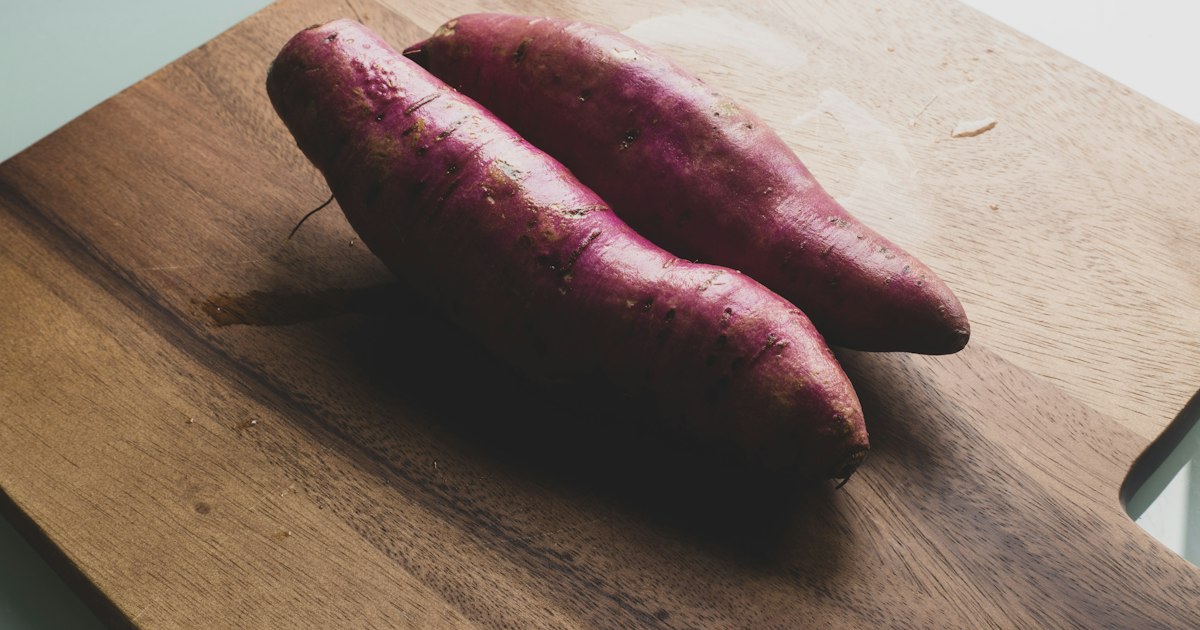
Imo kenpi is made by cutting sweet potato into thin batons (the shape that gives it the “kenpi” name, which refers to a stick-shaped confection), deep-frying them until crisp, and then tossing them in hot sugar syrup that hardens into a thin, crackly glaze as it cools. Some shops use kintoki-style reddish sweet potatoes for a deeper flavor and color; others go lighter and starchier. A small amount of salt is sometimes added to the glaze to cut the sweetness, and you’ll increasingly see variations with black sugar (kokuto), honey, matcha, or purple sweet potato.
Texture is the whole point. Done well, imo kenpi should shatter with a clean snap rather than go soft or chewy — that’s the main quality marker to look for when you’re choosing between brands.
Why Kochi?
Kochi has grown sweet potatoes on its volcanic, well-drained soil for generations, and imo kenpi developed here as a way to use surplus potato harvests in a form that keeps for weeks without refrigeration. Today Kochi still produces more imo kenpi than any other prefecture, and the city has multiple shops dedicated entirely to it, some of which fry in-store so you can buy a bag that’s still warm.
Getting to Kochi takes a bit of effort: the JR Nanpu limited express connects Okayama to Kochi Station in roughly 2.5 hours, or you can fly directly into Kochi Ryoma Airport from Haneda (about 80 minutes) or Itami. If you’re already planning a slower route around Shikoku, it’s also a reasonable stop on a campervan road trip, since several michi-no-eki roadside stations along Shikoku’s coast stock local imo kenpi alongside other prefecture snacks.
Where to Buy Imo Kenpi in Kochi City
Hirome Market (ひろめ市場) — This indoor food hall near Kochi Castle is the easiest one-stop option. Most stalls run roughly 8:00 am to 11:00 pm (some close earlier on Sundays), and alongside bowls of katsuo tataki you’ll find a few stands selling bagged imo kenpi and other local sweets, typically ¥400–¥700 for a standard 150–200g bag.
Imoya Kinjiro (芋屋金次郎) — The best-known dedicated imo kenpi specialty brand, with its roots and a flagship shop in Kochi. The appeal here is freshness: you can often watch potatoes being sliced and fried, and buy bags still warm from the fryer. Expect to pay somewhere in the ¥500–¥900 range for a standard bag, with gift boxes and multi-flavor sets running higher, often ¥1,000–¥2,500 depending on size.
Obiyamachi Arcade (帯屋町商店街) — Kochi’s main covered shopping street, a short walk from the castle, has several confectionery shops carrying local imo kenpi alongside other Tosa specialties. It’s a good spot to compare a few brands side by side before committing to a gift box.
Kochi Station and Kochi Ryoma Airport — Both have souvenir shops stocking imo kenpi in travel-friendly packaging, useful if you’re buying on your way out and don’t have time to seek out a specialty shop. Prices run slightly higher than in-town shops, typically ¥600–¥1,000 for a standard bag.
Buying Imo Kenpi Outside Kochi
You don’t have to go to Shikoku to find it. Imo kenpi is sold as an everyday snack in supermarkets and convenience stores across Japan, usually in the dried-goods or snack aisle, for roughly ¥200–¥400 a bag — it’s a common, unglamorous pantry item rather than a souvenir in most of the country. Don Quijote and larger Kaldi Coffee Farm branches often carry regional, Kochi-branded bags specifically, and these are a reasonable substitute if your itinerary doesn’t reach Shikoku. If you’re stocking up at a regular supermarket, note that most Japanese grocery stores expect you to bag your own purchases after paying — if that’s new to you, it’s worth a quick read of this guide to self-checkout and bagging in Japan before you’re standing at the register with an armful of snacks. Chains like Don Quijote also run their own point-card schemes, which are covered in this explainer on Japan’s store point card culture if you want to understand whether signing up is worth it for a short trip.
Price, Flavors, and What to Look For
As a rough budget guide: everyday supermarket bags run ¥200–¥400, Kochi specialty-shop standard bags run ¥500–¥900, and gift-boxed assortments or multi-flavor sets at a shop like Imoya Kinjiro run ¥1,000–¥2,500. There isn’t really a “splurge” tier beyond the gift boxes — this is fundamentally an inexpensive, everyday snack, which is part of its charm.
Because it’s deep-fried and sugar-glazed, imo kenpi keeps well — sealed bags are typically good for a month or more unopened, making it one of the more forgiving souvenirs to buy early in a trip rather than on your last day. There’s no strong seasonal window since the potatoes used are harvested in autumn and then processed and stored, but some shops do run limited “shin-imo” (new harvest) batches in autumn with a slightly fresher, less starchy flavor — worth asking about if you’re visiting Kochi between September and November.
Common Mistakes to Avoid
- Confusing it with daigaku imo. Daigaku imo (“university potato”) is chunky fried sweet potato in a sesame-studded syrup, a different Kanto-region snack with a softer bite. Imo kenpi is always thin, stick-shaped, and crunchy — if what you’re holding is soft or chunky, it’s not kenpi.
- Assuming all imo kenpi tastes the same. Sweetness level, glaze thickness, and potato variety vary a lot between brands. If a shop offers samples (many in Kochi do), try before buying a large bag.
- Buying only at the airport. Airport souvenir prices run higher than in-town shops, and the selection is usually limited to one or two mainstream brands. If you have any time in central Kochi, buy there first.
- Not checking your home country’s import rules. Commercially sealed, fully cooked snack food is generally fine to bring home in most countries, but travelers heading to places with strict biosecurity rules (Australia, New Zealand) should keep bags in their original sealed packaging and be ready to declare them, since customs forms often ask about anything containing potato.
Imo kenpi won’t make headlines the way a bowl of katsuo tataki or a plate of Matsusaka beef might, but it’s one of those snacks that’s genuinely worth seeking out at the source — cheap, portable, and a far better souvenir for coworkers back home than another box of mixed senbei.