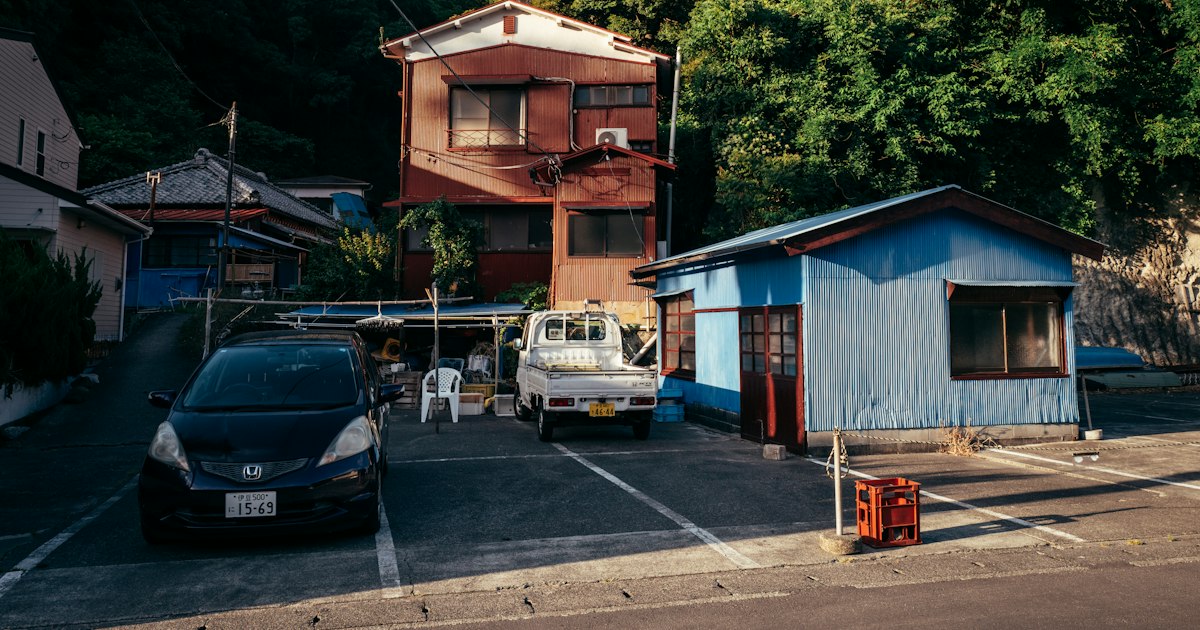
Photo by Loris Boulinguez on Unsplash
If you’ve ever stood at the edge of a one-lane mountain road in rural Japan and watched a boxy little car with yellow plates squeeze past a delivery truck with inches to spare, you’ve seen a kei car in its natural habitat. These “light vehicles” — capped by law at 660cc engines and tight exterior dimensions — are Japan’s answer to narrow streets, steep switchbacks, and tiny parking spaces. For visitors planning a countryside trip, renting one is often cheaper and more practical than a standard rental car, and far more flexible than chasing bus timetables. Here’s what you need to know before you book.
What exactly is a kei car, and why rent one
“Kei” (軽) means “light,” and Japanese law defines the class strictly: engines no larger than 660cc, length under 3.4 meters, width under 1.48 meters. In exchange for those limits, kei cars get cheaper highway tolls, lower annual road tax, and — crucially for renters — they fit on roads that a mid-size sedan simply can’t navigate comfortably. Think the back lanes of Yakushima, the hairpin climbs around Mount Aso, or old post towns where buildings lean over streets barely wider than the car itself.
Popular rental models include the Suzuki Hustler, Honda N-Box, Daihatsu Tanto, and Nissan Dayz — all tall-roofed, boxy hatchbacks with surprisingly roomy interiors for four passengers and a couple of suitcases. They’re slow on steep highway grades (don’t expect to merge aggressively) but ideal for the 40-60 km/h rural roads most countryside itineraries actually involve.
License requirements and how to book
Foreign visitors need either an International Driving Permit (IDP) based on the 1949 Geneva Convention, obtained in your home country before arrival, or a valid driver’s license from Switzerland, Germany, France, Belgium, Monaco, or Taiwan paired with an official Japanese translation (available from JAF offices or your embassy). US, UK, Canadian, and Australian licenses require the Geneva IDP — it cannot be obtained inside Japan, so arrange it before you fly.
Major chains like Toyota Rent a Car, Nippon Rent-A-Car, and Times Car Rental all carry kei cars, usually as their cheapest category. Budget-focused operators like Niconico Rental or ToCoo! (a booking aggregator that compares small local agencies) often undercut the big names significantly, especially outside Tokyo and Osaka. Book at least a week ahead in peak seasons — Golden Week (late April–early May), summer Obon (mid-August), and New Year — since the smallest, cheapest cars sell out first.
What it actually costs
Expect roughly ¥4,000-¥6,000 per day for a kei car on a weekday, rising to ¥6,000-¥9,000 on weekends and holidays. Add mandatory insurance (compulsory liability is bundled in, but Collision Damage Waiver runs ¥1,000-¥2,000/day extra and is worth every yen) and a one-way drop-off fee if you’re not returning to the same branch — this can add ¥5,000-¥15,000 depending on distance. Gasoline is cheap to run: kei cars average 18-22 km per liter, so a full day of rural driving might cost ¥1,500-¥2,500 in fuel at current prices of roughly ¥170-¥180/liter for regular.
Highway tolls for kei cars (the “K” category) are about 20% cheaper than for standard cars — useful if you’re connecting, say, Kochi’s coastal roads with a trip inland for katsuo no tataki at a riverside restaurant. For budget travelers already comparing transport costs, it’s worth cross-checking against discount ticket shops for bus and rail fares — in dense tourist corridors like Tokyo–Hakone, a train (including the Odakyu Romancecar) is often faster and less stressful than driving and parking. A kei car earns its keep once you’re off that corridor, in places with thin public transit.
Where kei cars genuinely shine
Anywhere with narrow roads, low parking availability, and spread-out sights. Satoyama countryside in Shikoku, the Kiso Valley’s old post towns, Kagoshima’s rural roads around samurai towns like Chiran, and coastal fishing villages like Tomonoura are all built on a scale that predates the automobile — streets were never widened for modern cars, and a kei car slips through where a rental sedan would be stuck reversing. Hokkaido’s farm roads and Okinawa’s smaller islands (Ishigaki, Miyako) are also popular kei car territory, partly because inter-town buses there run infrequently.
They’re also genuinely useful for grocery runs and errands if you’re staying in a rural rental house for a few nights — a kei car fits easily into the small parking lot of a local AEON Mall or neighborhood supermarket, unlike a larger rental that might struggle in compact Japanese parking frames (many are sized specifically for kei dimensions).
Common mistakes first-time renters make
- Underestimating highway merging. A 660cc engine with four adults and luggage struggles on long uphill highway grades. Build in extra time rather than tailgating the car ahead.
- Forgetting the ETC card. Most rentals include an ETC (electronic toll) card reader in the car, but you often need to request the card itself at pickup — ask explicitly, since paying cash at toll gates means losing the kei car discount in some cases.
- Ignoring one-way restrictions in old towns. Historic districts with narrow lanes frequently have one-way systems with no visible signage in English. GPS apps like Google Maps generally route correctly, but local drivers reading narrow mirrors expect you to yield first in blind corners — flashing headlights briefly is the standard “I see you, go ahead” signal.
- Booking a car too small for luggage. Kei hatchbacks have less trunk space than their tall cabins suggest. Two large suitcases plus carry-ons can be tight — check dimensions in the listing, especially if you’re already managing bags per airline rules like those covered in our ANA/JAL baggage guide.
- Traveling with a pet without checking the rental’s policy. Not all agencies allow animals in the cabin, and those that do may require a carrier. If you’re road-tripping with a dog, confirm this ahead — our pet-friendly travel guide has more on rules and accommodation.
Best season and timing for a kei car road trip
Spring (April) and autumn (late October–November) offer the clearest mountain roads and best visibility for scenic driving, without the snow risk of winter or the humidity of summer. If you’re driving in Tohoku or Hokkaido between December and March, confirm the rental includes winter tires — it’s mandatory on snow routes and usually included automatically by local agencies, but double-check with Tokyo- or Osaka-based chains shipping a car to a cold region. Typhoon season (August–September) can close mountain passes with little warning, so build flexibility into rural itineraries during those months.
Return the car with a full tank — nearly all Japanese rental contracts require this — and photograph the exterior at pickup and drop-off. Minor existing scratches are common on kei rentals given how often they brush against hedges and guardrails on narrow roads, and a quick photo avoids any dispute over damage charges later.