Photo by Ivan Ermolaev on Unsplash
Japan is one of the safest countries a traveler can visit, but accidents, sudden illness, and the occasional lost-wallet panic still happen. Knowing exactly which number to dial — and how phone and SIM setup can quietly block that call — is one of the few pieces of trip prep that actually matters. Here’s what every visitor should know before they need it.
The Two Numbers: 110 for Police, 119 for Fire and Ambulance
Japan splits emergency response into two separate numbers, and mixing them up wastes precious time:
- 110 — Police. Use this for theft, assault, lost persons, traffic accidents with no injuries, or anything requiring law enforcement.
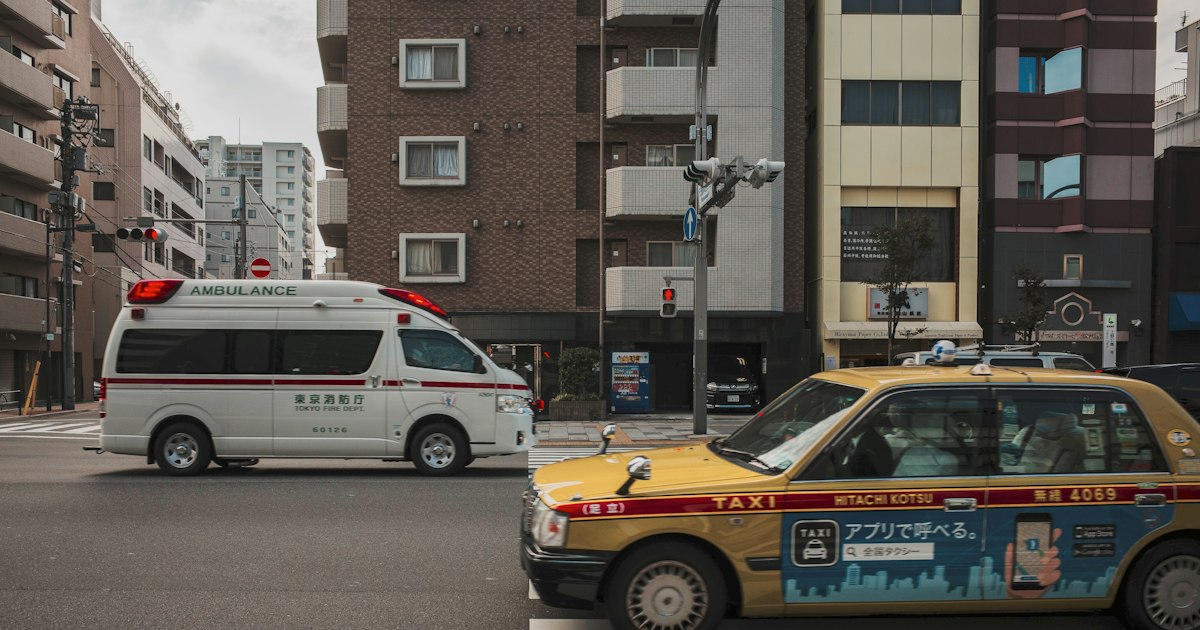
- 119 — Fire and ambulance. Use this for medical emergencies, injuries, fires, and gas leaks.
Both numbers are free to call, work 24 hours a day, and can be dialed without an area code from anywhere in the country. There’s no single “911” equivalent — this split system is standard across Japan, so it’s worth memorizing both before you land rather than looking it up mid-crisis.
The SIM Card Trap Most Tourists Don’t Know About
This is the detail that catches travelers off guard: many popular tourist SIM cards and eSIMs sold for Japan are data-only. They give you maps, translation apps, and messaging, but no voice calling — which means they physically cannot dial 110 or 119. If your plan is to rely on a cheap Amazon eSIM or an airport data SIM, check specifically whether it includes voice service before you need it in an emergency. A rental phone, a Japanese carrier SIM (Docomo, SoftBank, au, Rakuten) with voice minutes, or simply asking a nearby shop, hotel staff, or station attendant to call on your behalf are your reliable fallbacks. This is worth sorting out at the same stage you’re planning airport logistics — see our guide to Japan airport transit for related arrival-day planning.
Language: What Happens When You Call
Operators at 110 and 119 call centers primarily speak Japanese, but major cities (Tokyo, Osaka, Kyoto, Yokohama) have English-speaking staff or three-way interpretation available — it just takes an extra beat to connect. If you’re struggling, two phrases go a long way:
- “Eigo o hanasemasu ka?” (英語を話せますか?) — “Can you speak English?”
- Simply stating “Kega” (injury), “Kaji” (fire), or “Dorobo” (thief) alongside your location gets the right response dispatched even if the rest gets lost in translation.
For non-emergency help navigating a situation in English — including how to describe a medical issue or report a problem to police — the Japan Visitor Hotline at 050-3816-2787 operates 24/7 in English, Chinese, Korean, and Japanese. It’s run by the Japan Tourism Agency specifically for foreign visitors and can also help you communicate with 110 or 119 by conference call if needed. Save this number in your phone before you travel.
Giving Your Location (The Hardest Part)
Japan’s address system — based on block and building numbers rather than sequential street addresses — confuses even taxi drivers, let alone emergency dispatchers working with a flustered tourist. A few tricks:
- Open Google Maps and read out the nearest named landmark, station exit number, or shop/restaurant name rather than attempting an address.
- If you’re near a koban (the small neighborhood police box found in nearly every district), walking there directly is often faster than describing your location over the phone.
- Screenshot or point at your GPS pin if you’ve handed the phone to a Japanese speaker to relay details.
This matters even more outside major cities. If you’re exploring somewhere remote — a place like Tokunoshima in Kagoshima or similar outer islands — response times are inherently longer, there may be only one small clinic on the whole island, and serious cases sometimes require a medevac flight to the mainland. Build that reality into your plans if you’re traveling with health conditions or doing anything physically demanding far from a city.
Ambulances Are Free, But Hospitals Are Not
Unlike in the US, calling an ambulance in Japan via 119 is free regardless of the outcome — there’s no bill for the ride itself. However, treatment at the hospital you’re transported to is not free for visitors, and without Japanese national health insurance you’ll be billed the full rate, sometimes immediately or on discharge. This is the single biggest argument for buying travel insurance before you fly, not after you’re hurt. For anyone planning higher-risk activities — climbing Mt. Fuji via the Fujikyu Railway route to the Fuji Five Lakes during the short July–September climbing season, for instance — confirm your policy covers mountain rescue specifically, since standard travel policies sometimes exclude it. If you do need emergency care on the mountain, mountain huts along the trail have radios and can relay a 119 call faster than most phones will get signal near the summit.
Common Mistakes to Avoid
- Dialing 119 for a police matter or 110 for a medical one. Calls do get redirected, but it costs time.
- Assuming any phone can call out. Confirm your SIM has voice service before you need it, not during.
- Hanging up when no English speaker answers immediately. Stay on the line — interpretation gets patched in within moments.
- Not carrying your passport. Hospitals and police both typically ask for ID, and it speeds up registration considerably.
- Skipping travel insurance to save money. A single ambulance-to-hospital visit for a broken bone can run into hundreds of thousands of yen without coverage.
Save This Before You Land
Write these down somewhere accessible without data — a notes app works, a photo of a printed card works better:
- Police: 110
- Fire/Ambulance: 119
- Japan Visitor Hotline (24/7, multilingual): 050-3816-2787
- Your hotel’s address and phone number in Japanese, written out
- Your travel insurance policy number and emergency claims line
None of this takes more than ten minutes to prepare, and it’s the kind of prep you’ll hopefully never use — but if you do, those ten minutes will matter more than almost anything else you packed.