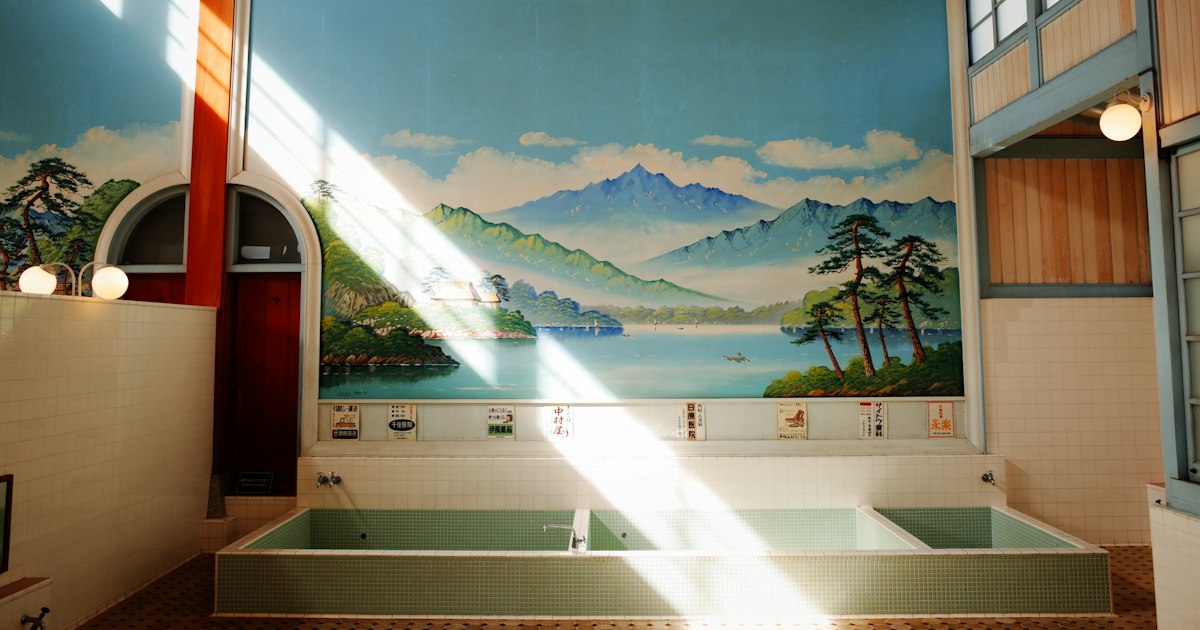
Photo by Soyoung HAN on Unsplash
Walk into almost any old-school Tokyo sento (public bathhouse) after a soak, and you’ll see it: a stout glass bottle, capped with foil, filled with a pastel pink or orange liquid, pulled from a rattling retro fridge by the front desk. That’s furutsu gyunyu — “fruit milk” — and drinking one with your free hand resting on your hip, fresh out of the bath, is one of the most quietly iconic rituals in Japanese daily life. It’s cheap, it’s sweet, and almost no foreign visitor has heard of it before they stumble onto it. Here’s what it actually is, where it came from, and which bathhouses still serve it the old-fashioned way.
What Is Furutsu Gyunyu?
Furutsu gyunyu isn’t fruit juice and it isn’t quite milk either. It’s a flavored milk drink — technically closer to what Japan classifies as a “milk beverage” (kakou nyu) than fresh dairy milk — sweetened and tinted with fruit flavoring, usually a mix that tastes like banana, orange, and a little bit of bubblegum rather than any single real fruit. Its sibling drink, coffee gyunyu (coffee milk), is actually more common nationwide, but furutsu gyunyu is the one with the strongest bathhouse pedigree and the prettier color. Both are sold in the same squat glass bottles with crimped foil lids, a design that hasn’t changed much since the 1960s.
A Showa-Era Bathhouse Tradition
Before home bathtubs became standard in Japanese apartments, most city dwellers bathed at the neighborhood sento. Dairies delivered glass-bottled milk drinks directly to these bathhouses, which kept them in iced cases by the entrance — the only reliably cold drinks available in a pre-home-refrigeration era. Fruit milk and coffee milk became the reward for a good soak, and the posture that goes with it — one hand on the hip, bottle tipped back — got cemented in Japanese pop culture as the universal symbol of “just got out of the bath.” Vending machines and konbini have long since taken over most beverage sales, but a shrinking number of traditional sento still stock the glass bottles specifically to keep this ritual alive, and it’s part of the same wave of Showa-era nostalgia that keeps retro drinks like the ones covered in Oronamin C and Lipovitan D’s retro energy drink culture popular today.
Where to Try It: Tokyo’s Classic Sento
The experience is best had at an actual bathhouse, not a convenience store, since half the point is the post-bath ritual. A handful of Tokyo sento are both tourist-friendly and still serve bottled furutsu gyunyu:
- Jakotsuyu (Asakusa) — One of the most visitor-friendly sento in Tokyo, with English signage and staff used to foreign guests. It’s a short walk from Tawaramachi Station (Ginza Line) or Asakusa Station. Entrance is the standard Tokyo-wide sento rate, currently around ¥500 for adults, and the drink fridge by the entrance stocks both fruit and coffee milk for roughly ¥130–250 a bottle, paid in cash at the front desk. Sento across Tokyo are typically closed one fixed day a week, so check the current schedule before you go.
- Koganeyu (Kinshicho) — A beautifully renovated sento that’s become a favorite with younger locals and curious travelers, partly because it runs an attached bar (Tiger Koganeyu) using the same water. It’s a few minutes’ walk from Kinshicho Station on the Sobu and Hanzomon lines, and keeps later evening hours than most traditional bathhouses.
- Rokuryu Kosen (Sendagi/Yanaka) — A genuine black “kuroyu” hot-spring sento in the atmospheric Yanaka backstreets, near Sendagi Station on the Chiyoda Line. It’s less polished and less English-friendly than Jakotsuyu, which is part of the charm if you’re already exploring the old Yanaka neighborhood on foot.
At all of these, double-check opening hours and closing days on the sento’s own signage or website before your trip — bathhouses in Japan are notorious for one-off holiday closures and seasonal schedule tweaks.
Beyond the Bathhouse: Retro Cafes and Konbini Bottles
If you can’t make it to a sento, Showa retro kissaten (old-style coffee shops) in neighborhoods like Yanaka, Koenji, and parts of Osaka’s Shinsekai district sometimes serve the same glass-bottled fruit milk alongside their coffee menu, usually for ¥300–500. Major convenience store chains also stock carton or plastic-bottle versions from big dairy brands like Meiji and Glico, usually for ¥130–170 for a small carton — convenient, but it’s a different (and frankly less interesting) drinking experience than the icy glass bottle at a bathhouse. If you’d rather pair your bath-house visit with a less sugary option, most sento drink fridges also stock bottled tea, and travelers who prefer something toastier than fruit milk might enjoy seeking out bottled hojicha instead.
Budget, Mid-Range, and Splurge Options
This is a low-cost souvenir experience by nature, but your spending really comes down to which sento you pick and what you do around it:
- Budget: A neighborhood sento visit plus a bottle of fruit milk runs about ¥600–750 total — sento admission (~¥500) plus the drink (~¥130–250). Bring a small towel or rent one on-site for a small extra fee.
- Mid-range: Renovated “design sento” like Koganeyu sometimes charge a small premium for saunas, special baths, or towel rental, pushing the total closer to ¥1,000–1,500, especially if you add a post-bath drink at the attached bar.
- Splurge: Some onsen ryokan and hot-spring day-spas serve nostalgic glass-bottled fruit milk as part of a broader retro aesthetic; a day-use visit at one of these can run ¥2,000–5,000+, but you’re paying for the whole experience, not the bottle itself.
Best Time to Go and Sento Etiquette
There’s no real seasonal pattern to furutsu gyunyu — it’s available year-round — but sento themselves are at their most enjoyable in cooler months, when stepping out of a hot bath into the night air (bottle in hand) feels the most rewarding. Evenings after a day of neighborhood walking, especially in areas like Asakusa or Yanaka, are the natural time to go, since most sento open in early-to-mid afternoon and run until around midnight. Standard etiquette applies: wash thoroughly at the shower stations before entering the shared tub, no swimwear (sento bathing is nude, unlike pools or beach facilities covered in guides on buying swimwear in Japan), and keep long hair tied up and out of the water. Floors get slippery, so take your time — and if you’re ever genuinely injured or unwell at a bathhouse, know that calling 119 for an ambulance as a tourist in Japan works the same way it would anywhere else in the country.
Common Mistakes to Avoid
- Assuming every sento stocks it. Many bathhouses have switched to modern vending machines with canned drinks. If the bottled version matters to you, look up a specific sento known for it rather than hoping any random one has it.
- Expecting cashless payment. Older sento and their drink fridges are frequently cash-only. Carry small coins and bills.
- Confusing it with coffee gyunyu. They’re sold side by side in identical bottles — check the label or ask staff if you specifically want the fruit version.
- Showing up on the weekly closing day. Most sento close one fixed day a week (it varies by bathhouse), and hours can shift seasonally — always verify before making a special trip.
- Treating it as a souvenir to bring home. Glass bottles aren’t practical for travel, and the drink isn’t shelf-stable long enough to survive international shipping — enjoy it on the spot instead.