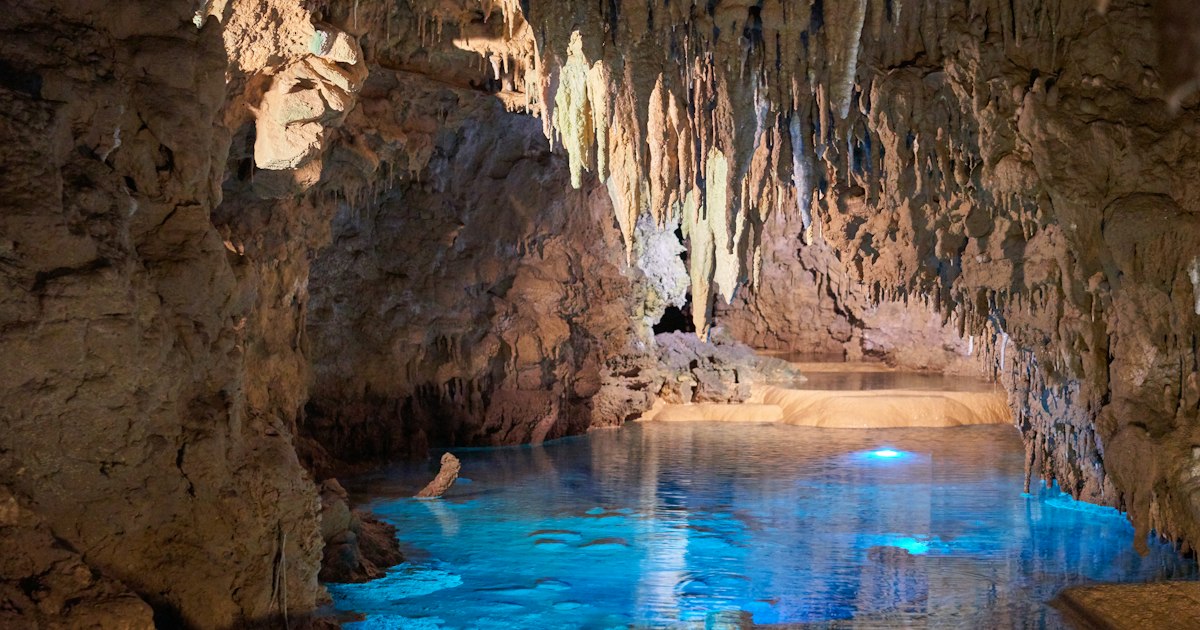
Photo by Timo Volz on Unsplash
Most visitors to Japan never make it to Yamaguchi Prefecture, which is exactly why Akiyoshido Cave feels like such a find. This is Japan’s largest limestone cave, a cathedral-scale tunnel system carved over hundreds of thousands of years, and it sits beneath a windswept karst grassland that looks more like Mongolia than mainland Japan. Visiting both — the cave and the plateau above it — makes for one of western Japan’s best full-day detours, especially if you’re already routing through Yamaguchi, Shimonoseki, or Fukuoka.
What Makes Akiyoshido Different From Other Caves in Japan
Akiyoshido (秋芳洞) runs roughly 10 kilometers underground, though only about 1 kilometer is open to the public along a flat, paved walking course. It’s designated a Special Natural Monument, Japan’s highest protection tier for natural sites, and the main chamber alone is tall enough that you forget you’re underground at all — ceilings soar overhead and a stream runs the length of the walkway. The cave stays around 17°C year-round, which makes it a genuinely good escape from Yamaguchi’s brutal summer humidity and a reasonable cold-weather option too, since it never drops below comfortable.
Inside the Cave: What to Look For
The signature sight is Hyakumai-zara, the “Hundred-Dish Terrace” — a cascade of shallow rimstone pools that look like stacked dinner plates, formed by mineral-rich water depositing calcite layer by layer. Further along, formations like Kurokawa-zumi and the enormous stalactite curtains near the main hall give a sense of the scale involved. Information signage is in Japanese and English, and the path is wide and well-lit, so it’s manageable for most fitness levels, though the stone floor is often wet and can be slippery — this is the single most common complaint from visitors in sandals or smooth-soled shoes.
There are two main entrances: the lower entrance near the Akiyoshido bus stop and shopping street, and the upper exit that connects via elevator to the Akiyoshidai plateau above. Walking the full course one-way and taking the elevator up is the most efficient way to see both the cave and the plateau without doubling back.
The Akiyoshidai Karst Plateau Above
This is the part people skip, and shouldn’t. Akiyoshidai is a quasi-national park covering rolling limestone grassland pocked with sinkholes (dolines) and jagged rock outcrops — a genuinely odd, open landscape by Japanese standards, where cattle once grazed freely. The Akiyoshidai Science Museum near the Akiyoshidai bus stop has displays on the cave’s formation and regional geology, and there are short walking trails from the museum area out onto the grassland itself. Spring brings pale green shoots after the traditional controlled burns; autumn turns the whole plateau into a sea of golden pampas grass (susuki), which is the most photogenic time to visit. Winter can bring snow and biting wind, so dress accordingly if you go.
If you’d rather stay out here overnight than rush back to a city hotel, there are a handful of outdoor-oriented lodgings in the wider Mine area; travelers who like a comfortable version of the outdoors might also look at glamping options elsewhere in Japan as a template for what to search for regionally.
Getting There
The nearest Shinkansen stop is Shin-Yamaguchi Station on the Sanyo Shinkansen line, reachable from Hiroshima in about 40 minutes or from Hakata (Fukuoka) in about 50 minutes. From Shin-Yamaguchi, Bocho Bus runs directly to the Akiyoshido bus stop in roughly 45–50 minutes, with a one-way fare in the neighborhood of 1,000–1,100 yen; buses are infrequent, so check the timetable before you plan your day, since missing one can cost you an hour. JR Yamaguchi Station also has bus connections to Akiyoshido on a similar schedule.
If you’re driving, Akiyoshido has paved parking lots near the main entrance (a few hundred yen per visit), and the drive from Shin-Yamaguchi takes about 40 minutes via local roads. Travelers without a rental car but who want flexibility for the last stretch from a train station might find a car-sharing app like Times Car or Careco useful for exactly this kind of rural hop, since Yamaguchi’s bus frequency drops off outside peak hours.
Practical Info: Hours, Tickets, and Timing
Akiyoshido is generally open from around 8:30am to 5:30pm, with the last entry roughly 30 minutes before closing; hours can shift slightly by season, so it’s worth a quick check if you’re arriving late in the day. Adult admission runs about 1,300 yen, with discounted rates for elementary and middle school students — pay at the entrance window, cash is safest though card acceptance has improved. The elevator connecting the cave to the plateau requires a separate small fee, payable on-site.
Plan for roughly 45–60 minutes to walk the cave course at an easy pace, plus another hour or more if you want to explore the plateau, visit the science museum, or walk any of the grassland trails. Because the cave’s temperature doesn’t change with the seasons, you can comfortably visit any time of year — the real seasonal decision is about the plateau above, where autumn grass and spring green are the two best windows.
Common Mistakes to Avoid
- Wearing sandals or flip-flops. The cave floor is wet and uneven in places; closed-toe shoes with grip are strongly recommended.
- Not bringing a light layer. 17°C feels cold after walking around outside in summer heat, and the plateau above can be windy even when the valley below is warm.
- Treating it as a quick stop. Because of limited bus frequency, rushing the visit to catch an early bus back often means skipping the plateau entirely, which is arguably half the appeal.
- Skipping the shopping street at the lower entrance. It’s touristy, but it’s also where you’ll find local specialties and a reasonable lunch before or after the cave — there isn’t much food up on the plateau itself.
Budget, Mid-Range, and Splurge Ways to Visit
On a tight budget, a round-trip bus from Shin-Yamaguchi plus the cave entry fee keeps the whole excursion under 4,000 yen per person, and you can bring your own snacks for the plateau. A mid-range approach adds lunch at one of the small restaurants near the cave entrance (tofu and local specialties feature heavily) and the elevator fee to save your legs on the way up. For a splurge, renting a car for the day gives you time to also detour toward the Yamaguchi countryside more broadly, or combine the trip with a longer loop toward Kyushu’s hot spring towns — travelers extending west sometimes pair this with a stop in Hita in Oita Prefecture, or head south toward the Seto Inland Sea’s car ferry routes if continuing into Shikoku or the smaller islands.
Akiyoshido won’t be the most famous stop on a Japan itinerary, but it’s one of the few places where you can genuinely contrast two landscapes — vast underground limestone halls and open-sky karst grassland — within the same half-day visit, and without the crowds you’d find at better-known nature sites.