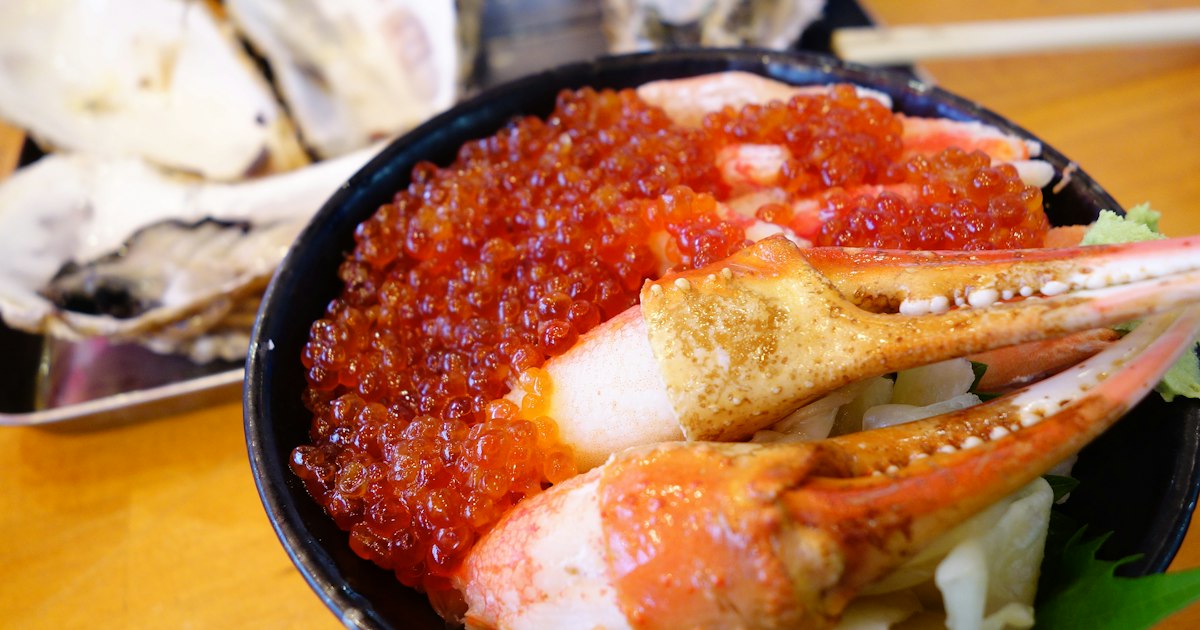
Glossy, orange, and bursting with brine, ikura (salmon roe) is one of the easiest ways to taste Japan’s seafood culture without needing much Japanese or a reservation. Unlike sushi, where technique matters as much as the fish, ikura is mostly about sourcing: fresh roe, properly cured, served generously over warm rice. This guide covers what ikura actually is, when to eat it at its best, and the specific markets and shops where you can build your own ikura donburi for a reasonable price.
What Ikura Actually Is
Ikura refers specifically to salmon roe that has been separated into individual eggs and cured in a light salt brine (shio zuke) or soy-based marinade (shoyu zuke). It’s distinct from sujiko, which is the same roe still bound in its egg-sac membrane, and from tobiko or masago (flying fish and capelin roe), which are smaller, crunchier, and often dyed for sushi rolls. Good ikura should look plump and separate, with a slight sheen, and should pop gently against your teeth rather than feeling mushy or rubbery. The name itself is borrowed from Russian ikra, a reminder that Hokkaido’s fishing towns have long traded with Russia’s Far East.
Best Season and Timing
Salmon run upstream to spawn in Japan mainly from September through November, which is when roe is freshest and cheapest, especially in Hokkaido. Autumn ikura tends to be firmer and less salty than roe held in cold storage through the winter. That said, because ikura freezes well, most markets and donburi shops sell it year-round — you just won’t get the same “just harvested” quality outside autumn. If your trip is timed for cherry blossoms in spring or the New Year holidays, you’ll still find good ikura, but if your schedule is flexible, aim for a Hokkaido visit between late September and early November.
Hakodate Morning Market: Build-Your-Own Donburi
The single best place in Japan to eat an ikura donburi is Hakodate Asaichi (Hakodate Morning Market) in southern Hokkaido, open roughly 6:00–14:00 most days (some stalls start as early as 5:00, and winter hours run slightly shorter). The market runs a system locals call “dontaku”: you buy an empty bowl of warm rice for around ¥300–400, then walk the stalls buying topping tickets — a scoop of ikura typically runs ¥800–1,500 depending on quantity and the stall, with uni (sea urchin), hotate (scallop), and crab available to mix in. A fully loaded bowl with ikura plus one or two other toppings usually lands in the ¥2,000–3,000 range. Hakodate Station is the market’s front door — it’s a five-minute walk, and the station itself is reachable by limited express train from Sapporo (about 3.5–4 hours) or by flight into Hakodate Airport. If you’re road-tripping through Hokkaido in winter to reach it, read up on winter driving precautions for Hokkaido and Tohoku first, since icy conditions catch a lot of visitors off guard.
Sapporo and Nijo Market
If Hakodate isn’t on your route, Sapporo’s Nijo Market (Nijo Ichiba), a short walk from Odori subway station, offers a similar build-your-own donburi experience on a smaller scale, open roughly 7:00–18:00 depending on the stall (some close by 16:00). It’s more compact and touristy than Hakodate’s market, so expect slightly higher prices — a bowl with generous ikura and salmon sashimi often runs ¥2,500–3,500 — but it’s a convenient stop if you’re already basing yourself in Sapporo or combining the city with a day trip to Lake Shikotsu or Lake Toya. Several Nijo stalls also vacuum-pack ikura in travel-friendly jars with ice packs, which is useful if you want to bring some home rather than eat it on the spot.
Tokyo and Beyond: Toyosu and Depachika
If your itinerary doesn’t reach Hokkaido, Tokyo’s Toyosu Market (which replaced the old Tsukiji inner market) has several sushi and donburi counters on its upper floors serving excellent ikura bowls, though lines for the famous ones can mean an hour or more wait even on weekday mornings — arrive by 7:00 if you want to avoid the worst of it. Expect to pay ¥2,500–4,500 for an ikura-centric donburi here, reflecting Tokyo rents rather than any drop in quality. Department store basements (depachika) in Tokyo, Osaka, and Kyoto also sell high-grade jarred ikura by weight, often ¥1,000–2,000 per 100g depending on grade and brine style, which is a good option if you’d rather prepare your own bowl back at your hotel or Airbnb.
Budget, Mid-Range, and Splurge Options
- Budget (¥1,000–1,500): A small ikura-only bowl at a Hokkaido morning market, or a modest jar from a regional supermarket — fine quality, smaller portion.
- Mid-range (¥2,000–3,500): A mixed donburi with ikura plus one other topping (uni, salmon sashimi, or crab) at Hakodate, Sapporo, or a regular kaisendon restaurant.
- Splurge (¥4,000+): A “kaisendon of the sea” bowl loaded with ikura, uni, and premium fish at a Toyosu sushi counter, or a high-grade shoyu-zuke ikura jar from a depachika specialty shop to take home.
Common Mistakes and Buying Ikura to Take Home
The most common mistake is ordering ikura at a random izakaya expecting market-fresh quality — chain restaurants often use frozen, previously-salted roe that’s noticeably softer and saltier than what you’ll get at a dedicated market stall. Another is assuming all ikura is interchangeable with sujiko on a menu; if you want individual, loose eggs rather than a roe sac, confirm it says ikura (イクラ), not sujiko (筋子). If you want to bring ikura home, buy vacuum-sealed, refrigerated jars (not shelf-stable ones, which are usually heavily processed) and pack them in your checked luggage with the ice packs the shop provides — most will clear a flight of 10–12 hours if kept cold, but check your destination country’s rules on importing fish products before you commit to buying. For travelers who want to recreate the donburi experience at home instead, a good rice cooker and the right bowl matter more than people expect; our guide to sushi-making tools and rice covers what’s worth packing, and the same rice-cooking basics apply directly to a proper ikura donburi.