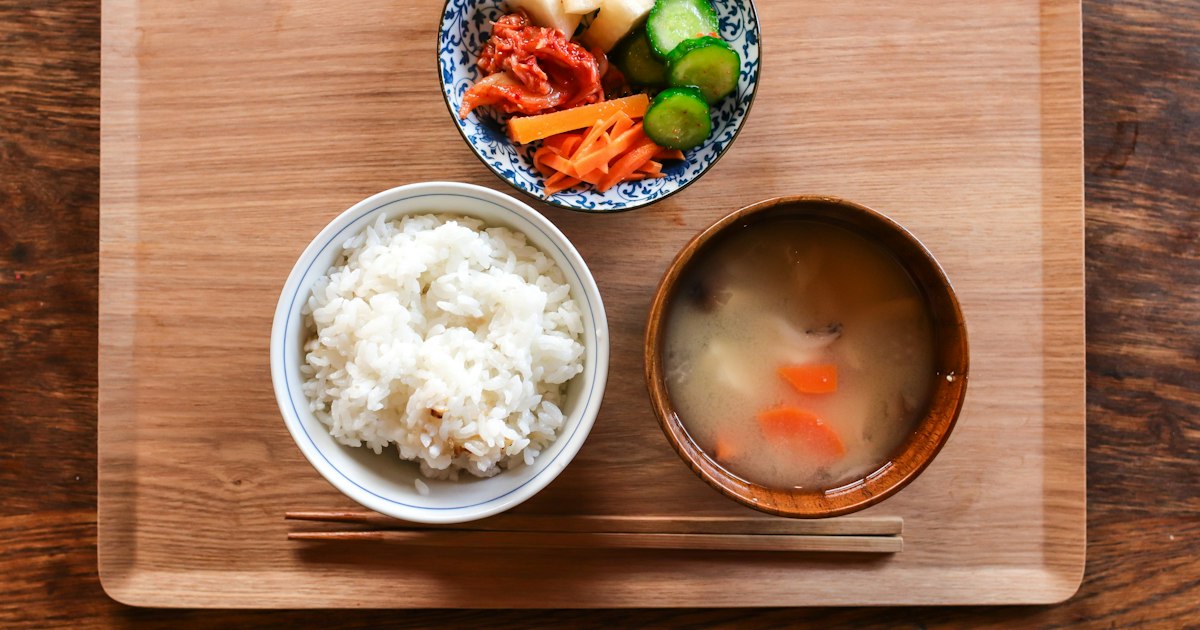
Photo by Takafumi Yamashita on Unsplash
Ask any adult in Japan about soft koppepan rolls, bottled milk, or the dreaded day natto appeared on the tray, and you’ll get an instant flood of memories. Kyushoku — Japan’s standardized school lunch program — is one of the country’s quietest but most formative food traditions, and it shapes how an entire generation thinks about nutrition, manners, and shared meals. Tourists can’t walk into an elementary school cafeteria, but a handful of themed restaurants in Tokyo recreate the experience almost exactly, down to the aluminum trays and classroom desks. Here’s what kyushoku actually is, and where you can try it yourself.
What Is Kyushoku, Exactly?
Kyushoku (給食) is the lunch served daily in nearly all Japanese public elementary and junior high schools. It isn’t a cafeteria where kids choose from a menu — every student in a school eats the same meal on the same day, prepared in an on-site or district kitchen and designed by a registered dietitian to hit specific calorie and nutrient targets for each age group. A typical tray includes a main dish, a side, soup, rice or bread, and a small carton of milk, almost always totaling around 600–700 kcal for upper elementary grades.
Menus rotate on a monthly schedule and often tie into the local area: a town near Numazu might serve aji (horse mackerel) caught that week, echoing the same local-sourcing pride you’ll find at ports like the one covered in our guide to Numazu’s fresh-catch culture. This “chisan-chisho” (local production, local consumption) principle is a point of real pride for school districts, and menus are published publicly so parents know exactly what their kids ate.
Why Kyushoku Is More Than Just Food
Lunchtime in a Japanese classroom is a structured ritual, not a break. Students on lunch duty (kyushoku-toban) wear a white smock — often a simple kappougi-style apron — plus a mask and cap, and physically serve the food to classmates from trolleys wheeled in from the kitchen. If you’ve seen Japan’s traditional cooking apron referenced elsewhere, it’s worth reading our piece on the kappougi apron — the same basic garment, scaled down, is standard elementary-school kyushoku gear nationwide. Everyone waits until all trays are distributed, says “itadakimasu” together, and eats at their desks with classmates, then helps clean up and recycles the milk carton themselves. Good chopstick manners are taught from this age too, which is why a quick read of our guide to chopstick taboos is useful background — the “don’t stab your food” and “don’t pass food chopstick-to-chopstick” rules many Japanese adults follow were first drilled into them over a kyushoku tray.
Where Tourists Can Try a Recreated Kyushoku Meal
You won’t get into a real school lunchroom as a visitor, but Tokyo has themed restaurants built specifically around kyushoku nostalgia for adults who grew up with it. The best-known is Kyushoku Toban (給食当番), an izakaya chain with branches in Shinjuku’s Kabukicho area and a few other central Tokyo neighborhoods. The interior is deliberately built to look like a Showa-era classroom — wooden desks and chairs as seating, chalkboards on the walls, and staff who sometimes play the role of “teacher.” Food arrives on the same molded aluminum trays used in real schools, and the menu leans heavily on dishes that were kyushoku staples from the 1970s–90s: kujira (whale) curry, soft koppepan bread rolls, fried fish nuggets, and simmered vegetable sides, often washed down with a small glass bottle of milk or melon soda for the full retro effect.
Because this is an izakaya at heart, it also serves alcohol and standard bar food alongside the nostalgia dishes, so it works as a dinner destination rather than a literal school-lunch replica — think of it as school lunch reimagined for a night out with friends, not a health-food experience.
What to Order and What It Costs
Pricing follows normal Tokyo izakaya ranges rather than cheap cafeteria rates. Individual nostalgia dishes (curry, fried nuggets, simmered sides) generally run around ¥500–900 each, drinks including the milk-bottle gimmick are in a similar range, and a full course with multiple dishes and drinks for a small group typically lands around ¥3,500–4,500 per person. If you’re on a tight budget, order two or three signature dishes à la carte rather than a set course — you’ll get the visual and nostalgic payoff without committing to a full dinner. For a splurge, go with a group and order the whole “classroom” spread so the table fills with trays, which is really the point of the place photographically and culturally.
Menus and prices do shift, so it’s worth checking the current listing on Tabelog or the restaurant’s own site before you go, especially if you’re trying to hit a specific dish you’ve read about.
Best Time to Go and How to Get There
These are evening izakayas first, so go for dinner rather than lunch — most open from around 5pm on weekdays, with earlier weekend hours at some locations. Reservations are a good idea on Friday and Saturday nights, particularly for groups, since the classroom-desk seating is limited and popular with both tourists and nostalgic locals. The Shinjuku Kabukicho branch is a short walk from Shinjuku Station’s east exit, making it an easy add-on to an evening already built around Shinjuku’s restaurants and nightlife. There’s no particular “best season” — the appeal is year-round and indoors — though it pairs well with a winter trip when you want a warm, playful dinner after a cold day of sightseeing.
Common Mistakes to Avoid
- Expecting a literal school cafeteria experience. It’s an izakaya with a theme, not a nutrition-controlled meal — portions, seasoning, and alcohol availability are all adult-oriented.
- Not booking ahead for groups. Desk-style seating means tables don’t flex easily; a group of six won’t just get combined desks on a busy night without a reservation.
- Assuming every “kyushoku” dish matches what Japanese diners of different generations remember. Menus skew toward specific eras (often the 70s–90s), so an older or younger visitor’s dining companion may not recognize every dish the same way.
- Skipping the milk or melon soda to save money. It’s a small cost but it’s the detail that makes the tray feel authentic — worth the extra few hundred yen.
Kyushoku rarely makes it onto typical Japan itineraries, but it’s one of the few food experiences that lets you taste a piece of everyday Japanese childhood rather than a tourist-facing dish. Pair a visit with a broader Showa-nostalgia evening in Shinjuku, and you’ll walk away understanding a part of Japanese culture that most short-term visitors never see.