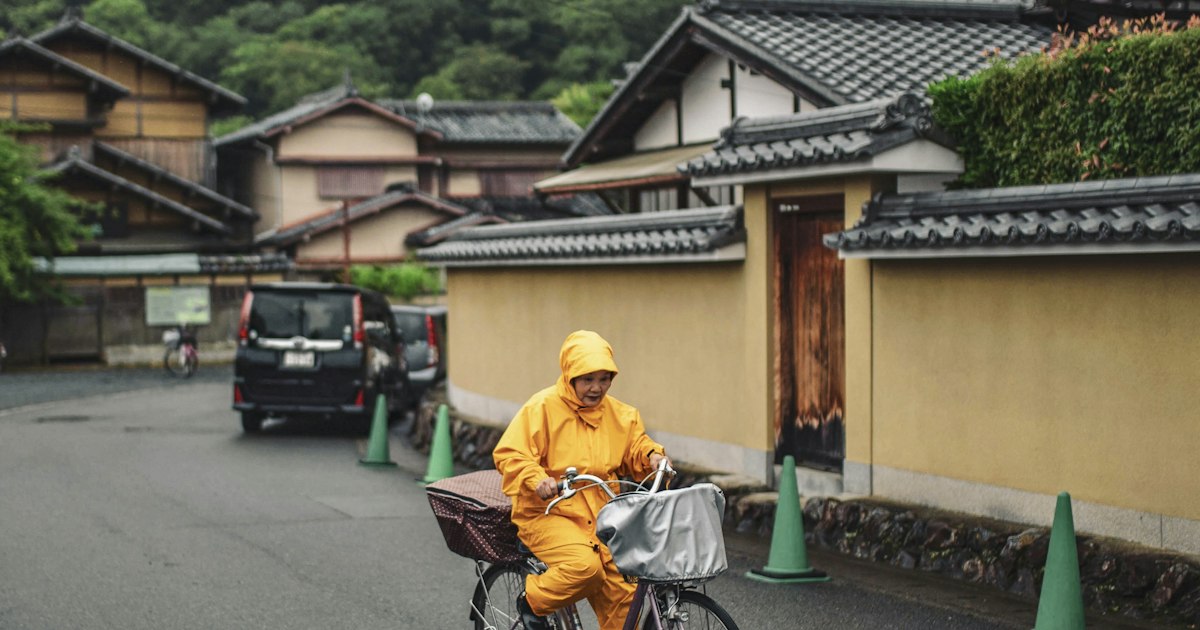
Photo by Gracia Dharma on Unsplash
If you’ve spent a rainy afternoon in any Japanese city, you’ve seen them: cyclists gliding through the drizzle in bright yellow or clear vinyl capes that drape over their handlebars like a tent. That’s a kappa (カッパ) — Japan’s answer to riding a bicycle in the rain without an umbrella, and without getting soaked. For a country where the bicycle is basic transportation rather than a weekend hobby, the kappa is as essential as a raincoat, and it’s one of the easiest, cheapest souvenirs a visitor can pick up that actually earns its luggage space.
What Exactly Is a Kappa, and Why Is the Bicycle Version Different?
“Kappa” is the generic Japanese word for a rain poncho or cape, but the bicycle-specific version is a distinct product. Unlike a plain walking poncho, a cycling kappa has an extended front panel that drapes down over the handlebars and often a basket, keeping your hands, lap, and any shopping bags dry while you ride. Many models include a clear vinyl window or finger slits near the hem so you can grip the handlebar without lifting the fabric, a stiff-brimmed hood that stays put at riding speed, and snap or Velcro cuffs at the wrists so the sleeves don’t balloon in the wind.
They’re almost always made from PVC or polyester with a waterproof coating rather than breathable technical fabric, which keeps the price low but means you’ll sweat on a warm, humid day — this is a short-commute solution, not something designed for a long tour.
Where to Buy a Bicycle Kappa in Japan
Budget (¥680–¥1,500): Don Quijote (“Donki”) is the easiest stop — nearly every branch carries bicycle kappa in the household goods or seasonal section, and many stores in tourist areas like Shibuya, Dotonbori, and Shinjuku are open very late or 24 hours. 100-yen and 300-yen shops (Daiso, Seria, Watts) sell simple disposable ponchos for ¥110–¥330; a few carry bicycle-shaped versions with a basic handlebar loop, but fit and durability are basic. Home centers like Cainz also stock functional kappa in this range.
Mid-range (¥2,000–¥4,000): Workman, Japan’s workwear chain, is the best value for anyone who’ll actually use the poncho more than once — their cycling and outdoor kappa are more durable, with reinforced seams and better hoods. Bicycle specialty shops such as Y’s Road and Asahi Cycle also carry dedicated models sized to fit over a backpack, which is worth knowing if you’re commuting with luggage. Workman stores typically open around 8:00–9:00am and close by 8:00–9:00pm; hours vary by branch, so check Google Maps for the specific store.
Splurge (¥5,000–¥15,000): Outdoor brands like Montbell and Columbia sell technical rain capes with breathable, taped-seam fabric and reflective trim — better for serious commuters or anyone riding in sustained rain for 30+ minutes, since cheap PVC kappa trap heat and moisture. Montbell stores are in most major cities and the hood/fit quality is noticeably better than anything at a convenience store.
In a pinch: Convenience stores (7-Eleven, Lawson, FamilyMart) sell emergency disposable ponchos near the register for roughly ¥300–¥600 when it starts raining unexpectedly. They’re not bicycle-specific and won’t cover a handlebar basket, but they’ll get you home dry.
If you’re building out practical rain gear for a Japan trip, it’s worth pairing a kappa with proper footwear — see our guide to Nagagutsu rain boots, which are sold at many of the same stores (Workman and Don Quijote both carry both items, often in the same aisle).
Best Time to Buy — and When You’ll Actually Need One
Japan’s rainy season (tsuyu) runs roughly early June through mid-July across Honshu, with Okinawa starting in May and Hokkaido largely skipping it. Typhoon season follows from August through October, bringing sudden, heavy downpours rather than the steady drizzle of tsuyu. If your trip falls in either window, buy a kappa in the first day or two rather than waiting — during a surprise storm, convenience store and Donki stock sells out fast and prices at the register can feel like a captive-audience markup.
Outside those seasons, winter drizzle in cities like Tokyo and Osaka is usually light enough that a compact folding umbrella is fine, but if you’re renting a bicycle (a common way to get around smaller towns like Numazu or other coastal areas), it’s worth having a kappa in your day bag just in case — most fold down small enough to fit in a tote.
How to Choose the Right Size and Features
Japanese sizing runs M, L, and LL (extra-large), and most off-the-shelf kappa are cut for an average Japanese adult frame. If you’re tall, broad-shouldered, or plan to wear the kappa over a backpack, size up to LL or look for packaging labeled “ワイド” (wide) — standard M/L sizes often ride up at the knees on a taller rider, defeating the point. Check for:
- A front panel long and wide enough to cover a handlebar basket, not just your lap
- Snap or elastic wrist cuffs, which stop sleeves from flapping and filling with rain
- A stiff, visored hood rather than a soft one that collapses over your eyes at speed
- A back hem long enough to cover the bicycle seat so you don’t sit in a wet puddle five minutes after putting it on
Common Mistakes
The most frequent misstep is buying a walking poncho instead of a bicycle-specific one — without the extended front panel, rain pools in your lap and streams off the hem onto your shoes and the bike frame. Second, cheap clear-vinyl construction-style kappa fog up badly, especially if you’re wearing glasses or sunglasses underneath; a matte or lightly tinted fabric breathes slightly better. Third, a poncho with a loose or missing bottom hem can catch in the rear wheel or spokes while pedaling — look for one with a snap or tie at the hem, and tuck the sides under your legs if it doesn’t have one. Finally, riding a bicycle while holding an umbrella is illegal in most Japanese municipalities (it counts as unsafe one-handed riding), which is exactly why the kappa exists — don’t assume you can just carry an umbrella instead.
Packing One Home
A folded kappa weighs next to nothing and is a genuinely useful, inexpensive souvenir — unlike many novelty items, it’ll actually get used the next time it rains at home. If you want a second, equally practical Japanese textile souvenir in the same price range, the kappougi kitchen apron is sold at some of the same home-goods stores and makes a nice companion purchase on the same shopping trip.