Photo by ibmoon Kim on Unsplash
If you’ve eaten fried chicken in Tokyo or Osaka and think you know karaage, Hokkaido has a different bird waiting for you. Zangi (ザンギ) is the island’s own take on deep-fried chicken — darker, garlickier, and built around a soy-and-ginger marinade that’s punchier than the lighter karaage found further south. It shows up on izakaya menus, convenience store hot cases, and school lunch trays across Hokkaido, and it’s one of the easiest, cheapest ways to eat well while you’re up north. Here’s what makes it different, where it actually started, and where to order it so you’re not just getting “fried chicken, but in Hokkaido.”
What Makes Zangi Different From Karaage
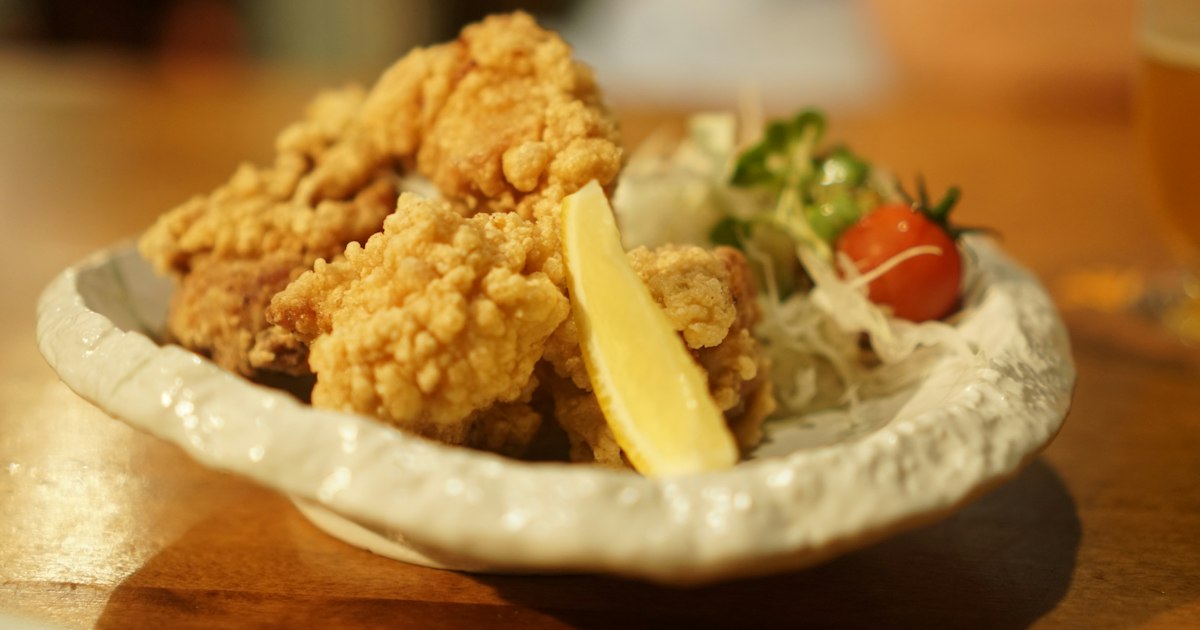
Technically, zangi and karaage are close cousins — both are bite-sized pieces of chicken, marinated, dusted in starch, and deep-fried. The differences are in degree rather than kind. Zangi marinades lean harder on raw garlic and ginger, soy sauce, and sometimes sake or mirin, and the chicken sits in it longer, so the flavor goes all the way through rather than sitting on the surface. The coating is usually potato starch (katakuriko) rather than wheat flour, which fries up into a slightly craggier, more matte crust that holds sauce well. Bone-in thigh pieces are common, especially at older shops, which locals will tell you gives better flavor than the all-boneless karaage you’ll find at a Tokyo izakaya.
In practice, if a menu lists both karaage and zangi side by side, the zangi will usually taste noticeably more garlicky and salty-savory, and often comes with a wedge of lemon or a dab of mayonnaise on the side rather than a sauce drizzled over the top.
Where Zangi Was Born: Kushiro
Zangi is widely credited to Kushiro, a port city on Hokkaido’s southeastern coast, where a restaurant called Torimatsu (鳥松) is generally cited as the place that coined the name and the dish sometime in the 1960s. Kushiro has leaned into this history — there’s a local Zangi association that maps and promotes shops serving it, and you’ll see “Kushiro zangi” used as a point of civic pride the way other towns promote a signature noodle or bowl of rice. If you want the closest thing to an origin-story meal, Kushiro is the city to do it in, ideally paired with a stop at Kushiro’s famous fisherman’s wharf market for the contrast of raw seafood and deep-fried chicken in the same afternoon.
That said, zangi isn’t a Kushiro-only food anymore — it’s all over Hokkaido, from Sapporo izakaya to small-town diners, in the same way regional specialties like Kitakata ramen or hegi soba started in one town and became regional staples people travel for.
Where to Try Zangi
Budget (¥400–¥700): Most izakaya and set-meal diners (shokudo) sell zangi by the plate of five to six pieces, typically ¥500–¥700. This is the easy, no-research option — look for 「ザンギ」on a laminated menu at any casual Hokkaido restaurant and you’re set. Some shokudo also sell a “zangi don,” a rice bowl topped with the fried chicken and a drizzle of sauce, usually ¥700–¥900, which makes a filling solo lunch.
Mid-range (¥900–¥1,500): Izakaya specializing in zangi, including Kushiro shops tracing their recipe back to the original 1960s version, usually serve a larger bone-in portion meant for sharing over beer, often ¥1,000–�al ¥1,300 for a full plate. These are worth seeking out specifically if you’re in Kushiro or Sapporo for an evening and want the “real” version rather than a quick lunch plate.
Splurge: A few higher-end izakaya and hotel restaurants in Sapporo put a premium spin on zangi — using free-range Hokkaido chicken, double-frying for extra crunch, or pairing it with local craft beer or sake flights. Expect ¥1,500–¥2,500 for a chef’s-plate version, which is still inexpensive by splurge-meal standards but noticeably more refined than the diner plate.
Opening hours vary a lot by shop — many zangi-focused izakaya open only for dinner, roughly 5pm to 11pm or midnight, and close one day a week (often Sunday or Monday). Shokudo serving zangi don as a lunch item tend to run 11am–2pm and again 5pm–9pm, with a closed window in between. It’s worth checking the shop’s hours online or via a hotel concierge before making a special trip, since Hokkaido’s smaller cities have fewer backup options than Tokyo if a restaurant turns out to be closed.
Zangi at Convenience Stores and Supermarkets
You don’t need a restaurant reservation to try zangi. Seicomart, the Hokkaido-only convenience store chain, sells hot zangi from its in-store fryer case, usually priced per piece at around ¥150–¥250, and it’s genuinely good — crisp, garlicky, and made fresh throughout the day rather than sitting under a heat lamp. This is the easiest way to try zangi if you’re just passing through on a road trip or train transfer, and it pairs naturally with a stop at a highway service area if you’re self-driving around Hokkaido, where regional fried chicken is a common rest-stop staple. Supermarkets also sell packaged zangi in the deli section, and some butcher shops sell it uncooked, marinated and ready to fry, if you’re staying in a rental with a kitchen.
Best Season and Timing
Zangi is a year-round food, but it earns its keep differently depending on the season. In Hokkaido’s short, intense summer (July–August), it’s a popular beer-garden food — order it alongside a cold draft on an outdoor izakaya terrace in Sapporo. In winter, it functions more as hearty, warming comfort food after a day of skiing or snow sightseeing, and you’ll find it on hot-pot restaurant menus as a side dish. There’s no “best” month to eat it specifically, so plan around Hokkaido’s broader travel seasons — summer for mild weather and flower fields, winter for snow and skiing — rather than around the chicken itself.
Common Mistakes to Avoid
- Assuming it’s the same as karaage and skipping it. If a menu has both, try the zangi — the flavor difference is real, not just a regional name swap.
- Expecting it at every restaurant in Japan. Zangi is a Hokkaido specialty; outside the island it shows up occasionally at Hokkaido-themed izakaya chains in Tokyo or Osaka, but it’s not a default menu item nationwide.
- Showing up at lunchtime-only hours for dinner-only izakaya. Many of the best zangi specialists only open in the evening — check hours ahead rather than wandering in mid-afternoon.
- Not asking about spice or sauce options. Some shops offer a chili-mayo or vinegar-soy dip on the side; it’s worth asking if you don’t see one on the table, since plain zangi is good but the condiments round it out.
Getting There
Sapporo is the easiest base, reachable by direct flight from Tokyo (about 1.5 hours) or Shin-Chitose Airport followed by a 40-minute train into the city. Kushiro, the dish’s hometown, is reachable by direct flight from Tokyo Haneda (roughly 1.5 hours) or by JR train from Sapporo (around 4 hours via the limited express Super Ozora). If you’re combining a Hokkaido trip with other regions, it’s worth noting that rail passes covering Hokkaido are separate from passes like the JR Tokyo Wide Pass, which only covers the greater Tokyo area — budget a specific Hokkaido rail or flight plan rather than assuming an existing pass extends that far north.