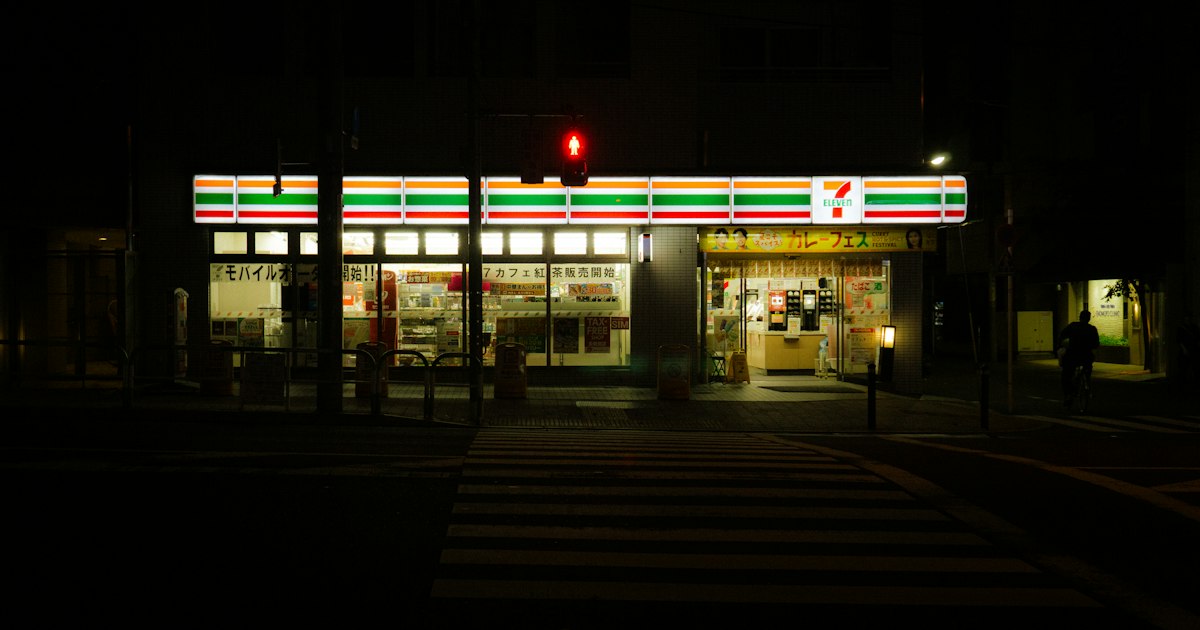
Photo by SungWon Kim on Unsplash
If you’re staying in Japan for a week or two — hopping between an Airbnb, a business hotel, and maybe a ryokan — getting a package delivered can feel like a logistical puzzle. Hotels won’t always hold parcels before check-in, Airbnb hosts aren’t always reachable, and most short-term visitors don’t have a fixed address to give Amazon Japan, Rakuten, or a department store’s shipping form. The good news is that Japan has an entire infrastructure built for exactly this problem: PUDO stations and konbini (convenience store) pickup counters. Once you understand how they work, you can shop online, ship souvenirs ahead, or receive a replacement SIM card without ever needing a permanent address.
What a PUDO Station Actually Is
PUDO (short for “Picking Up / Drop Off”) stations are the orange-and-white self-service parcel lockers you’ll see outside train stations, inside supermarkets, and in the entryways of some Lawson stores. They’re operated by Yamato Transport (the company behind the famous black-cat “Takkyubin” delivery vans) in partnership with Japan Post and other carriers. They’re genuinely useful for visitors because they run 24 hours a day, every day — no staff, no store hours to work around.
To receive a package at a PUDO locker, you (or the online store, if it supports locker delivery) register the locker as the delivery address when checking out, or you redirect a parcel after it’s already dispatched using the Yamato “My Yamato” app or the tracking link in your delivery notification email. When the parcel arrives, you get an SMS or email with a QR code or numeric PIN. Walk up to the locker’s touchscreen, scan or enter the code, and a locker door pops open with your box inside. It typically takes under a minute.
How Konbini Pickup Works
Seven-Eleven, Lawson, and FamilyMart all double as parcel counters for Yamato, Sagawa, and Japan Post. This is the option to use if you don’t trust a locker to have space for an oddly shaped box, or if you’d rather deal with a human. The process: the sender ships to a specific store (you give them the store’s official address plus your name, written as “c/o [Store Name]”), and when it arrives, staff hold it behind the counter. You’ll get a tracking number or QR code by text or email — bring that up on your phone, hand it to the cashier, and they’ll pull the parcel from the back room. No passport is usually required for this, though some staff may ask you to confirm the name on the slip, so it helps to have the confirmation screen ready rather than digging through your inbox at the counter.
This matters more than it sounds like, because anyone who’s had to deal with losing a passport in Japan knows how often Japanese bureaucracy defaults to wanting photo ID — konbini pickup is refreshingly low-friction by comparison.
Why This Matters for Shopping, Not Just Deliveries
The obvious use case is Amazon Japan or Rakuten orders, but the more interesting one for travelers is shipping your own purchases. If you’re buying bulky or breakable items — a Karimoku side table, a boxed Hario coffee set, or an armful of New Year fukubukuro grab bags — most department stores and specialty shops will arrange domestic Takkyubin shipping from the register. Rather than giving them your hotel’s address (where front desks sometimes misplace parcels or refuse packages for guests who’ve already checked out), you can have it sent to a PUDO locker or konbini near wherever you’ll actually be in a few days. This is especially handy around New Year’s, when fukubukuro shopping produces more bags than any one person wants to carry around Tokyo for the rest of the trip.
Costs and How Long Parcels Are Held
Using a PUDO locker or konbini as a pickup point costs nothing extra — you only pay the normal shipping fee, which for a standard Takkyubin box within Japan runs roughly ¥700–¥1,500 depending on size and distance (a bit more for oversized furniture). The only cost consideration is on the sending side: if you’re shipping something home internationally, that’s a separate, much pricier calculation (international Yamato or Japan Post EMS rates, often ¥5,000+ for a medium box), and PUDO lockers don’t handle customs paperwork — that still happens at a post office counter.
Storage time is the detail that trips up visitors. PUDO lockers generally hold a parcel for about 3 days before returning it to the sender or the depot; konbini counters are a bit more forgiving, often a week, but it varies by carrier and store. If you’re heading out on a multi-day side trip — say, using a JR Tokyo Wide Pass for a few days around Nikko and Karuizawa — don’t schedule a locker delivery for the day you leave. Either have it arrive before you depart or extend the hold through the carrier’s app (Yamato’s app lets you push the pickup deadline back a few days with a couple of taps).
Common Mistakes to Avoid
- Assuming any Lawson or FamilyMart handles any carrier. Not every konbini partners with every courier — Yamato pickup is widest at Lawson and some FamilyMart locations, Japan Post ties in with different stores depending on the region. Check the carrier’s app or the notification SMS for the exact confirmed store before you walk over.
- Letting the QR code expire out of your inbox. Screenshot the pickup code as soon as it arrives — spotty hotel wifi or a dead phone battery at the counter is a surprisingly common reason people have to come back a second time.
- Forgetting rural stores keep shorter hours. City konbini are often 24 hours, but smaller-town branches may close overnight, which matters if you’re picking up late after a long travel day.
- Using a locker for anything fragile and oversized. PUDO compartments come in a few sizes, but the largest still won’t fit a big box — oversized furniture or appliance purchases should go to a staffed counter or a direct home/hotel delivery instead.
- Not registering a Japanese phone number when required. Some retailer checkout forms want a local number format to generate the pickup SMS; a hotel’s front desk will usually let you borrow their number for this if your own SIM can’t receive Japanese texts.
Getting Comfortable With the System
Once you’ve used a PUDO locker or a konbini pickup counter once, the appeal becomes obvious — it decouples “where you are” from “where things get delivered,” which is exactly the flexibility a short-term visitor needs. Combine it with Japan’s otherwise tight, reliable delivery windows and you can treat parcel pickup the same way locals do: as a quick errand on the way to the station, not a logistics project.