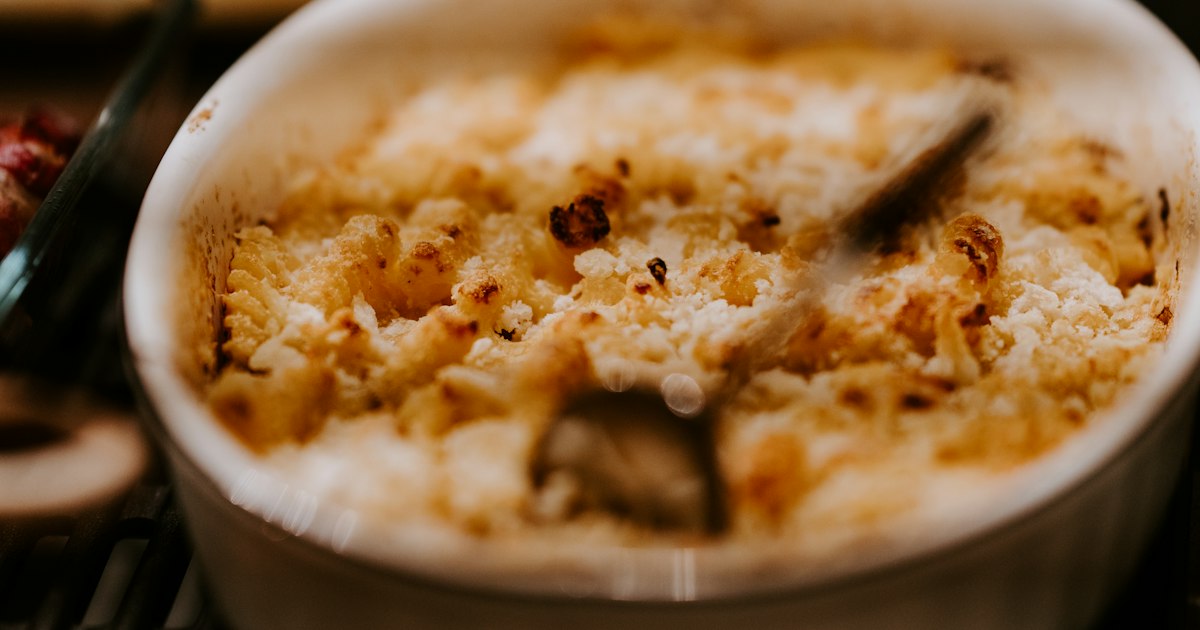
Photo by Claudio Schwarz on Unsplash
If you’ve wandered into a Japanese café on a cold day and seen someone eating what looks like a casserole dish of rice bubbling under melted cheese, that’s doria — one of the cornerstones of yoshoku, Japan’s category of Western-inspired comfort food. It’s rice, a creamy sauce, and a protein of your choice, baked together under a golden layer of cheese until the edges turn crisp and the center stays molten. It’s not on most tourist itineraries, which is exactly why it’s worth seeking out.
What Doria Actually Is
Doria is baked rice gratin: pilaf-style or plain buttered rice spread in a shallow oven dish, topped with a white sauce (usually a béchamel or cream-based sauce, sometimes a demi-glace variant), a protein like shrimp, chicken, or minced beef, and a blanket of cheese, then baked until browned on top. The texture contrast is the whole point — crisp cheese crust, molten sauce, and rice that’s absorbed just enough creaminess without turning to mush.
It sits in the same yoshoku family as hamburg steak, omurice, and korokke — Japanese reinterpretations of European dishes that emerged in the late 19th and early 20th centuries as Japan opened to Western food culture. If you enjoyed digging into hayashi rice, doria is the next logical stop — both dishes lean on rich, European-style sauces poured over Japanese short-grain rice, but doria’s defining move is the oven and the cheese.
Where the Dish Actually Comes From
Doria’s origin story is tied to Yokohama’s Hotel New Grand, which opened in 1927 and became a hub for Western-style dining as Japan modernized its port cities. The hotel’s Swiss-born chef, Saly Weil, is widely credited with creating doria for a guest who wanted something light but warming. Whether or not every detail of that story is exact, Hotel New Grand still serves its own version today, and it’s the most historically grounded place to try the dish if you’re in the Yokohama area.
Hotel New Grand is a short walk from Yokohama Station (or Nihon-odori Station on the Minato Mirai Line), right by Yamashita Park and the waterfront — an easy half-day add-on if you’re already doing Minato Mirai or Chinatown. The hotel’s main dining room, The Café, serves its signature “Shrimp Doria” (ドリア) for around 2,500–3,000 yen, which is on the higher end for this dish but comes with the historical bragging rights of eating it where it was supposedly invented.
Budget, Mid-Range, and Splurge Options
Doria’s everyday home is the family restaurant chain, not the fine-dining room, so most people’s first bite comes cheap.
- Budget (500–900 yen): Saizeriya, the ubiquitous Italian-style family chain, sells several doria variations — the Milanese-style doria and a mushroom cream doria are regulars on the menu — for well under 1,000 yen. It’s an easy, low-risk way to try the dish if you’re not sure you’ll like it.
- Mid-range (900–1,500 yen): Family restaurants like Royal Host, Jonathan’s, and Denny’s Japan all carry doria, often paired with a small salad and soup set. Royal Host’s version tends to use a richer demi-glace or cream sauce and is a step up in quality from the fast-casual chains.
- Splurge (2,000–3,000+ yen): Hotel New Grand in Yokohama, as above, plus standalone yoshoku specialty restaurants in Tokyo and Osaka that make their white sauce from scratch and bake individual portions in copper or ceramic gratin dishes. These places treat doria as the centerpiece of the meal rather than a side option, often adding lobster, crab, or wagyu versions.
How to Order and Eat It
Doria is almost always ordered by its filling: ebi doria (shrimp), kani doria (crab), chicken doria, or hambagu doria (hamburg steak doria, essentially doria topped with a minced meat patty). Menus will usually list it simply as “〇〇ドリア.” It arrives in the baking dish itself, blisteringly hot — restaurants will warn you with a “お気をつけください” (please be careful) if the dish just came out of the oven, and they mean it. Give it two or three minutes before digging in, both because the ceramic dish retains heat and because the sauce needs a moment to set slightly so it doesn’t just run off the rice.
It’s eaten with a spoon, not chopsticks, and usually comes with no side dishes beyond maybe a small salad or soup in a set meal. Don’t expect bread on the side — this is a rice dish through and through, not a European gratin substitute.
Best Season and Timing
Doria is a cold-weather dish by instinct — it’s warming, rich, and feels right in autumn and winter, roughly October through March. That said, it’s on year-round menus at every chain that serves it, so you won’t struggle to find it in summer; it’s just less of a “craving” item when it’s 35°C outside. If you’re building a cold-season itinerary around onsen towns or snow regions, doria is a reliable lunch option in station cafés and department store restaurant floors (depachika) where yoshoku counters are common.
Lunchtime is the best time to go if you want it at a sit-down restaurant without a wait — most family restaurants run lunch sets from around 11:00 to 15:00 that include doria at a discount versus the dinner menu price.
Common Mistakes to Avoid
- Ordering it expecting pasta-adjacent lightness. Doria is heavier and richer than it looks in photos — the rice absorbs the sauce, so portions that look modest can be quite filling.
- Touching the dish right away. The ceramic gratin dish holds heat far longer than the food looks like it should; burned fingers are the most common doria mishap.
- Assuming every “doria” is the same. Chain versions use a simpler béchamel, while specialty yoshoku restaurants may use a brown demi-glace sauce closer to hayashi rice. If you want the classic white, creamy version, look for “cream doria” or “white sauce doria” (ホワイトソースドリア) specifically.
- Skipping it because it seems “not Japanese enough.” Yoshoku is as much a part of everyday Japanese dining as ramen or soba — it’s just less photographed. Doria, hayashi rice, and omurice are staples of the same lunch-counter culture.
Finding It Outside the Big Cities
Because doria lives mainly in chain family restaurants and department store restaurant floors, you’ll find it almost anywhere in Japan, including smaller cities and even rural service areas along expressways. It’s a useful fallback meal if you’re traveling somewhere like a Fuji-area day trip (after a stop at Oshino Hakkai, for instance) and want something warm and filling without hunting for a specific regional specialty. The same goes for quieter island getaways — on a trip to somewhere like Kozushima, a family restaurant doria might be the most reliable hot meal you’ll find outside of seafood-focused local spots.
If you’re building out a broader yoshoku-tasting itinerary, pairing doria with hayashi rice and omurice across a few meals gives you a good sense of how Japan absorbed and reshaped Western cooking over the past century — comfort food that’s distinctly its own thing by now, whatever its Swiss-chef origin story.