Photo by Chloe Evans on Unsplash
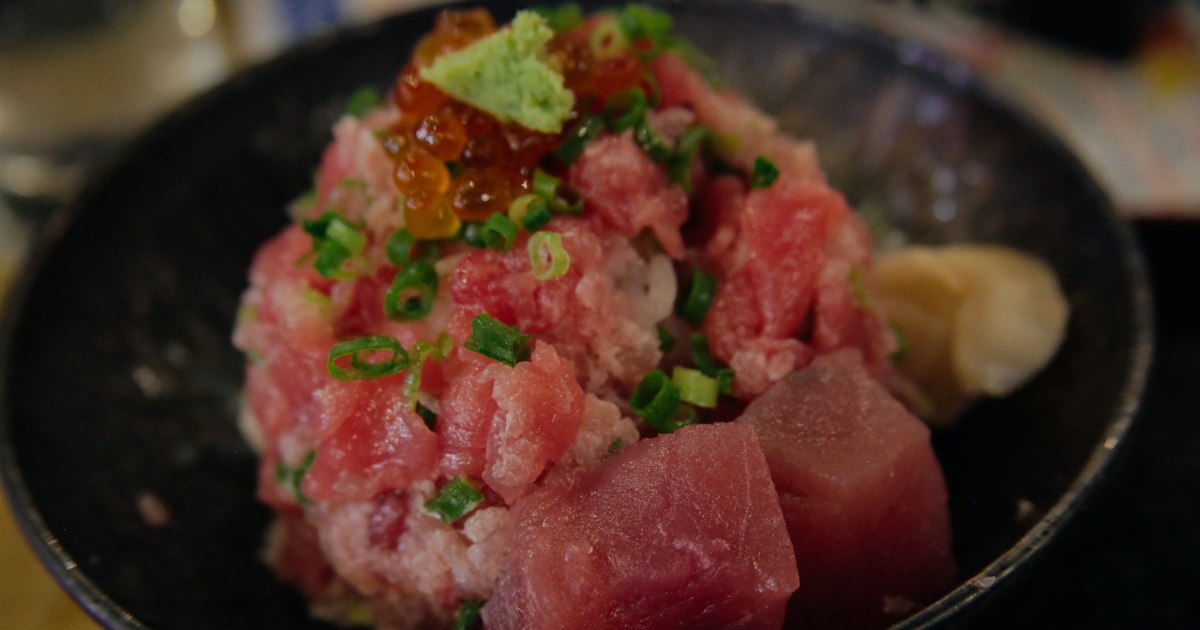
Negitoro don looks unassuming next to a glossy platter of nigiri, but it’s one of the most quietly satisfying things you can order in Japan: finely minced tuna, folded with chopped scallion, piled over warm rice. It’s cheap enough to eat daily and good enough that plenty of Japanese diners order it over pricier cuts of toro. Here’s what it actually is, where to get a good one at every budget, and what trips up first-time visitors.
What Is Negitoro Don, Exactly?
“Negi” means scallion, “toro” refers to the fatty belly of tuna — but negitoro itself isn’t usually made from whole toro. It originated as a way to use nakaochi, the scraps of meat scraped off the bones after a tuna is filleted. Those scraps are minced to a soft, almost paste-like texture, mixed with finely chopped scallion (usually the white part of a long onion, not the leafy green chives sprinkled on top for color), and served as a gunkan-maki topping, a don (rice bowl), or stirred into a bowl of somen noodles in summer.
Because it’s made from trimmings rather than a prime cut, it’s historically a frugal, everyday dish — closer in spirit to a humble breakfast rice bowl like tamago kake gohan than to a special-occasion sushi order. Don’t let that fool you, though — a well-made negitoro don, with good tuna and a splash of soy sauce and wasabi mixed through, is genuinely one of the better-value items on a sushi menu.
Budget Option: Conveyor-Belt Sushi Chains
The cheapest, most reliable place to try negitoro is a kaiten-zushi (conveyor-belt sushi) chain — Sushiro, Kura Sushi, Hama-zushi, and Uobei all have it. A plate of negitoro gunkan (usually two pieces) typically runs ¥115–170, and most branches serve rice bowl versions too, around ¥400–600. These chains are nationwide, open roughly 11:00–23:00, take walk-ins (expect a queue card and a wait at busy locations around lunch and dinner), and have English touchscreen menus at most branches, so they’re a safe first try even with zero Japanese.
Worth knowing: at this price point, some negitoro — especially pre-packaged versions sold in supermarkets and used by the cheapest chains — is tuna scraps blended with a small amount of added vegetable oil to mimic the richness of real toro fat. It’s not unsafe or unusual, just worth knowing if the texture tastes unexpectedly smooth or oily; it’s a known trick in the industry, not a sign of a bad shop.
Mid-Range: Standing Sushi Bars and Market Stalls
For a step up without a reservation, look for tachigui (standing) sushi bars, which are common around Tokyo’s fish market areas and train stations. Uogashi Nihon-Ichi, with several branches near the old Tsukiji site, is well known specifically for cheap, fast negitoro gunkan at roughly ¥150–250 a piece, eaten standing at a counter in a couple of minutes.
The Tsukiji Outer Market (Tsukiji Jogai) and the Toyosu Market dining hall are the other classic hunting grounds. Expect negitoro don here in the ¥1,200–2,500 range, often served with a raw quail egg yolk on top. These market stalls keep early, fisherman’s hours — most open around 5:00–7:00 and close by early-to-mid afternoon (often 14:00–15:00), and many are closed on Sundays and some Wednesdays, so check the specific stall’s schedule before planning a trip around one. Cash is still the safer bet at the smaller stalls, even though card acceptance has improved.
Splurge: Hand-Mixed Negitoro at a Proper Sushi-ya
At a sit-down sushi restaurant or a department store restaurant floor, negitoro is made to order rather than pre-packed, with the chef mincing fresh toro trimmings by hand and seasoning them lightly with soy sauce right before serving. A negitoro don at this level runs roughly ¥1,800–3,500, or it may appear as one course within an omakase set. The texture difference is real — looser, fresher, with visible flecks of fat rather than a uniform paste — and it’s a good way to taste the dish at its best if you’ve only had the conveyor-belt version so far.
Best Time to Go
Negitoro itself is available year-round because it’s made from trimmings rather than a seasonal cut, so there’s no “wrong” month to order it. That said, bluefin tuna’s fat content peaks in winter (roughly December through February), so negitoro made in winter tends to taste noticeably richer at any shop that sources fresh tuna daily rather than frozen. For market visits specifically, go on a weekday morning — weekends at Tsukiji Outer Market get crowded with tourists by mid-morning, and the first week of January is especially chaotic around the market’s New Year reopening. Lunch (roughly 11:30–13:30) is the busiest window at conveyor-belt chains; arriving right at opening or after 14:00 cuts the wait significantly.
Common Mistakes Visitors Make
- Confusing it with tekkadon. Tekkadon is sliced tuna over rice; negitoro is minced. They look similar in photos but are different dishes with different textures — ask for “negitoro don” specifically if that’s what you want.
- Expecting premium toro flavor at a ¥150 price point. Cheap negitoro is made from scraps, not the prized cut. It’s a different, more everyday pleasure than a ¥1,500 slice of otoro nigiri — comparing them head-to-head sets up disappointment.
- Not mixing the bowl. Negitoro don usually comes with soy sauce, wasabi, and sometimes a raw egg yolk arranged on top rather than already stirred in. Mix everything together before eating — it’s meant to coat the rice, not sit as a garnish.
- Assuming market stalls take cards and stay open all day. Many close by mid-afternoon and some are cash-only. Go early and bring yen.
How to Order and Eat It Like a Local
If you’re ordering at a counter or on a touchscreen, “negitoro don, onegaishimasu” is all you need. At an izakaya, negitoro often shows up as a small shared plate rather than a full rice bowl — a good pairing is a cold tofu dish like hiyayakko, which cuts nicely against the richness of the tuna. Stir the bowl thoroughly before your first bite, eat it reasonably quickly since the minced texture doesn’t hold up well once it warms to room temperature, and don’t be shy about asking for extra scallion or a dash more soy sauce — it’s a casual dish, and nobody will blink at the request.
If raw tuna in minced form sounds mild and you’re curious to push further into Japan’s more unusual seafood traditions, dishes like funazushi, Shiga’s fermented crucian carp sushi, sit at the opposite end of the spectrum — but negitoro don remains the friendliest, most approachable entry point into Japan’s raw-fish-over-rice tradition, and one worth ordering more than once on any trip.