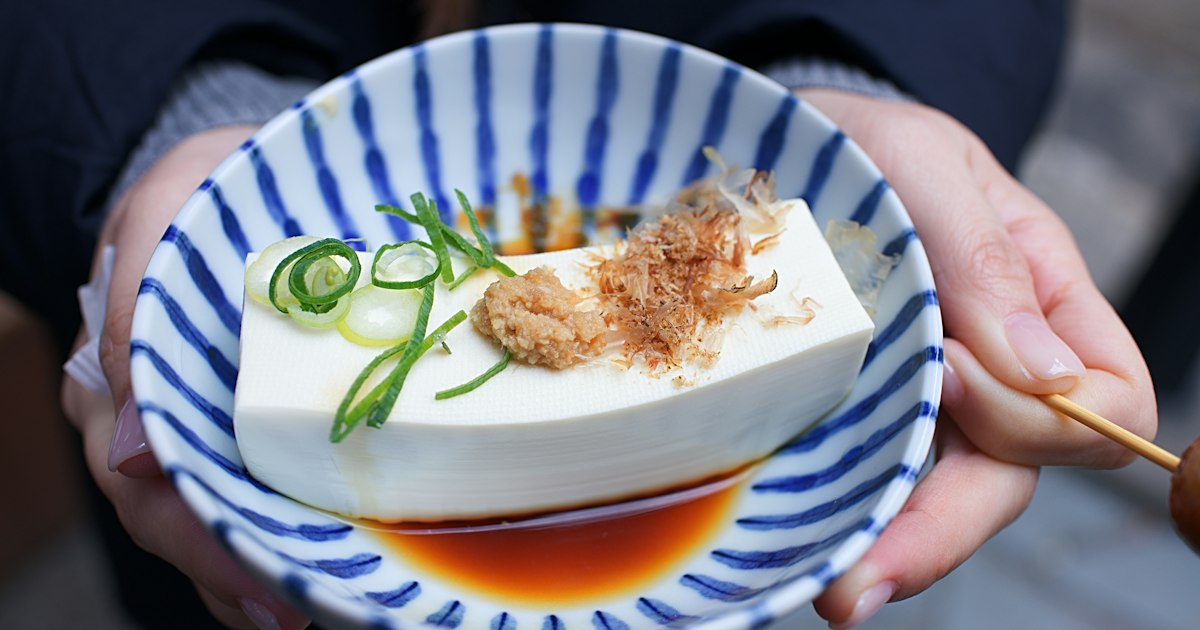
Photo by Sherman Kwan on Unsplash
If you’ve sat down at a Japanese izakaya in summer and seen a small white block topped with green onion and brown flakes arrive before anything else you ordered, that’s hiyayakko. It looks plain, costs almost nothing, and is one of the most quietly satisfying things you can eat in Japan — if you know what’s actually on top of it and why.
What Is Hiyayakko, Exactly?
Hiyayakko (冷奴) is simply chilled tofu served whole or halved, topped with aromatics and finished with a splash of soy sauce. The name comes from “hiya” (cold) and “yakko,” an old word for a block-shaped crest pattern that the tofu’s cube shape resembles. It’s not a recipe so much as a format — the tofu itself is the point, and the toppings are there to contrast with its blandness, not mask it.
Restaurants almost always use kinugoshi (silken) tofu for hiyayakko rather than momen (firm) tofu. Silken tofu has a wobblier, custard-like texture that works when you’re eating it cold with a spoon; firm tofu is saved for dishes that get cooked, like agedashi or mabo tofu. If a restaurant serves you a firmer, denser block, it’s usually a regional specialty tofu rather than a mistake.
The Toppings That Make It Japanese (Not Just Cold Tofu)
The standard topping set, in rough order of how often you’ll see it:
- Katsuobushi — shaved dried bonito flakes, added for umami and a little visual movement as the flakes curl in the heat of the tofu’s surface moisture.
- Negi — finely chopped green onion, for sharpness.
- Oroshi shoga — grated fresh ginger, a small mound on the side.
- Myoga — a mild, floral Japanese ginger bud, sliced thin; common in summer versions and genuinely hard to find outside Japan.
- Shiso — a shredded or whole perilla leaf, for a grassy, slightly minty note.
- Soy sauce — poured directly over, sometimes swapped for ponzu (citrus soy) in summer for extra brightness.
A drizzle of sesame oil and a few drops of rayu (chili oil) turn it into a more Chinese-leaning “piiman-fu” or “chilled tofu Sichuan-style” variant that’s also common on izakaya menus, usually labeled something like “piritofu” or “goma-rayu dofu.”
Best Season and Where to Order It
Hiyayakko is technically available year-round, but it’s a summer dish by convention — in haiku and seasonal-food lists it’s classified as a kigo for summer, alongside things like wind chimes and cold noodles. June through September is when you’ll see it on every izakaya menu and when myoga and shiso are at their freshest. Order it as a starter; it’s meant to come out fast, before your hot dishes, and most places will have it on the table within a couple of minutes of ordering.
At a typical izakaya, hiyayakko runs about ¥350–¥600, often listed under “tsumami” (small bites/snacks) rather than the mains. It’s one of the cheapest, most reliable things to order while you wait for everything else, and a safe pick if your group has a vegetarian — just double-check the soy sauce or tare isn’t dashi-based, since Japanese dashi is often made with bonito or fish stock even in dishes that look plant-based.
Tofu Shops Worth a Detour
Most hiyayakko you eat will come from supermarket tofu, which is genuinely good in Japan — a plain block from a conbini or supermarket, chilled, costs roughly ¥100–¥200 and is perfectly fine with your own toppings added at a ryokan or Airbnb kitchen. If you want to taste the difference good tofu makes, look for a dedicated tofuya (tofu shop), usually a small storefront that opens early (around 8:00–9:00) and sells out of fresh blocks by afternoon — Kyoto has several well-known ones near Fushimi Inari and the Nanzenji area in the east of the city, where temple-adjacent tofu restaurants have served tofu-based set meals for generations. These shops make tofu that’s noticeably creamier and more flavorful plain, with almost no bean bitterness.
If your trip includes a traditional inn, you may already encounter well-dressed hiyayakko without ordering it — it’s a frequent component of a ryokan breakfast tray, usually in a small side dish with minimal toppings so it doesn’t compete with the grilled fish and rice.
Budget, Mid-Range, and Splurge Ways to Eat It
Budget (¥150–¥500): a conbini tofu pack plus a sachet of soy sauce, or an izakaya’s house hiyayakko ordered alongside drinks.
Mid-range (¥1,200–¥2,500): a lunch set at a dedicated tofu restaurant, where hiyayakko comes as one course alongside agedashi tofu, yuba (tofu skin), and rice — common around Kyoto’s Nanzenji and Arashiyama districts.
Splurge (¥5,000–¥10,000+): a multi-course tofu kaiseki dinner at an established Kyoto tofu-ryori restaurant, where hiyayakko or a chilled yuba course opens a sequence of six to ten tofu preparations, served in a garden setting. Book ahead — these restaurants often require a reservation a day or more in advance and may have limited English-language booking options, so having your hotel call is worth the ask.
Common Mistakes Visitors Make
The biggest one is over-soaking tofu in water before eating it — restaurants drain the block well before serving, and dumping a chilled block straight from a water-packed supermarket container without patting it dry will water down your soy sauce and dilute the flavor. Pat it with a paper towel first.
The second is piling on too many toppings at once. A good hiyayakko has restraint — negi and katsuobushi with soy sauce is already complete; adding ginger, myoga, shiso, sesame oil, and rayu all together just muddies everything. Pick two, maybe three.
The third is assuming it’s always vegetarian-safe. Katsuobushi is fish, and soy sauce blends and ponzu sometimes include dashi. If you’re vegetarian or vegan, ask for “katsuobushi nashi” (without bonito flakes) and confirm the soy sauce is plain shoyu.
Dressing Your Own Hiyayakko at Home
This is an easy souvenir-adjacent dish to recreate: bring back a bottle of good soy sauce, a bag of katsuobushi, and if you can find a shaver, a block of dried katsuobushi to shave fresh (fresh-shaved flakes curl and move on warm tofu in a way that pre-shaved packets don’t). Fresh myoga and shiso don’t travel, but green onion and ginger are available almost anywhere, so you can get close to the real thing within a day of coming home.
It’s a small dish, but it’s a good one to understand early in a Japan trip — once you know what’s supposed to be on top, you’ll notice how differently restaurants treat something that looks, at first glance, like nothing at all. If you’re traveling in peak summer when hiyayakko is most common, it’s also worth pairing the meal planning with the right gear for the heat — see our guide to UV-cut arm covers and cooling towels for walking between restaurants in July and August. And if you liked the idea of a simple, ingredient-driven Japanese home dish, the chilled-tofu mindset carries over nicely to tamago kake gohan, another dish where quality of the base ingredient matters more than technique.