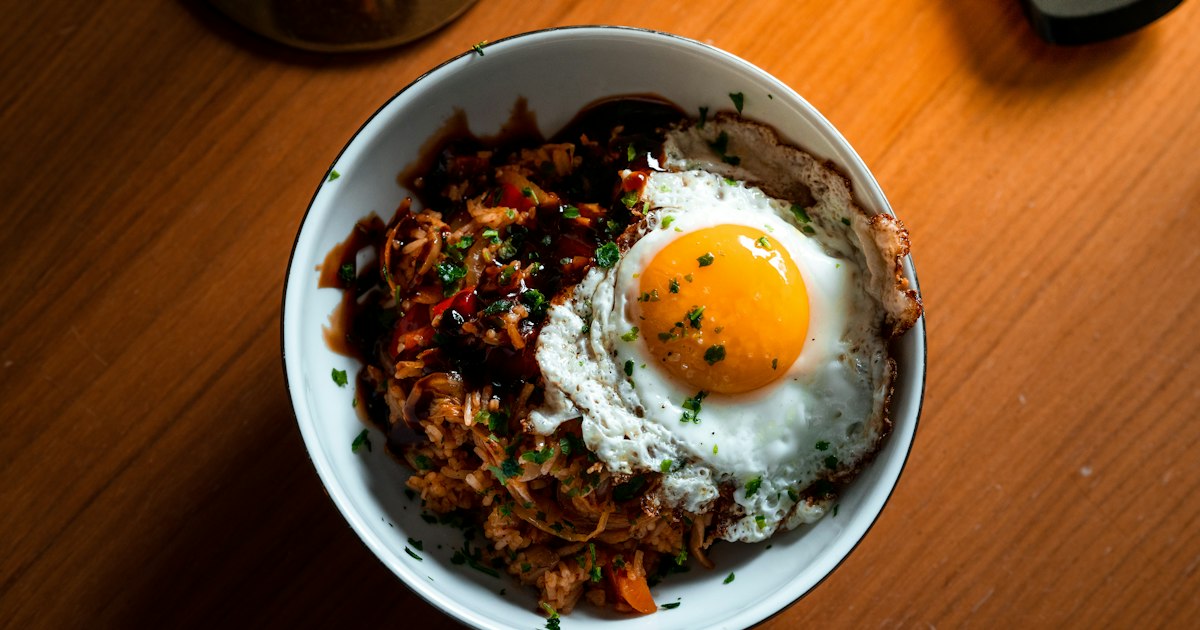
Photo by Emanuel Ekström on Unsplash
Ask a Japanese friend what they ate for breakfast as a kid and there’s a good chance the answer involves cracking a raw egg over a bowl of hot rice, splashing on some soy sauce, and stirring it into a glossy, savory mess eaten in under two minutes. It’s called tamago kake gohan — TKG for short — and it’s one of the most ordinary, most beloved, and most misunderstood dishes a visitor can try in Japan. Ordinary because every household has its own version. Misunderstood because most foreign visitors have been taught their whole lives never to eat raw egg. This guide explains why TKG is safe here, how to build a proper bowl, and where to find it if you’d rather have someone else make it for you.
What Tamago Kake Gohan Actually Is
At its simplest, TKG is three ingredients: freshly cooked short-grain rice, a raw egg, and soy sauce. You crack the egg directly onto the hot rice (or into a small bowl first if you want to separate the white and whisk it to frothy perfection), add a few drops of soy sauce, and mix until every grain is coated in a pale, silky custard. It’s cheap, it’s fast, and it’s deeply comforting — the Japanese equivalent of buttered toast. Most households eat it for breakfast, but convenience-store workers, students, and night-shift workers also treat it as a reliable midnight meal because it takes about ninety seconds to make.
Why Raw Egg Is Safe to Eat in Japan
This is the question every first-timer asks, and it’s a fair one. Japan treats eggs meant for raw consumption as a distinct product category. Commercial egg producers follow strict washing, sanitizing, and cold-chain standards specifically aimed at preventing salmonella contamination, and cartons sold in supermarkets are stamped with a shōmi kigen (賞味期限) — a “best for raw eating” date, usually printed separately from the general expiration date. Eat the egg raw before that date and it’s considered perfectly safe; after it passes, the advice is simply to cook the egg rather than eat it raw. This labeling system is a big part of why TKG culture exists at all — it only works because the entire supply chain is built around eggs being fit to eat uncooked. If you’re staying somewhere with a kitchenette, buy eggs from a supermarket rather than an open-air market stall, and use them within a few days.
Building a Proper Bowl
- Rice first, always hot. The heat of the rice is what lightly “cooks” the egg white around the edges. Day-old or lukewarm rice makes a worse bowl.
- Crack, don’t dump. Many people separate the yolk, whisk just the white into a foam with chopsticks, then pour it over the rice before adding the yolk whole on top — it gives a lighter, fluffier texture than dumping the whole egg in at once.
- Go easy on soy sauce. A teaspoon or less is standard. Over-pouring is the single most common mistake visitors make, and it drowns the egg’s flavor in salt.
- Add texture. Thinly sliced green onion, a pinch of katsuobushi (bonito flakes), nori strips, or furikake are common additions. Some regions add a dash of dashi instead of soy sauce.
If you want to bring the ritual home, look for a bottle labeled tamago kake gohan yō shōyu — soy sauce made specifically for this dish, usually a touch sweeter and milder than regular koikuchi shoyu, so it doesn’t overpower the egg. Specialty food halls in department store basements and larger supermarkets carry several competing brands, and a 200ml bottle (roughly ¥500–900) makes a compact, flavorful souvenir that won’t raise eyebrows at customs the way fresh eggs would.
Where to Try It If You’re Not Cooking
TKG rarely appears on restaurant menus in cities, since it’s considered home food, but there are two reliable ways to try a well-made version. The first is a traditional ryokan breakfast — raw egg, a small bottle of soy sauce, and a pot of rice are a near-universal fixture of the Japanese-style breakfast tray, so if you’re staying at a ryokan on your trip, this is likely already on your table. Our ryokan breakfast guide walks through everything else you’ll find on the tray and how to eat it properly.
The second option is rural Japan, particularly egg-farming regions in Okayama, Miyazaki, and parts of Hokkaido, where farm shops and roadside michi no eki stations sell their own eggs alongside a small attached eatery serving a simple TKG set — usually just rice, egg, soy sauce, and miso soup for around ¥500–800, often with free rice refills. These spots lean on one selling point: eggs so fresh they were laid that morning, which genuinely does make a textural difference in the finished bowl. If you’re road-tripping through the countryside and see a farm shop advertising fresh eggs, it’s worth the stop.
Common Mistakes to Avoid
Beyond over-salting with soy sauce, the other frequent error is using eggs past their raw-eating date or eggs that have been left unrefrigerated for hours — airport lounge buffets and hotel breakfast spreads are the usual culprits, since eggs sitting at room temperature lose their raw-safety window quickly. Stick to eggs served cold or ones you’ve bought yourself from a supermarket fridge case. Another misstep is treating TKG as a full meal rather than a component of one — in a traditional Japanese breakfast it’s paired with miso soup, pickles, and grilled fish, not eaten alone as the entire meal, though plenty of people do exactly that on a busy morning.
Budget, Mid-Range, and Splurge Versions
At the budget end, a carton of ten standard supermarket eggs runs about ¥200–300, and any rice and soy sauce you already have completes the dish for next to nothing — this is the version most Japanese households eat daily. Mid-range means seeking out a branded specialty egg, sold individually or in small cartons of six to eight for ¥400–900, marketed specifically for raw eating with a deeper-colored yolk and firmer white. The splurge tier is a farm-direct egg from a named producer, sometimes sold as a single egg for ¥100–300, paired with a premium TKG-specific soy sauce — the kind of small, precise luxury that defines a lot of Japanese food culture, where incremental quality differences in a humble dish are taken completely seriously. If that appeals to the way you travel, it pairs well with seeking out other deceptively simple regional specialties, like Obihiro’s original butadon in Hokkaido, or going further off the beaten path entirely with something like Shiga’s funazushi for travelers chasing Japan’s more adventurous traditional foods.
TKG isn’t a dish you plan a trip around, but it’s one of the easiest ways to eat exactly like a local does on an ordinary morning — and once you’ve had a genuinely fresh egg over hot rice, the raw-egg hesitation tends to disappear fast.