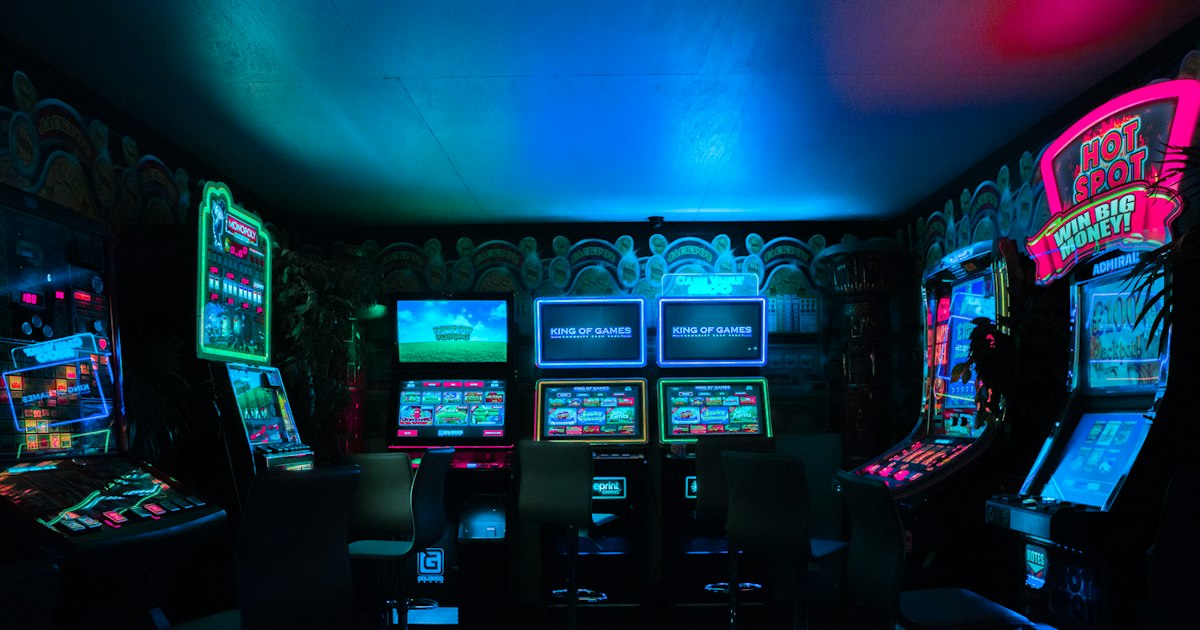
Most visitors who make it to Kawasaki are headed to Kawasaki Daishi, the city’s famous temple. Few of them realize that a five-minute walk from the station sits one of the strangest arcades in Japan: a building designed to look like a collapsing, rain-slicked back alley from a near-future dystopia, packed wall to wall with claw machines, purikura booths, and retro video game cabinets. It’s called Kawasaki Warehouse, and it’s one of the few attractions in the Tokyo area where the set design is as much the draw as the games themselves.
What Kawasaki Warehouse actually is
Kawasaki Warehouse occupies a floor inside the Kawasaki DiCE entertainment building, operated by GENDA GiGO Entertainment (the same company behind the GiGO arcade chain, formerly Sega’s arcade division). Rather than build a generic arcade floor, the designers themed the entire space as a crumbling, graffiti-covered slum alley — exposed pipes, hanging laundry, flickering neon kanji signage, fake rain and steam effects, and narrow walkways that make you feel like you’ve wandered into a Kowloon Walled City-style set from Blade Runner. Underneath the atmosphere, it functions exactly like a normal Japanese game center: rows of UFO catcher claw machines, medal games, print-club (purikura) photo booths, and a dedicated section of vintage and rare arcade cabinets that have mostly disappeared from other arcades.
If you’ve been to the Nintendo Museum in Kyoto and enjoyed the walk through gaming history there, Kawasaki Warehouse scratches a similar nostalgia itch but in a much rawer, less curated way — it’s a working arcade, not a museum, so you’re playing the machines rather than looking at them behind glass. For ticketing logistics on that Kyoto counterpart, see our guide to getting tickets to the Nintendo Museum.
Getting there from Tokyo
Kawasaki city sits just south of Tokyo, between Tokyo and Yokohama, and is genuinely easy to reach as a half-day trip. From Tokyo Station, take the JR Tokaido Line or Keihin-Tohoku Line to JR Kawasaki Station — the ride takes about 20 minutes. From Shinagawa, it’s closer to 10 minutes on the same lines. If you’re coming from Haneda Airport, the Keikyu Line runs directly to Keikyu Kawasaki Station in roughly 15 minutes.
Kawasaki DiCE is on the east side of the station (the Keikyu Kawasaki side), about a 2-minute walk from Keikyu Kawasaki Station or a 5-minute walk from JR Kawasaki Station’s east exit. Look for signage pointing toward “DiCE” — the building also houses a bowling alley, karaoke, and other GiGO-branded attractions, so Kawasaki Warehouse is just one floor within it, not a standalone building.
Common mix-up: Kawasaki Warehouse is not the same as Kawasaki Daishi (the temple) or “Kawasaki Daisy.” If you tell a taxi driver or type “Kawasaki” into a map app without specifying DiCE, you may end up well away from the arcade. Save the building name “Kawasaki DiCE” (also written Kawasaki Dice) in your maps app before you go.
Entry, cost, and how the games work
There’s no admission ticket and no reservation system — you walk in for free and only pay for what you play, exactly like any other Japanese game center. Budget roughly:
- UFO catcher / claw machines: about ¥100–¥300 per play, depending on the machine and prize
- Retro video game cabinets: typically ¥100 per credit, similar to classic arcades
- Purikura (photo sticker booths): around ¥400–¥600 per session
- Medal games: medals are usually sold in batches starting around ¥100
Bring cash in small denominations — ¥100 coins specifically. There are change machines on-site that break larger bills, but queues form at them during busy evening hours. Some newer machines accept IC cards like Suica or Pasmo, but don’t count on it for every cabinet; a pocket of coins is still the safest bet.
Budget plan: ¥1,000–¥1,500 covers a satisfying hour of browsing, a few retro game credits, and one or two claw machine attempts without expecting to win.
Mid-range plan: ¥3,000–¥4,000 gives you a real shot at a claw machine prize (these are tuned like any Japanese UFO catcher — budget for several tries) plus a purikura session as a souvenir.
Splurge: serious claw machine hunters can easily spend ¥5,000+ chasing a specific prize; staff will sometimes adjust machine difficulty after repeated plays, a small service gesture worth watching for if you’re visibly struggling.
Opening hours and timing your visit
Like most GiGO-operated arcades, Kawasaki Warehouse generally runs late morning through late night, roughly 10:00 to around 23:45, seven days a week. Hours can shift around holidays or for maintenance, so it’s worth a quick check of signage at the entrance or a search for the current posted hours before you make the trip out, especially if you’re planning a visit close to closing time.
The atmosphere genuinely changes with the time of day. Daytime visits (late morning to mid-afternoon on a weekday) are quieter, making it easier to actually examine the set design and take photos without bumping into other players. Evenings, especially Friday and Saturday nights, are when the space is busiest and feels most alive — more players, more noise, and the neon and fog effects read much better once it’s dark outside. If photography is your main goal, go in the evening; if you want elbow room at the rare cabinets, go on a weekday afternoon.
One scheduling note: Japan’s youth protection ordinances generally restrict minors from being in arcades unaccompanied after 10 PM (and sometimes earlier for younger teens, depending on the prefecture), so families with kids should plan to wrap up before then.
Common mistakes to avoid
- Assuming it’s in Tokyo proper. Kawasaki is its own city in Kanagawa Prefecture. It’s an easy add-on to a Tokyo or Yokohama itinerary, not a Tokyo neighborhood.
- Not bringing enough coins. Claw machines eat ¥100 coins fast, and change machines get congested on weekend evenings.
- Treating it like a museum. There’s no guided tour or English signage system — it’s a real, functioning arcade, so expect noise, cigarette-smell-free but crowded aisles, and other customers actually playing the machines you want to photograph.
- Skipping the rest of Kawasaki DiCE. The building has other floors worth a glance if you’re already there, so it’s easy to turn this into a longer stop rather than a quick in-and-out.
- Forgetting it’s a short detour, not a full-day destination. Most visitors spend 45 minutes to 2 hours here — pair it with Kawasaki Daishi temple or continue on to Yokohama the same day rather than building an entire day trip around it alone.
Pairing it with the rest of your trip
Because Kawasaki Warehouse only takes an hour or two, it works best folded into a bigger day rather than as a standalone outing. If you’re based in central Tokyo, consider combining it with sightseeing closer to the station using a hop-on, hop-off option like the ones covered in our Hato Bus and Sky Bus Tokyo guide, then take the short train ride south to Kawasaki in the afternoon or evening. If you’re chasing arcade and gaming culture specifically, it also pairs naturally with a stop at a Pokemon Center for merch shopping, since both scratch the same “only in Japan” gaming-culture itch in very different ways.
Whatever you bring home from the claw machines, Kawasaki Warehouse is one of those stops that photographs better than it sounds described — a genuinely strange, well-executed piece of set design hiding inside an otherwise ordinary arcade, and one of the easiest offbeat day trips to tack onto a Tokyo-based itinerary.