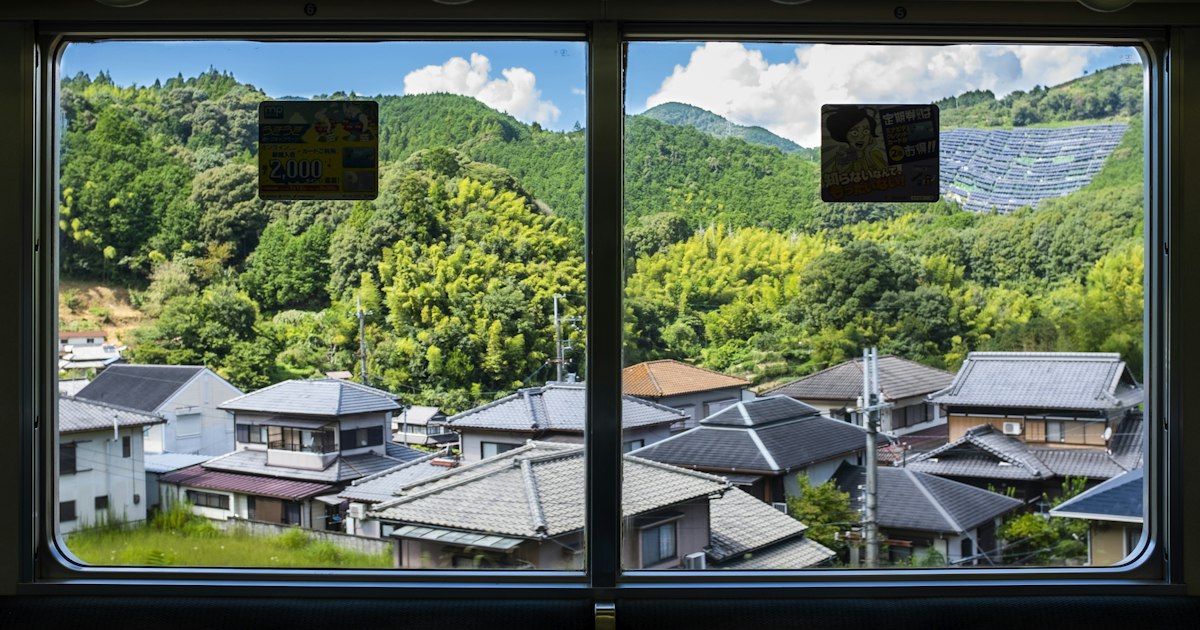
Photo by Nuno Antunes on Unsplash
Most first-time visitors to Tokyo never hear the name Seibu Railway. It isn’t on the JR Pass, it doesn’t touch Shinjuku or Shibuya, and its flagship route runs the “wrong” direction — away from the coast, into the mountains of Saitama Prefecture. That obscurity is exactly why it’s worth knowing about. For around ¥1,300 and 80 minutes, Seibu’s limited express trains — the classic Red Arrow and the newer, saucer-nosed Laview — carry you from the chaos of Ikebukuro to Chichibu, a river-and-mountain town that feels like a different country from the one you landed in.
A Limited Express Most Tourists Skip
Seibu Railway operates two private commuter lines out of Tokyo — the Seibu Ikebukuro Line and the Seibu Shinjuku Line — and the one that matters for this trip is the Ikebukuro Line, which runs northwest into Saitama and terminates at Seibu-Chichibu Station. Local and rapid trains cover the route too, but they take close to two hours with at least one transfer. The reason to seek out this line specifically is the limited express service, which goes direct and reserved-seat all the way, cutting the trip to about 80 minutes.
Because Chichibu doesn’t show up on most “best day trips from Tokyo” lists dominated by Nikko, Kamakura, and Hakone, the trains and the town itself stay noticeably calmer. If you’ve already done a coastal escape like the one described in Choshi’s fishing port and lighthouse, Chichibu is the inland, mountain-and-river equivalent — and just as easy to reach without a rental car.
Red Arrow vs. Laview: Spot the Difference
“Red Arrow” (Reddo Aro) is the decades-old brand name Seibu uses for its limited express service to Chichibu, dating back to trains painted bright red in the 1960s. For years the workhorse on this route was the 10000 series, a boxier, more traditional-looking limited express carriage that still occasionally appears on the timetable, especially during peak seasons when Seibu adds extra runs.
Since March 2019, most departures use the 001 series “Laview,” designed by architect Kazuyo Sejima. It’s instantly recognizable: an egg-shaped nose, floor-to-ceiling panoramic windows even above the luggage racks, and a wide, low-set window line meant to frame the mountain scenery rather than fight it. Seating faces forward in pairs of reclining seats, similar to a Shinkansen car, and there’s a small luggage area near the doors. For this particular ride, the Laview is genuinely worth waiting for if you have flexibility — the window design makes the Arakawa River valley and the approach into Chichibu look spectacular, especially in the front few rows.
Either way, both trains require a seat reservation and an extra limited express charge on top of the base fare — there’s no unreserved “hop on” option.
Getting There: Trains, Times and Fares
Board at Ikebukuro Station, following signs for the Seibu Ikebukuro Line (it has its own gates, separate from the JR and Tokyo Metro sections of the station). Limited express trains to Seibu-Chichibu run roughly hourly through the day, with the first departures around 7:00–8:00 am and the last train back from Seibu-Chichibu typically leaving in the early evening — check the exact time on arrival, since missing it means a slower local-train transfer back or a late taxi to a connecting station.
Fares are two-part: a base fare (around ¥790 one way for the full Ikebukuro–Seibu-Chichibu distance) plus a limited express reservation charge (around ¥500), for a total of roughly ¥1,300 each way. You can buy both at once from the limited express ticket machines or staffed counter near the Ikebukuro Line gates at Ikebukuro Station, or reserve ahead through Seibu’s official website or app, which has an English interface and lets you pick a specific seat. On weekends during shibazakura season (late April–early May) and the Chichibu Night Festival (early December), reserve in advance — trains do sell out.
If you plan to see several sights around both Chichibu and nearby Nagatoro in one day, ask about Seibu’s combined round-trip-plus-local-transport ticket packages at the ticket counter; they’re usually cheaper than paying for each leg separately once you add in local trains and buses.
When to Go: Chichibu’s Calendar
Chichibu rewards timing your trip around one of a few annual events. Late April into early May brings Hitsujiyama Park’s shibazakura — hundreds of thousands of moss phlox plants in pink, purple, and white, with Mount Buko as a backdrop; this is the single most popular reason tourists make the trip, and trains and the park itself get crowded. Autumn, roughly early-to-mid November, turns the Arakawa River gorge at nearby Nagatoro into a foliage display, best seen from a traditional line-boat ride over the Iwadatami rock shelf. In early December, the Chichibu Yomatsuri (Night Festival) — one of Japan’s three major float festivals — fills the town with illuminated floats, fireworks, and food stalls on December 2–3.
Outside of those windows, Chichibu is quiet, which has its own appeal if you’d rather have Chichibu Shrine or the hillside paths to yourself than fight a festival crowd.
What’s Waiting at the End of the Line
Seibu-Chichibu Station sits a 15-minute walk from the separate Chichibu Station on the Chichibu Railway — don’t confuse the two when telling a taxi driver or looking at a map, since they’re run by different companies and serve different onward connections (Chichibu Railway continues to Nagatoro and beyond). From either station, central Chichibu is walkable: Chichibu Shrine, the old townscape near Banba-dori, and sake breweries that offer tastings are all within 15–20 minutes on foot. Hitsujiyama Park is about a 20-minute walk or a short taxi ride from Seibu-Chichibu Station. For something further afield, Mitsumine Shrine, a mountain shrine with its own torii and views, requires a bus ride from Seibu-Chichibu and is best planned as a half-day add-on rather than squeezed in.
Budget travelers can treat this as a self-guided day trip for the cost of two train tickets and lunch (soba and Chichibu’s own regional sake are the local specialties). Mid-range travelers might add the Nagatoro boat ride or a ropeway/bus ticket up to Mitsumine. If you want to splurge, an overnight stay at one of Chichibu’s small ryokan lets you catch the morning light over the valley before the day-trippers’ trains arrive — a nice contrast if you’re also the type to chase mountain-town escapes like Jozankei Onsen near Sapporo.
Mistakes to Avoid
The most common misstep is assuming any Seibu train will do — local and rapid trains from Ikebukuro to Chichibu exist and are cheaper, but they take noticeably longer and usually require a change of train partway, which is easy to get wrong if you don’t read Japanese station names carefully. The second is skipping the seat reservation and showing up expecting to board a limited express on the spot; without a reserved ticket, station staff will turn you back to the regular trains. The third is timing a shibazakura-season trip without booking ahead — both the outbound Laview and the return service can sell out by late morning on peak spring weekends.
If your Japan itinerary already includes a mountain-resort stop like Karuizawa, Chichibu is a useful comparison: similar distance from Tokyo, similar mountain scenery, but reachable without the Shinkansen and priced for a much more casual day out.