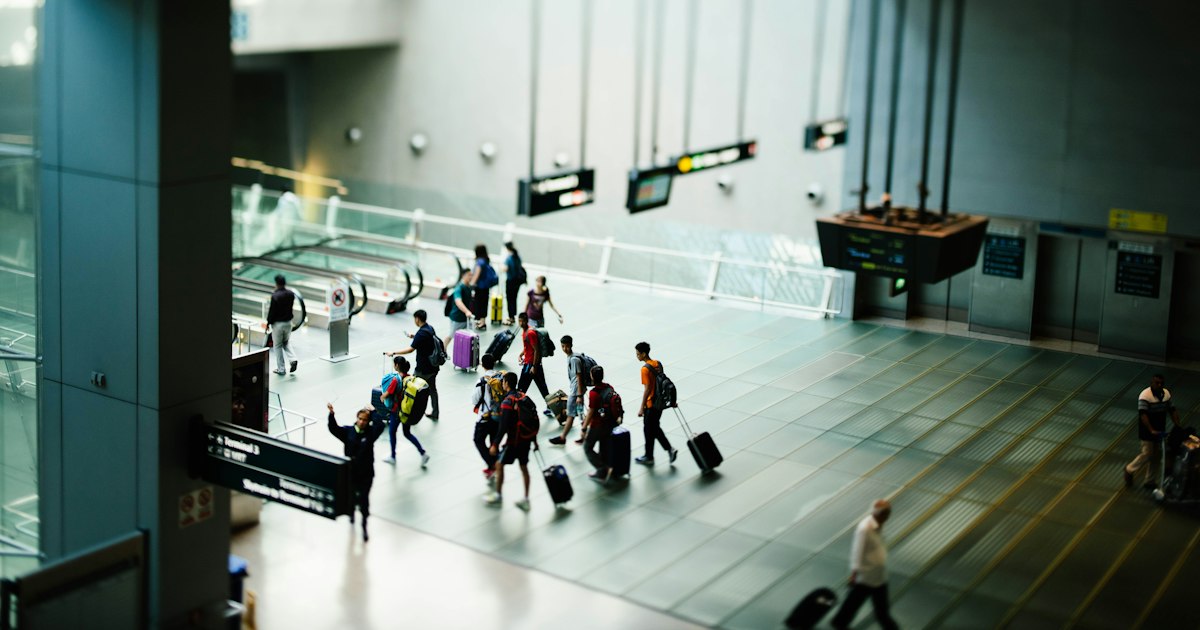
Photo by CHUTTERSNAP on Unsplash
Traveling with a CPAP machine, a mobility device, or other bulky medical equipment in Japan is far easier than most first-timers expect, but the system runs on specific rules that aren’t always obvious from outside the country. Japanese security staff are used to seeing CPAP machines, nebulizers, and similar devices — you just need to know how to present them, which paperwork actually matters, and where the practical friction points are once you’re past security and into hotels. Here’s what to know before you go.
Before You Fly: Documentation and Airline Notification
Most airlines, including Japan Airlines (JAL) and All Nippon Airways (ANA), classify a CPAP machine as an assistive medical device, which means it does not count toward your carry-on allowance and does not need advance approval to bring aboard. That said, notify the airline when you book or at least 48 hours before departure if you plan to run the machine in-flight using battery power — some aircraft require it to be on their approved medical device list, and JAL and ANA both publish these lists on their websites. You generally cannot plug a CPAP into the aircraft’s seat power on domestic Japanese flights, so bring a battery pack rated for your device’s power draw and flight duration.
Carry a doctor’s letter (in English is fine; a Japanese translation isn’t required but can smooth things along) describing the device and its medical necessity, plus the manufacturer’s spec sheet if you have it. You won’t need to show this often, but it resolves any confusion in seconds if a question comes up, and it’s useful if you’re also carrying rechargeable batteries or liquid medication that needs separate screening.
Getting Through Airport Security in Japan
At Narita, Haneda, Kansai, and other major airports, CPAP machines and similar equipment go through the X-ray scanner in their case, separately from your other carry-on items — tell the staff “CPAP” or “医療機器” (iryō kiki, medical equipment) and they’ll usually pull it aside for a quick visual or swab check rather than making you unpack the whole unit. This adds maybe five minutes to your screening time. Lithium batteries for the device must travel in carry-on, never checked luggage, which is standard international rule but worth double-checking since some travelers assume medical gear is exempt.
Security staff at Japanese airports are generally efficient and low-friction about this — English signage and announcements are solid at the major international terminals, less so at smaller regional airports, so if you’re connecting through somewhere like Takamatsu or Kushiro, allow extra buffer time and expect more pointing and gesturing than spoken English. If your flight gets delayed or your checked luggage containing other travel gear goes missing, the process for recovering it follows the same airline-counter procedure covered in this guide to lost or damaged checked luggage in Japan.
Power and Voltage: What Actually Works
Japan runs on 100V, which is lower than the 110-240V range most CPAP machines and medical devices are built to handle automatically — check the label on your power brick; if it says “100-240V,” you’re fine with just a plug adapter (Japan uses the same two flat-pin plug shape as North America, Type A), no voltage converter needed. If your device is rated for a narrower range that excludes 100V, you’ll need a step-up voltage converter, which is harder to find once you’ve landed, so sort this out before departure. Hotel rooms in Japan virtually always have standard wall outlets near the bed, but older ryokan and some business hotels may only have one or two outlets per room, so a compact multi-outlet adapter is worth packing if you’re also charging phones, cameras, or hearing aid batteries.
Hotel and Ryokan Logistics for Bulky Equipment
Standard hotel rooms in Japan tend to be smaller than what North American or European travelers are used to, especially in city-center business hotels where a double room might be 15-18 square meters. A CPAP machine on the nightstand isn’t usually a problem, but if you’re traveling with a larger device — an oxygen concentrator, a mobility scooter, or similar — it’s worth booking directly with the hotel by phone or email rather than through a booking site, specifically asking for a room with floor space near an outlet. Mid-range chain hotels like Toyoko Inn or APA Hotel (typically ¥8,000-14,000/night) are generally accommodating and used to foreign guests; splurge options like a Hyatt or Conrad property (¥35,000+/night) will have larger rooms and staff experienced with medical equipment requests.
Traditional ryokan are the trickier case: futon-on-tatami sleeping means no bed frame to tuck cables under, and outlets are sometimes only along one wall. If you’re set on a ryokan stay, call ahead and ask specifically about outlet placement — most are happy to adjust your room setup if you tell them in advance rather than arriving and asking. If you ever find yourself locked out of a room while juggling equipment and luggage, the steps are the same as for any guest; see this guide on what to do if you’re shut out of a rental apartment or hotel room.
Distilled Water and Consumables
If your CPAP uses a humidifier chamber, you’ll need distilled water (精製水, seisei-sui), which is sold at most drugstores and some convenience stores for roughly ¥150-300 per liter bottle — look in the skincare or baby-care aisle, not the beverage section, since that’s where Japanese stores typically shelve it. Matsumoto Kiyoshi, Sundrug, and Welcia drugstore chains are reliable bets in any city center. Replacement filters and tubing are harder to source locally since most CPAP brands sold in Japan differ from US/European models, so pack enough consumables for your whole trip plus a few spare days in case of delays.
Common Mistakes to Avoid
- Checking the battery instead of carrying it on. Lithium batteries above a certain watt-hour rating may also need airline pre-approval — check the specific threshold with your carrier before flying.
- Assuming seat power exists on domestic flights. Many domestic Japanese routes, especially shorter ones on regional jets, don’t have passenger power outlets at all.
- Not confirming voltage compatibility. A device rated only for 110-240V run on Japan’s 100V supply may undercharge or behave erratically — verify the label, don’t guess.
- Skipping advance contact with ryokan or small inns. Smaller properties can accommodate equipment needs easily if told ahead, but are far less flexible with same-day requests.
With the documentation sorted, a plug adapter in your bag, and a quick heads-up to your hotel, traveling through Japan with a CPAP machine or similar equipment is genuinely low-stress — the country’s airports and hospitality industry see this constantly and are set up to handle it smoothly.