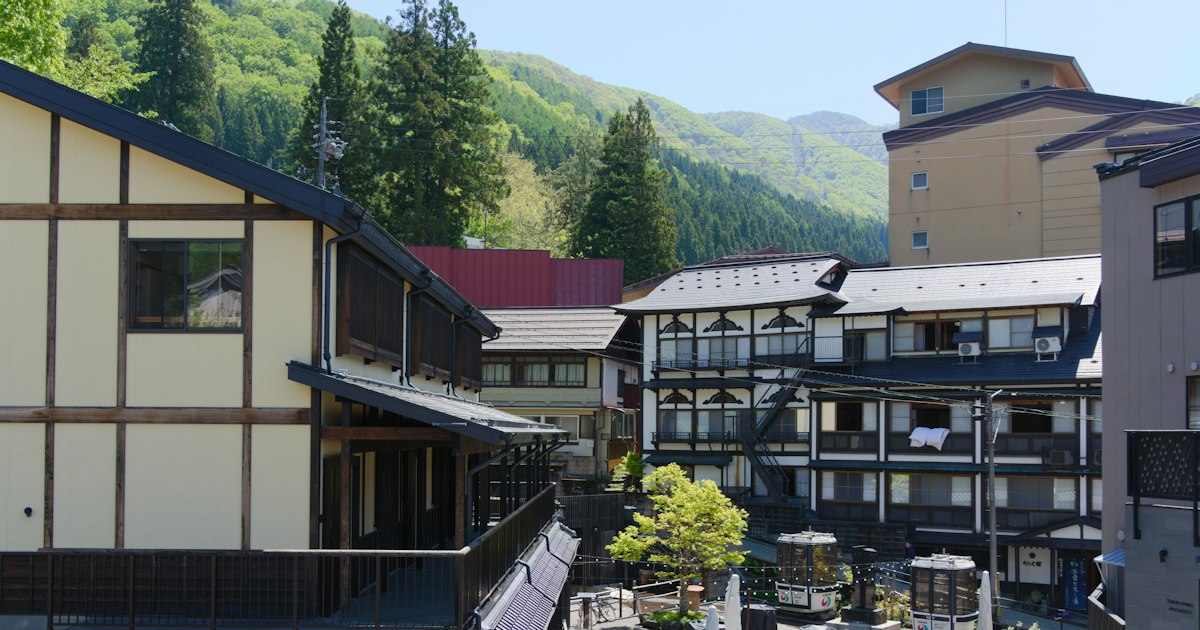
Photo by waa towaw on Unsplash
Thirty minutes south of Kanazawa by train and bus, Yamashiro Onsen doesn’t show up on most first-time Japan itineraries — which is exactly why it’s worth the detour. This is one of the “Kaga Onsen” hot spring towns, said to have been discovered more than 1,300 years ago, and it has the compact, walkable, slightly worn-in charm that a lot of bigger onsen resorts have traded away for bus tours and souvenir arcades. Here’s what you need to know to actually plan the visit.
Where Yamashiro Onsen Is and Why It’s Different
Yamashiro Onsen sits in Kaga City, Ishikawa Prefecture, one of four hot spring towns in the area alongside Yamanaka Onsen, Awazu Onsen, and Katayamazu Onsen. Unlike a lot of Japanese onsen towns built around a single big resort hotel, Yamashiro is organized around a public bathhouse at its center, with ryokan, cafes, and craft shops radiating out from it. Locals and guests still walk to the communal bath in their yukata, which gives the town a lived-in feel rather than a theme-park one.
It’s also tied to Japanese ceramics history: the celebrated potter and gourmet Kitaoji Rosanjin lived and ran a kiln at the Araya ryokan here in the early 1900s, before he became famous in Tokyo. The surrounding region is the birthplace of Kutani ware (Kutani-yaki), the porcelain style known for its bold red, green, yellow, purple, and blue overglaze enamels, and you’ll find small kilns and shops selling it throughout town.
Getting There from Kanazawa
From Kanazawa Station, take the Hokuriku Shinkansen to Kaga-Onsen Station — it’s a short ride of roughly 12 to 15 minutes. If you’d rather save on the shinkansen surcharge, local trains on the line (now run by IR Ishikawa Railway rather than JR since the 2024 shinkansen extension) cover the same route in about 25 minutes for a lower fare.
From Kaga-Onsen Station, the CAN Bus loop service runs to Yamashiro Onsen in about 15 minutes; a single ride costs roughly ¥100-200, and a day pass covering all four Kaga Onsen towns is worth it if you plan to hop between them. Buses run every 20-40 minutes depending on the time of day, so check the schedule before you commit to a tight connection. A taxi from the station takes about 10 minutes and runs around ¥2,000-2,500, which is a reasonable option if you’re arriving with luggage. If you’re coming from further afield and want to make the train portion itself part of the experience, it’s worth knowing that some limited express services in this region offer special viewing or charter cars — see our guide on booking a private onsen-view train car if you’re traveling with a group and want something more memorable than a standard reserved seat.
The Bathhouses: Kosoyu and Soyu
The heart of the town is a pair of public bathhouses sitting side by side. Kosoyu is a careful 2009 reconstruction of the Meiji-era bathhouse that once stood here, complete with stained-glass windows and gold-leaf tilework; it’s meant purely for soaking, so soap and shampoo aren’t allowed inside. Entry is around ¥500 for adults, and it’s typically open from early morning until around 10pm, with one day a month closed for cleaning — check the posted schedule when you arrive, since it shifts.
Right next to it is Yamashiro Onsen Soyu, the everyday public bath where you can actually wash with soap and shampoo. It’s cheaper, around ¥440 for adults, and keeps similar hours. Most visitors do both: Soyu to properly wash, Kosoyu for the slower, more atmospheric soak. Bring your own towel or buy one on-site for a few hundred yen — rentals aren’t always guaranteed.
One thing to flag before you go: like most traditional public baths in Japan, both of these bathhouses generally ask guests to cover visible tattoos or may turn away larger ones. If that’s a concern, it’s worth reading our roundup of onsen towns where tattooed travelers can soak without a cover-up sticker — some ryokan in the Kaga area have private in-room baths that sidestep the issue entirely, which is often the simpler fix if you’re staying overnight anyway.
Where to Stay: Budget, Mid-Range, and Splurge
Yamashiro Onsen is doable as a day trip from Kanazawa, but staying overnight is really the point — it’s when you get access to a ryokan’s own bath and kaiseki dinner, and when the town empties out and feels most like itself.
- Budget: Simple business hotels and guesthouses in the wider Kaga-Onsen area run roughly ¥6,000-9,000 a night without meals. You lose the ryokan experience but can still walk over to use Kosoyu and Soyu.
- Mid-range: A standard ryokan stay with half-board (dinner and breakfast included) typically runs ¥15,000-25,000 per person, and gets you a tatami room, yukata, and a multi-course dinner built around Kaga-grown vegetables and Kanazawa-area seafood.
- Splurge: Yamashiro Onsen punches above its weight for high-end ryokan — Beniya Mukayu is the best-known example, with design-forward rooms and refined kaiseki that regularly draws attention in international travel press. Expect ¥35,000-60,000+ per person per night at this tier.
Beyond the Baths: Pottery, Rosanjin, and Natadera
Set aside an hour or two to walk the town itself. Kutani ware shops and small kilns are scattered around the center, and some let you watch pieces being painted. The Araya ryokan, where Rosanjin ran his kiln, is still operating and worth a look even if you’re not staying there.
About 10-15 minutes away by taxi is Natadera, a roughly 1,300-year-old temple built into a cliffside with a cave you can walk through, said to represent a kind of pilgrimage in miniature. It’s especially striking during autumn foliage season and makes a natural pairing with a Yamashiro Onsen stay.
If you’re routing through Kanazawa on the way, it’s worth stopping at Omicho Market before you leave — it’s the kind of place where you can taste pickles and local produce before deciding what to bring home; our guide to the tsukemono tasting counters at Nishiki and Omicho Markets covers exactly how to sample without committing to a jar you don’t actually want.
Best Time to Visit
Yamashiro Onsen works year-round, but each season pulls a different crowd. Winter (November through March) is peak season for crab — Kaga-area ryokan dinners lean heavily on fresh zuwaigani during these months, and the baths feel best with snow outside. Spring brings cherry blossoms and milder crowds, while autumn (late October into November) pairs well with foliage at Natadera. Summer is quieter and cheaper but humid; Hokuriku’s rainy season runs roughly mid-June into July, so if you’re visiting then, a compact packing list helps — a portable option like a kutsu kansouki electric shoe dryer is a small thing that makes a wet-season ryokan stay noticeably more comfortable.
Common Mistakes to Avoid
- Treating it as a quick stopover without checking bus timing. The CAN Bus doesn’t run constantly — missing one by ten minutes can mean a 30-40 minute wait, which matters if you’ve got a train to catch back.
- Skipping Soyu and going straight to Kosoyu. Kosoyu has no soap allowed, so if you need to actually wash, do that at Soyu first.
- Not booking ryokan dinner in advance. Many ryokan plan kaiseki dinners around confirmed guest counts and will not accommodate walk-ins or late changes.
- Assuming it’s walkable from Kanazawa proper. It isn’t — you need the train-plus-bus (or taxi) combination above, and trying to wing it without checking schedules in advance wastes a chunk of the day.
Yamashiro Onsen rewards slowing down: one night, two baths, a decent kaiseki dinner, and a walk through a town that’s been doing this for over a thousand years. It’s an easy, high-value add-on to a Kanazawa trip rather than a destination that needs a day of its own.