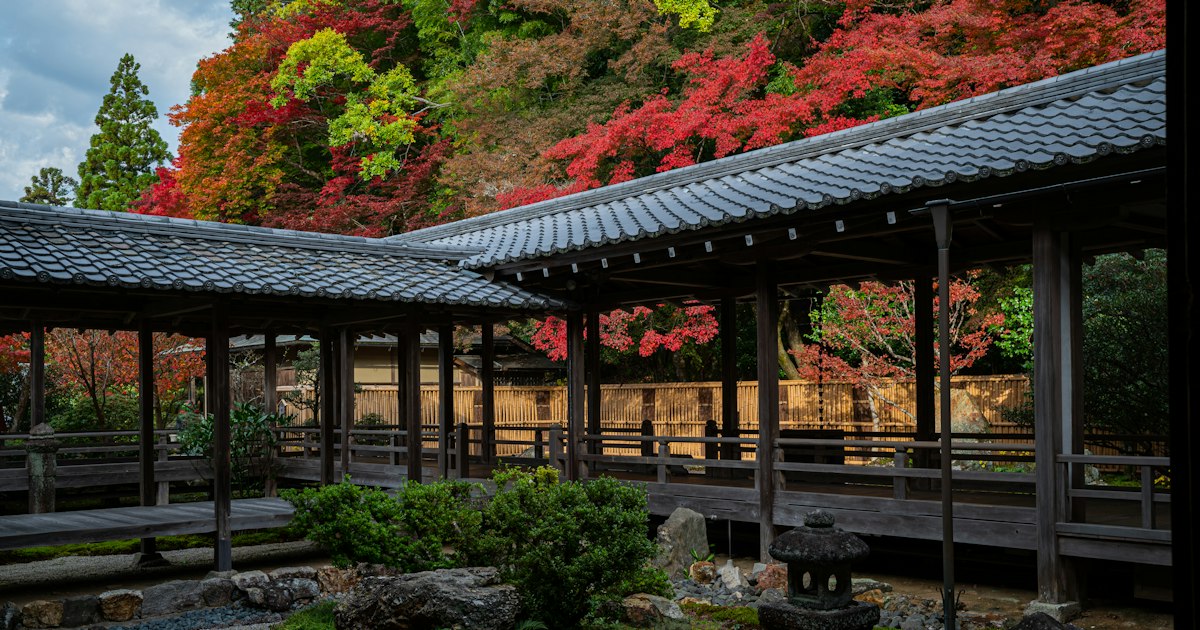
Photo by Samuel Berner on Unsplash
Most of Japan’s public bathhouses still turn tattooed visitors away at the door, or hand over a flesh-colored sticker the size of a coaster and hope it covers a full sleeve. It rarely does. The good news is that the ban is a house rule, not a law, and it almost always applies to shared, mixed bathing areas — not to a private family bath (kashikiri-buro or kazoku-buro) that your group rents by the hour and has entirely to yourselves. Below are onsen towns where that distinction actually works in practice, with real prices, hours, and how to get there.
Why the Tattoo Rule Exists — and Why It Stops at the Private Bath Door
The no-tattoo policy at Japanese baths traces back to associations with organized crime and to insurance liability for shared facilities, not to any national law. Because a private family bath is booked for one party at a time, there’s no “other guest” for the inn to protect, which is why so many ryokan quietly drop the rule — and the sticker — the moment you’ve paid for exclusive use of the room. It’s worth confirming this by phone or at check-in before you travel, since policy varies ryokan by ryokan and can change season to season, but the pattern below holds across these towns.
Kinosaki Onsen (Hyogo): Ryokan-Hopping Without the Sticker
Kinosaki is built around seven public bathhouses (soto-yu) that guests stroll between in yukata, and several of them are strict about tattoos. The workaround is the town’s many ryokan-run private baths. Inns like Nishimuraya Honkan and Mikiya offer kashikiri baths that overnight guests can reserve free or for a small supplement, and some also sell short slots to day-trippers for roughly ¥3,000–6,000 per 45–50 minutes, billed per room rather than per person, so splitting it across two or three people brings the cost down fast. Kinosaki is reached by the JR Limited Express “Kinosaki” from Kyoto (about 2.5 hours) or “Konotori” from Osaka/Shin-Osaka, and the best time to go is November through February, when the town pairs its baths with snow crab kaiseki dinners.
Kurokawa Onsen (Kumamoto): Family Baths Along the River
Kurokawa’s famous nyuto tegata pass (¥1,300) lets you hop between three of the town’s roughly two dozen ryokan baths, but those are still shared facilities where tattoo checks happen. Skip the pass for this purpose and ask directly about a ryokan’s kashikiri-buro instead — many of the riverside inns rent a private rotenburo for around ¥1,000–1,500 per person for 40 minutes, or a flat ¥3,000–4,000 for a couple, bookable same-day at the front desk if a slot is open. Kurokawa sits about 75 minutes by bus from either Kumamoto or Yufuin. Go in October–November for foliage along the river gorge, or December–February for a snow-dusted bath that’s genuinely worth the trip.
Shibu Onsen (Nagano): Private Baths Near the Snow Monkeys
Shibu Onsen’s nine public bathhouses run on a stamp-rally system that requires a key from your ryokan, and tattoo enforcement in those shared baths tends to be strict. Several ryokan here instead offer their own private baths for around ¥2,000–3,000 for a 30–45 minute slot. The location is convenient if you’re combining the trip with Jigokudani Monkey Park, about 10 minutes away by bus or taxi. To get there, take the Hokuriku Shinkansen to Nagano, then the Nagano Dentetsu line to Yudanaka Station (around 45 minutes), followed by a short local bus. January and February are peak season, when the monkeys are soaking in their own hot spring and you can be soaking in yours.
Nyuto Onsen and Takaragawa Onsen: Remote Mountain Baths That Don’t Fuss
Nyuto Onsen, a cluster of seven rustic ryokan deep in Akita’s mountains, is known for milky white sulfur baths and a historically relaxed attitude toward tattoos even in some shared pools — but if you want certainty, ask about the smaller private baths a few of the ryokan (including Tsurunoyu) offer for an added fee of roughly ¥1,000 per person for 30 minutes. It’s reached by bus from Tazawako Station on the Akita Shinkansen, around 50 minutes, with limited daily departures, so check the timetable before you go. Takaragawa Onsen Osenkaku in Gunma, home to one of Japan’s largest riverside rotenburo, rents smaller family baths (kazoku-buro) for about ¥1,000–2,000 per 45-minute slot. It’s accessible via Jomo-Kogen Shinkansen Station and a roughly hour-long bus, or by car if you’re comfortable on mountain roads. Both towns are at their best in October–November for foliage, or around New Year’s for the tradition of a first soak of the year.
How to Book a Private Family Bath: Timing, Price, and Etiquette
Call ahead or ask at the front desk as soon as you arrive — weekend and holiday slots at popular ryokan fill by early afternoon. Prices are almost always quoted per room or per time slot, not per person, so a group of three or four gets much better value than a solo traveler. Expect a hard time limit enforced by a buzzer, sign-up sheet, or a staff knock, and bring your own small towel or expect a rental fee of ¥200–300. Swimsuits are typically not allowed even in a private bath — the privacy is the point, so full nudity is still the norm unless a bath is specifically advertised otherwise. If you’re traveling as a larger group and want to turn the journey itself into part of the trip, it’s worth looking at how chartering a private onsen-view train car works on some limited express routes — a few of these onsen towns sit along lines that offer it.
Common Mistakes to Avoid
The biggest one: assuming “this ryokan is tattoo-friendly” means every bath on the property is open to you. It usually means only the private baths are — the ryokan’s own shared rotenburo may still require a cover sticker or refuse entry outright, so ask specifically about the kashikiri or kazoku-buro option by name. Second mistake: showing up without a reservation and assuming you can walk in, especially in Kinosaki or Kurokawa during peak foliage and snow months. Third: underestimating how long a soak in a very hot mountain bath takes out of you — pack something to cool down afterward, since cooling gel sheets are cheap, widely sold at any Japanese drugstore, and genuinely useful if you overdo it in a 42°C bath on a hot summer day. Finally, don’t assume policy is permanent — call the specific ryokan before you build a whole day around its bath, since staff and ownership (and therefore house rules) change.