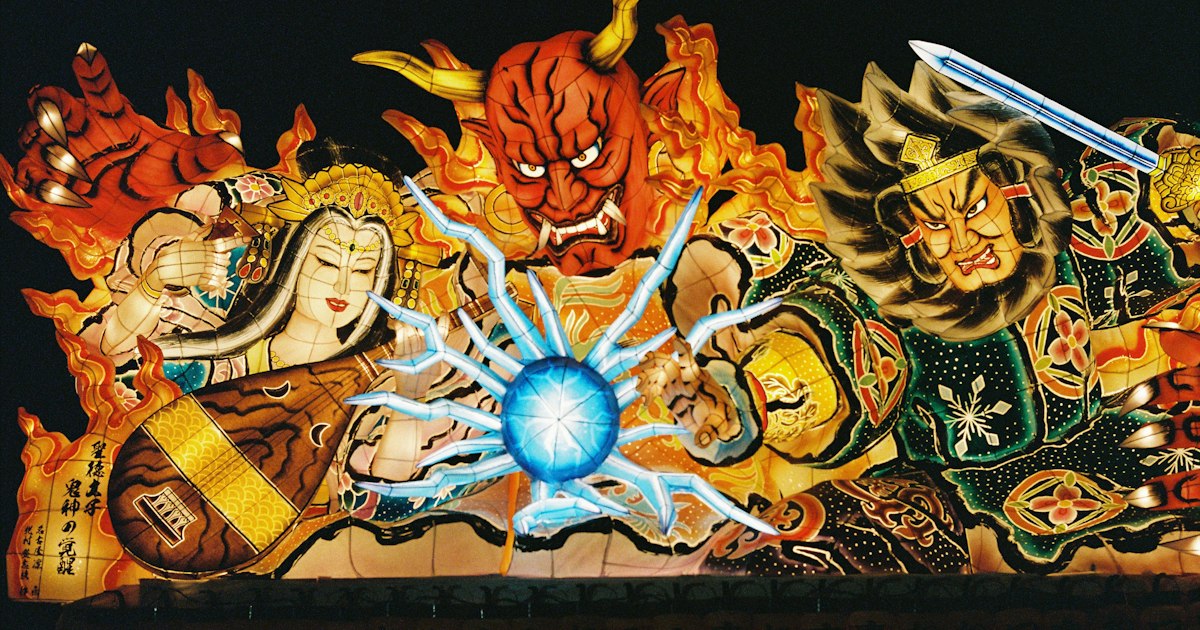
Photo by Arie Oldman on Unsplash
Every September, a small castle town just south of Osaka city turns into one of the most physically intense festivals in Japan. Teams of hundreds of men and women sprint through narrow streets hauling four-ton wooden carts, then whip them around 90-degree corners at full speed without slowing down. People have been seriously injured — occasionally killed — doing this. It is also one of the most exciting things you can watch in the Kansai region, and completely free to attend if you know where to stand. Here’s what first-time visitors need to know about the Kishiwada Danjiri Matsuri.
What Makes Danjiri Matsuri Different From Other Japanese Festivals
A danjiri is an elaborately carved wooden float, roughly 4 meters tall and weighing around 3–4 tons, built without nails in a style closer to a miniature shrine building than a parade cart. Kishiwada has over 30 of these, each belonging to a different neighborhood, and each decades or even centuries old. Pulling teams of 300–500 people haul their danjiri through the city on thick ropes, with a team leader standing on the roof directing the run with fan signals.
The signature move is called yarimawashi — turning the fully loaded, fast-moving cart sideways at a street corner without stopping. Done right, it’s one of the most thrilling sights in Japanese festival culture. Done wrong, the cart can tip or plow into the crowd, which is why this festival has a well-documented history of injuries at the turning points. That history is exactly why knowing where to stand matters more here than at almost any other matsuri in Japan.
When It Happens and How to Plan Your Trip Around It
The main Kishiwada Danjiri Matsuri runs across a Saturday and Sunday in mid-September, centered on the Shinto festival dates of September 14–15 (the exact weekend shifts slightly year to year, so check Kishiwada City’s official tourism site a few months ahead before booking flights). Saturday is yoiyama — a slower-paced evening session where lantern-lit floats parade through town, good for photos and for getting relatively close without the full-speed danger. Sunday is honmatsuri, the daytime main event, when the fast pulls and yarimawashi turns happen at full intensity. A separate, smaller version of the festival (Kishiki Danjiri Matsuri) takes place in the same city in early October, drawing far smaller crowds if you want a gentler taste of the same tradition.
Hotels in Kishiwada itself are limited, so most visitors base themselves in Osaka city and day-trip in. Book Osaka accommodation well ahead of the September weekend — it overlaps with a national holiday period and rooms fill fast.
Getting to Kishiwada
The festival action is centered around Kishiwada Castle and the old town, which sits on the Nankai Main Line, not the JR line. From Osaka, take the Nankai Main Line from Nankai Namba Station — a limited express or express train gets you to Nankai Kishiwada Station in about 20–30 minutes for around 500–600 yen one-way. There is also a separate JR Kishiwada Station on the Hanwa Line, but it’s roughly 1.5 km from the main festival area, so arriving there by mistake means an extra 20-minute walk through dense crowds. If you’re unsure which line serves which stop, it’s worth reviewing Osaka Metro vs Nankai vs JR: Which Line to Take from Namba to Kansai Attractions before you go — picking the wrong station on festival day costs you real time.
Trains back to Namba on the Sunday night of honmatsuri get extremely crowded once the evening runs finish, with waits for platform access. Give yourself extra time and don’t assume you’ll walk straight onto a train at 9pm.
Where to Watch Safely
The single most dangerous spots are the turning corners where yarimawashi happens, especially the intersection near Kishiwada City Hall (Shiyakusho-mae), which is the festival’s most famous and most crowded viewing point. Police and festival staff set up rope barriers and crowd-control lines here — stay behind them, and never stand at the outer edge of a turn, which is exactly where a cart can swing if the turn goes wrong.
Better options for visitors who want excitement without standing in the highest-risk zone:
- Straight pulling sections away from corners — you still feel the ground shake as 400 people run a danjiri past you, with far less risk than at a turn.
- Elevated spots — pedestrian bridges, raised sidewalks, or shopfront steps along the route give you a clear view over the crowd without being at street level in a crush zone.
- Yoiyama evening on Saturday — the lantern-lit floats move slower and the crowd is thinner than Sunday’s honmatsuri, making it the easier night for families, kids, or anyone who wants to see the floats up close without the full-contact crowd experience.
Whatever you pick, listen for whistles and shouted warnings from staff — they mean a cart is approaching and everyone needs to move back immediately. Don’t livestream or shoot photos with your back to the street; turn fully around so you can see and react to the cart.
Common Mistakes First-Time Visitors Make
- Standing at the apex of a turning corner for a “better shot.” This is the single most dangerous place to be and exactly where past accidents have happened.
- Underestimating the crowd. Several hundred thousand people attend across the weekend. If you arrive at the City Hall intersection right before a major run, you may not be able to get anywhere near the barrier.
- Getting off at the wrong station. As noted above, JR Kishiwada and Nankai Kishiwada are different stations, both a reasonable walk apart — confirm which one before boarding.
- Drinking heavily and then trying to get close to the carts. Alcohol and fast-moving multi-ton wooden structures don’t mix; festival staff will push back anyone acting unsafely near the route.
- Assuming you can just walk the route anytime. Roads along the course close to general traffic and pedestrian crossing is restricted during active runs — plan your position before a pull starts, since crossing mid-route once a danjiri is moving isn’t possible.
Budget, Mid-Range, and Splurge Viewing Options
Budget (free): Street-level viewing anywhere along the public route is free — just arrive early (at least an hour before a scheduled run) to claim a spot behind the barriers at a straight section.
Mid-range: The city and local tourism association sometimes sell numbered seating near key viewing areas for the honmatsuri daytime runs, typically in the few-thousand-yen range per seat. These sell out, so check the official Kishiwada tourism site in summer for sale dates if you want a guaranteed, safer vantage point without queueing for hours.
Splurge: A few restaurants and buildings along the route with upper-floor windows or balconies rent out viewing space for private groups during the festival, sometimes bundled with a meal — these aren’t widely advertised in English, so asking a Japanese-speaking contact or your hotel concierge to call ahead is the realistic way in.
Beyond the Pull: The Danjiri Museum
If you can’t make the September dates, or want context before you go, the Kishiwada Danjiri Kaikan near Kishiwada Castle displays retired and ceremonial danjiri up close year-round, letting you see the woodcarving detail that’s impossible to appreciate on a cart sprinting past at night. It’s typically open daily from around 10:00 to 17:00 with an adult admission fee in the low hundreds of yen — hours and pricing shift occasionally, so confirm on the museum’s listing before visiting. Pair it with a walk through Kishiwada Castle grounds, a compact, low-key stop that makes a pleasant finish to a festival day once the crowds thin out.