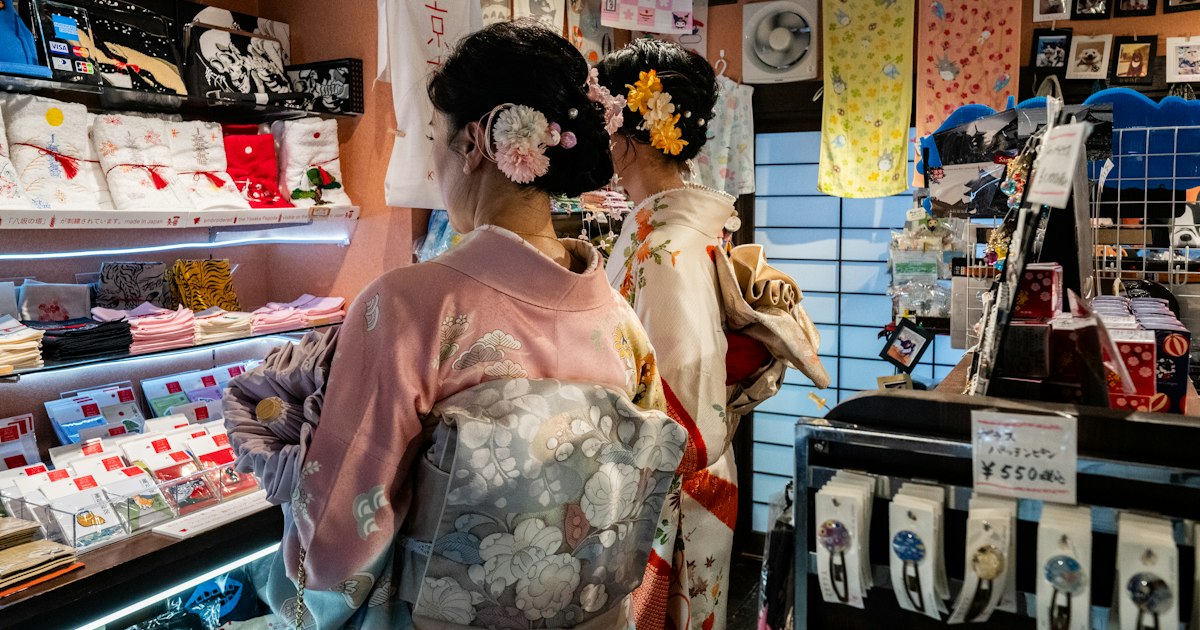
Photo by EMANUELE Ricciardi on Unsplash
If you’ve wandered through a Japanese craft market, a rural train station gift shop, or a boutique in Kyoto’s Gion district, you’ve probably seen them hanging on a rack: baggy, ankle-cinched trousers in indigo cotton or bold ikat prints, often labeled もんぺ or “monpe.” They look like something between harem pants and overalls, and for most of the 20th century they were the default uniform of Japanese farm life. Today they’re having a genuine fashion moment, sold as streetwear in the same shops that carry linen tunics and canvas totes. Here’s what they are, why they matter, and where to actually buy a pair.
What Monpe Actually Are
Monpe are loose-fitting trousers, gathered or elasticated at the waist and ankle, with an unusually roomy seat and thigh. That cut isn’t a style choice — it’s functional. The baggy seat lets a farmer squat in a rice paddy for hours without the fabric binding, and the cinched ankles keep mud, insects, and cold air out while working outdoors. They’re traditionally made from sturdy cotton, often in indigo (ai-zome) or kasuri, the thread-resist ikat weave associated with regions like Kurume in Fukuoka and Iyo in Ehime. The fabric had to survive years of field work and repeated washing, so it tends to be heavier and more tightly woven than ordinary clothing cotton.
From Snow Country Workwear to Wartime Uniform
Monpe are generally traced to Tohoku and other snowy, mountainous regions of Japan, where women needed trousers rather than kimono for farm work and winter travel. Their nationwide spread, though, came from an unlikely source: during World War II, the Japanese government promoted monpe as standard women’s wear under wartime austerity and “national uniform” policies, since they used less fabric than a kimono and allowed freedom of movement for labor and air-raid drills. That history is part of why monpe carry such strong nostalgic weight for older generations — for many, they’re tied to childhood memories of grandparents in the fields or to photographs from the immediate postwar decades, much the way other once-utilitarian garments have aged into cultural icons. For a parallel example of plain, practical clothing becoming a style statement, see how men’s steteco loungewear shorts made a similar journey from workwear to boutique fashion item.
Why Monpe Are Back in Style
The modern revival really took off in the early 2000s, led by Kyoto apparel brand SOU・SOU, which reimagined monpe in contemporary silhouettes and playful graphic prints while keeping the traditional gathered-ankle cut. The appeal for younger Japanese buyers and foreign visitors alike is partly nostalgia-as-cool (similar to the vintage workwear trend in the West) and partly practicality: monpe are genuinely comfortable, breathable in summer, roomy enough to layer in winter, and easy to move in — good qualities for sightseeing, gardening, yoga, or just lounging at a guesthouse. They’ve also become a popular “wearable souvenir” because, unlike a folding fan or chopsticks, they’re something you’ll actually put on again back home.
Where to Buy Monpe in Japan
- SOU・SOU (Kyoto): The brand with multiple small shops clustered around Shijo-Kawaramachi and the Teramachi/Shinkyogoku covered arcade, most open roughly 11:00–19:30 daily. Their monpe mix traditional cuts with modern prints and run from about ¥9,000 to ¥16,000. This is the easiest place for a visitor to try on several styles in one afternoon, since the shops are within a five-minute walk of each other and of the Hankyu Kawaramachi and Keihan Gion-Shijo stations.
- Department store craft and kimono floors: Stores like Takashimaya or Daimaru in major cities often carry a small selection of monpe, particularly kasuri-weave versions, in their Japanese textile or kimono departments.
- Regional craft markets and roadside stations (michi-no-eki): In Tohoku, Fukuoka (for Kurume kasuri), and rural Ehime (for Iyo kasuri), you’ll find plainer, more traditional monpe sold directly by local producers, often at better prices than in Tokyo or Kyoto boutiques.
- Online: Amazon Japan and Rakuten list dozens of monpe styles that ship internationally or to a Japan hotel/forwarding address, useful if you don’t have time to shop in person. Sizing runs small by Western standards, so check the listed waist and hip measurements in centimeters rather than relying on S/M/L labels.
Budget, Mid-Range, and Splurge Options
Prices vary a lot depending on fabric and brand:
- Budget (¥2,500–¥5,000): Plain cotton monpe from workwear shops, home centers, or rural markets — functional, not fashion-forward, but authentic and genuinely useful for farm stays or gardening.
- Mid-range (¥8,000–¥16,000): SOU・SOU and similar lifestyle brands, with original prints, better tailoring, and natural fibers like cotton or linen blends.
- Splurge (¥18,000–¥35,000+): Hand-woven kasuri monpe from established weaving regions, sometimes sold with a maker’s name or regional certification attached — these are closer to textile art than everyday pants, and collectors buy them the way they’d buy a hand-dyed tapestry.
Sizing, Care, and Common Mistakes
The biggest mistake foreign buyers make is judging monpe by how they look on the hanger — the baggy cut is meant to look oversized, so don’t go up a size expecting a “normal” fit; check the actual waist measurement instead. Indigo-dyed monpe will bleed dye for the first several washes, so wash them separately in cold water, ideally by hand for the first time or two. Avoid buying the cheapest polyester-blend versions sold as novelty items at tourist shops near major temples — they lose the breathability and drape that make genuine cotton or kasuri monpe comfortable, and they tend to look costume-y rather than wearable. If you’re shopping in Kyoto for monpe, autumn and spring (October–November, March–April) are good timing, since SOU・SOU and similar shops often release seasonal prints then, and the mild weather makes trying on layers easier in a small fitting area. For a broader sense of how Kyoto’s traditional-craft retail scene works, browsing a specialty guide like the one on where Japanese craftspeople shop for hand tools gives a useful feel for how these niche, maker-focused shops operate — small storefronts, limited stock, and staff happy to explain the materials if you ask.
Styling Them Once You’re Home
Back outside Japan, monpe work best treated as what they are: relaxed, slightly oversized trousers rather than formal wear. Pair them with a plain t-shirt or the kind of soft knitwear you’d see in a brand like Gelato Pique’s loungewear lines for an easy, Japan-inspired at-home look, or wear them as travel pants on a long flight — the elasticated waist and ankles make them more comfortable than jeans for a 12-hour journey. However you wear them, a pair of monpe is one of the few souvenirs from Japan that carries real social history in its stitching: nearly a century of farm labor, wartime policy, and now a deliberate, design-conscious revival.