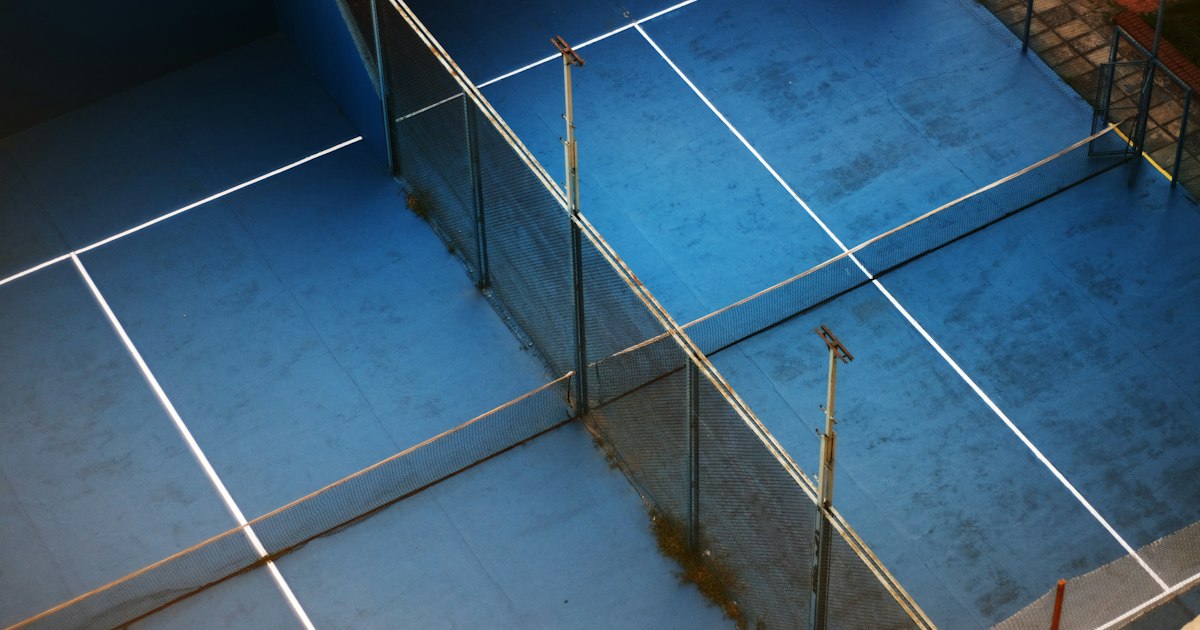
Photo by José Alejandro Cuffia on Unsplash
Padel has gone from “what sport is that?” to one of the hardest court bookings in Tokyo and Osaka in just a few years. For visitors, that’s both good and bad news: there are now enough glass-walled courts to actually get a game, but the popular ones fill up fast, especially on weekend evenings. Here’s how foreign visitors can find a court, book it without a Japanese phone number headache, and avoid the rookie mistakes that waste a reservation slot.
Why padel took off in Japan
Padel is a doubles racquet sport played on an enclosed court about a third the size of a tennis court, with walls you can play off, like squash. It’s easier to pick up than tennis in an afternoon, which is exactly why it exploded in Spain and Argentina first and is now doing the same in Japan. Dedicated padel clubs opened in Tokyo (Shibuya, Koto, Setagaya, and several spots near the bay area) and Osaka (around Umeda, Namba, and the waterfront near Osaka Bay) starting roughly 2021-2022, and new facilities are still opening as of 2026. Most are indoor or have retractable roofs, so the sport is playable year-round — unlike a lot of outdoor options covered in our guide to public tennis courts in Japan, where summer heat and rain are real obstacles.
Where to find courts in Tokyo
Tokyo’s padel scene clusters around a few chains with multiple locations: PADEL TOKYO, LUXON PADEL, and Social Padel Club are the names you’ll see most often, alongside smaller independent clubs. Courts run roughly ¥4,000-¥8,000 per hour per court (not per person) at private clubs, split four ways that’s often under ¥2,000 each — cheaper than a round of karaoke. Peak evening slots (weekdays after 19:00, weekends 10:00-18:00) are the hardest to get and sometimes carry a small surcharge. Most clubs open around 7:00-9:00 and close between 22:00 and 24:00. Shibuya and Koto-ku locations are the easiest to reach by train, usually a 5-10 minute walk from the nearest station.
Where to find courts in Osaka
Osaka’s clubs are newer on average and slightly cheaper than Tokyo’s, with hourly court rates often in the ¥3,500-¥6,500 range. Facilities cluster near Umeda and the Osaka Bay waterfront, with a few in Namba. Because the scene is smaller, there are fewer courts overall, so weekend bookings should be made several days ahead if you want a specific evening slot. If you’re coming from Kyoto or Kobe, factor in train time — Osaka’s bay-area clubs are a 20-30 minute ride from central Osaka Station, so build that into your schedule the way you would when planning around Tokyo’s rush hour, since crowded trains at 18:00 can eat into your reserved court time.
How to actually book a court
Almost every club uses its own booking app or LINE-based reservation system, and a few require a Japanese phone number to create an account, which is the single biggest obstacle for visitors. Your options, roughly in order of ease:
- Book through your hotel or a Japanese-speaking contact — fastest and most reliable if you have one.
- Call the club directly — many clubs will take a reservation by phone in basic English, especially the bigger Tokyo chains used to foreign members.
- Walk in — smaller or newer clubs sometimes have open courts for walk-ins on weekday afternoons, though this is a gamble on weekends.
- Use a credit-card-based international booking app if the club supports one — a growing number of clubs are adding English-language web booking, but not all have caught up yet.
Whichever route you use, confirm three things before you show up: the exact court number/location (some clubs have courts split across two buildings), whether rental rackets are included or extra, and the cancellation deadline, since many clubs charge the full court fee for no-shows or late cancellations inside 24 hours.
Gear, rentals, and what to wear
You don’t need to own anything. Nearly every club rents rackets for ¥500-¥1,000 and sells or rents balls for a few hundred yen more; indoor court shoes with non-marking soles are usually required, and some clubs rent those too for around ¥500. Bring your own shoes if you have proper indoor court or tennis shoes — it saves a rental fee and guarantees fit. Dress is casual athletic wear; there’s no strict dress code like some tennis clubs have.
Budget, mid-range, and splurge options
Budget: Weekday daytime courts (before 17:00) are the cheapest and least crowded — expect ¥3,500-¥5,000 per court per hour at most clubs, and you can often walk in same-day.
Mid-range: Evening and weekend bookings at a standard club, ¥5,000-¥7,000 per hour, plus rental gear, typically run ¥1,800-¥2,500 per person for a group of four with rackets included.
Splurge: A few premium clubs in Tokyo offer private coaching sessions (one-on-one or small group) with English-speaking instructors for ¥8,000-¥15,000 per hour on top of the court fee — worth it if you’ve never played and want to actually rally instead of chasing balls for an hour.
Common mistakes to avoid
The biggest one is assuming you can walk up to a popular Tokyo club on a Saturday evening and get a court — most are booked out a week or more in advance for prime slots. Second is forgetting that court fees are per court, not per person, so a group of two pays the same as a group of four; try to fill all four spots to get the best value. Third, non-marking shoes are enforced strictly at most clubs — street sneakers with marking soles will get you turned away or charged a rental fee on the spot, so check before you arrive. Finally, double-check the cancellation window; a missed late-night international flight schedule has cost more than one visitor a forfeited court fee.
If padel doesn’t pan out or you want to mix up your sports itinerary, Japan’s badminton courts are far easier to book on short notice and cost less per hour, making them a solid backup plan for a spontaneous evening.