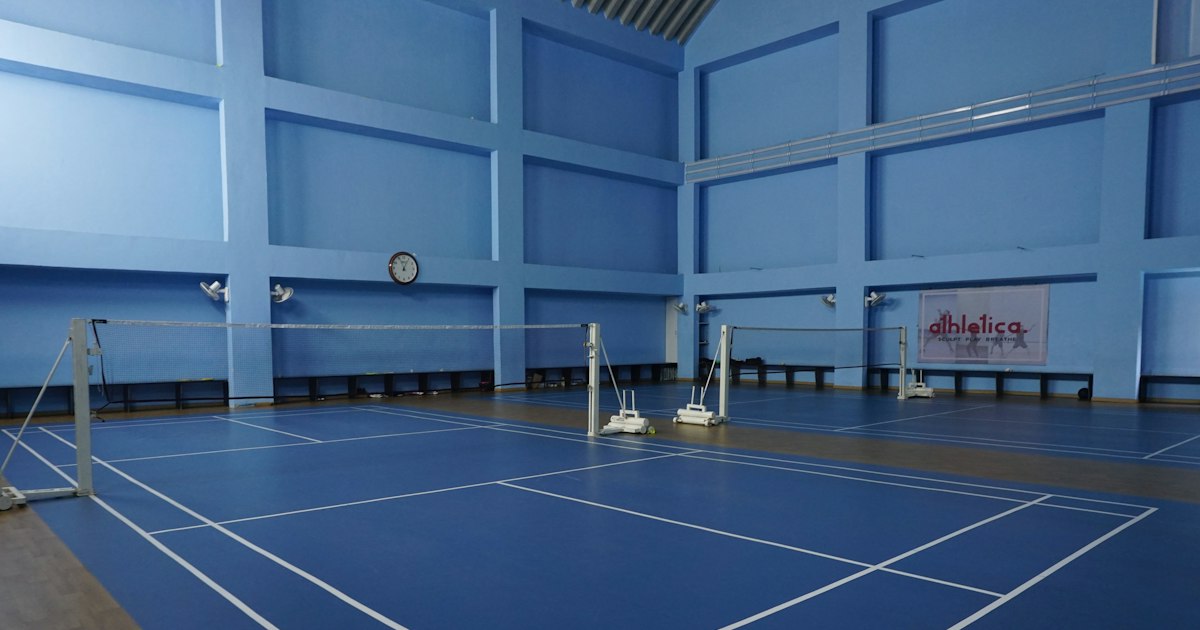
Photo by Palak Pitroda on Unsplash
Badminton is one of Japan’s most popular participation sports, and the country is dotted with public gymnasiums that mark out courts for anyone to rent by the hour. The catch is that almost none of this is set up with foreign visitors in mind — booking systems are in Japanese, some facilities favor local residents, and the difference between a ¥600 public court and a ¥5,000 private one isn’t obvious until you’ve tried both. Here’s how to actually get a racket in your hand during a Japan trip, without wasting an afternoon on a reservation system that rejects you.
Where Tourists Can Actually Play Badminton in Japan
The default venue is the municipal “taiikukan” (体育館), a multipurpose gymnasium run by a city or ward sports division. These buildings have wood-floor courts marked for badminton, volleyball, and basketball, and almost every city of meaningful size has at least one. Examples tourists can realistically reach include Tokyo Metropolitan Gymnasium near Sendagaya Station (a short walk from Shinjuku), the gymnasiums at Komazawa Olympic Park in Setagaya, and the Shibuya-run Yoyogi Sports Center. Osaka, Nagoya, Fukuoka, and Sapporo all have equivalent ward or city sports centers with badminton courts for public use.
These are not private clubs — anyone can rent a court, including non-residents and foreign visitors — but most facilities charge a lower rate to local residents and a higher “non-resident” rate to everyone else, tourists included. That’s normal and expected; you’re not being overcharged, you’re just paying the same rate a Japanese visitor from another city would pay.
Booking a Public Gymnasium Court Step by Step
Most municipal gyms use a regional online reservation portal (search the city name plus “体育館 予約” or “スポーツセンター 予約”). Residents can usually book weeks in advance, sometimes through a lottery system, while non-residents are often restricted to booking from about one week before the date, or in some cases only in person or by phone on the day. In practice, the easiest route for a short visit is:
- Call or visit the gym’s front desk directly and ask in simple English or with a translation app whether a badminton court is free for walk-in use that day — many smaller municipal gyms allow same-day drop-in play if a court isn’t reserved.
- If you want to guarantee a slot, go in person 2–3 days ahead with your passport; staff can usually process a one-off booking for a visitor even if the online system won’t accept a non-Japanese address or phone number.
- Avoid weekday evenings (roughly 18:00–21:00) and weekend mornings, when local badminton and volleyball clubs reserve the full gym on a standing basis.
Courts are typically booked per hour per court, and one court comfortably fits a doubles game of four. Bring the booking confirmation slip or receipt if one is issued — you may need to show it to the gym attendant before they turn on the court lights.
Private and Pay-as-You-Go Courts (No Residency Needed)
If the municipal system feels like too much friction, private indoor sports rental studios are the simpler option. These are commercial multi-sport spaces — found in most major cities, especially Tokyo and Osaka — that rent out badminton, futsal, or basketball courts by the hour with same-day online booking in apps that work fine with a foreign credit card and phone number. No residency proof, no lottery, no Japanese-language phone call required. The trade-off is a higher hourly rate and sometimes a smaller, lower-ceiling court than a full gymnasium.
What It Costs: Budget, Mid-Range, and Splurge
Prices vary by city, but as a general guide:
- Budget (¥600–¥1,500/hour per court): A municipal taiikukan at the non-resident rate. This is the cheapest way to play and the standard choice for most visitors, especially if you’re already comfortable navigating Japanese signage and basic phone calls.
- Mid-range (¥2,000–¥3,500/hour per court): Private sports rental studios with English-friendly booking apps, air conditioning, and often racket rental included.
- Splurge (¥4,000–¥6,000+/hour): Premium indoor sports clubs or hotel-affiliated sports facilities in central Tokyo or Osaka, which may include shuttlecocks, towel service, and shower facilities in the price.
Lighting and heating/cooling fees are sometimes billed separately at municipal gyms — ask when you book so there’s no surprise at the front desk.
Gear, Shoes, and Shuttlecocks
The one rule that trips up almost every first-time visitor: Japanese gym floors require non-marking indoor sports shoes, and staff will check. Running shoes worn outside are usually turned away because their soles can scuff the wood. If you didn’t pack dedicated indoor shoes, most municipal gyms and private studios rent a pair for a few hundred yen, and sporting goods stores like Sports Depo or Alpen sell inexpensive indoor court shoes if you want your own.
Rackets are rentable at most facilities for roughly ¥100–¥500 per racket, but shuttlecocks are consumable and usually not included — a tube of good feather shuttlecocks (Yonex is the standard brand) runs about ¥2,000–¥3,000 and will easily last a casual session. Budget courts in particular often expect you to bring your own.
Best Times to Play and Common Mistakes to Avoid
Because badminton is played indoors, there’s no real “season” the way there is for outdoor sports — it’s a good rainy-day or midsummer-heat activity precisely because it dodges Japan’s weather extremes. The main timing issue is crowding, not climate: weekday daytime hours (roughly 10:00–16:00) are the quietest at most public gyms, since locals are at work or school, while evenings and weekends fill up fast with league play and school clubs.
The most common mistakes tourists make are booking a court without checking the non-resident rate and showing up with a budget in mind that’s wrong by a factor of two or three; assuming a reservation can be made entirely online in English (most municipal systems can’t, even if Google Translate makes the page readable); and forgetting indoor shoes, which can mean being turned away at the door after traveling across town. Plan the court around the rest of your day the way you’d plan around Tokyo’s rush hour — a midday or early-evening slot avoids both train crowding and the after-work gym rush.
If badminton doesn’t pan out or you want a second court-based activity for the trip, the same hourly-rental logic applies to public tennis courts in Japan, which run through nearly identical municipal booking systems. And if you’re traveling with someone who’d rather be outdoors on wheels than on a court, it’s worth pairing the trip with a look at Japan’s drop-in skateparks, which tend to be far more walk-in-friendly for visitors than any reservation-based gym.