Photo by Jaz. Mine on Unsplash
Most travelers who make it as far as Oita Prefecture are headed for the hot springs of Beppu or Yufuin. Few of them notice the small, round silhouette sitting just off the tip of the Kunisaki Peninsula — a cluster of old lava domes that locals simply call Himeshima, “princess island.” It’s one of the few Japanese municipalities that is a single island, home to roughly 2,000 people, a famous prawn farm, an obsidian cliff, and a summer fox dance you won’t see anywhere else. The whole place can be explored in half a day, which makes it one of the easiest genuine “undiscovered island” experiences in Kyushu.
Where Himeshima Is and Why It Looks the Way It Does
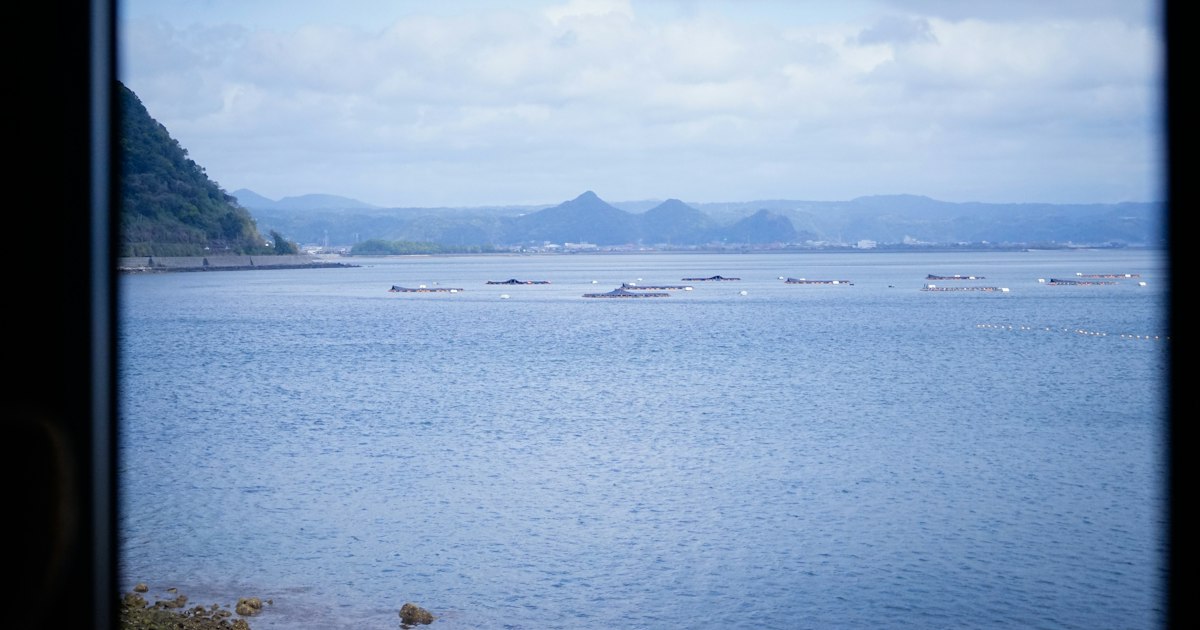
Himeshima sits in the Suo-nada waters off the northeastern point of the Kunisaki Peninsula, within sight of the mainland on a clear day. The island itself is the fused remains of several volcanic lava domes, and its skyline is dominated by two summits — the tallest, Yahazu-dake, rises to around 266 meters — connected by lower, sandier ground where the village and farmland now sit. That volcanic history is recognized officially: Himeshima and the Kunisaki Peninsula form a certified Japan Geopark, and the island’s cliffs expose obsidian deposits that were quarried and traded across Kyushu as far back as the Jomon period. One outcrop, a glossy black rock face known as Kuroiwa, is counted among the island’s “Seven Wonders” (Himeshima Shichi-fushigi), a set of local legends tied to specific geological spots you can walk to.
Getting There: The Imi Port Ferry
The only way onto Himeshima is by boat, and the crossing is refreshingly short — about 20 minutes — on the Himeshima Village ferry running between Imi Port, on the mainland tip of the Kunisaki Peninsula, and Himeshima Port. Boats run roughly seven to eight times a day in each direction from early morning until early evening, carrying both foot passengers and cars. A one-way adult passenger ticket runs in the neighborhood of ¥600; bringing a car costs considerably more and space is limited, so reserve ahead if you’re driving on. Because this is a small rural ferry, schedules shift slightly by season and can be suspended in rough weather, so check the current timetable on the village website or by phone before you set out — don’t rely on an old printout.
Reaching Imi Port itself takes a bit of planning. By car, it’s roughly 40–50 minutes from Oita Airport around the Kunisaki coastline. Without a car, the realistic route is a local Oita Kotsu bus from JR Usa Station (on the Nippo Line) toward Kunisaki, transferring to a bus bound for Imi Port — these rural routes run only a handful of times a day, so build your ferry departure around the bus timetable rather than the other way around. A taxi from Usa Station or Oita Airport is the simplest fallback if you’re short on time or traveling with luggage.
Getting Around the Island
Himeshima has essentially no traffic lights and a single paved loop road circling the coastline for about 17 kilometers — flat enough for a relaxed half-day bike ride, with a couple of short climbs near the two peaks. Simple rental bicycles are available right near the ferry terminal for a modest daily fee; walking is also perfectly feasible if you’re only planning to see the port-side sights and the flower gardens. There’s no convenience store chain on the island and no train, so bring cash — card acceptance is patchy even at restaurants that do take it.
What to See and Do
Himeshima’s best-known claim to fame is kuruma ebi — Japanese tiger prawn. The island was where the full artificial breeding cycle for kuruma ebi was first achieved in Japan in the 1960s, and aquaculture ponds are still a visible part of the local economy. Several small restaurants near the port serve the prawns fresh, grilled, or as tempura over rice; a bowl typically runs somewhere around ¥2,000, though prices move with the season and catch size.
In autumn, head to the netted butterfly garden where fujibakama flowers are grown specifically to attract Asagimadara (chestnut tiger butterflies) passing through on one of the longest known insect migrations in Japan — some tagged on Himeshima have later been recovered over 1,000 kilometers away in Okinawa or Taiwan. If you’re there in mid-August, don’t miss Kitsune Odori, the island’s distinctive Bon Odori dance in which performers paint fox-like markings on their faces and circle a central tower — it’s a genuinely local festival, not a tourist re-creation, and you’ll likely be one of very few foreign visitors watching it.
Round out a visit with the coastal viewpoints tied to the Seven Wonders legends and a stop at the small flower fields planted with seasonal blooms, which locals use partly for cooking oil production.
Best Time to Visit
Spring (March–May) brings mild weather and flowering fields, making it the easiest season for cycling the loop road. Mid-August is the one date worth planning around deliberately if you want to see Kitsune Odori. Late September through October adds the butterfly migration to the mix and is also when the island is noticeably cooler and quieter than peak summer. Winter is workable but windy, with shorter ferry hours — not the best first visit if you’re also relying on bus connections from the mainland.
Budget, Mid-Range, and Splurge Options
This is a budget-friendly day trip by Japanese standards: ferry fare, a bike rental, and a simple seafood lunch can realistically come in under ¥4,000 per person for a day visit. Mid-range travelers can add an overnight stay at one of the handful of small minshuku (family-run guesthouses) on the island, which tend to serve home-style seafood dinners featuring whatever was caught that day. There isn’t a true luxury hotel on Himeshima itself — if you want higher-end accommodation, the splurge move is to base yourself in Beppu or at a Kunisaki Peninsula ryokan and treat Himeshima as a day trip, which is how most visitors do it anyway.
Common Mistakes to Avoid
- Arriving at Imi Port without checking the ferry timetable that day. Sailings are infrequent enough that missing one can cost you hours, not minutes.
- Assuming you can rely on a data connection everywhere. Signal on a small island like this can be patchy depending on your carrier; if your phone struggles to connect once you’re off the mainland, our guide on fixing a SIM card or eSIM that won’t connect in Japan covers the fixes worth trying before you give up.
- Not bringing cash. Many small restaurants and the bike rental counter are cash-only.
- Underestimating the return bus/train connection timing. Work backward from the last bus out of the Kunisaki area, not forward from when you feel like leaving the island.
- Ignoring coastal safety signage. As with any low-lying fishing community on the coast, it’s worth knowing what the blue tsunami evacuation signs around the port mean and where the nearest high ground is, even on a short visit.
Is Himeshima Worth the Trip?
If your Japan itinerary already has room for one offbeat island detour, Himeshima earns its place with a genuinely unusual combination: volcanic geology you can see up close, a prawn-farming history with real scientific significance, and a festival culture that hasn’t been reshaped for tourists. It won’t replace a trip to somewhere like Iriomote in Okinawa or Tanegashima in Kagoshima if you’re after a multi-day island stay, but as a half-day or overnight add-on to an Oita trip, it’s hard to beat for the effort involved — one short ferry ride for an island that feels genuinely apart from the mainland rhythm of Japan.