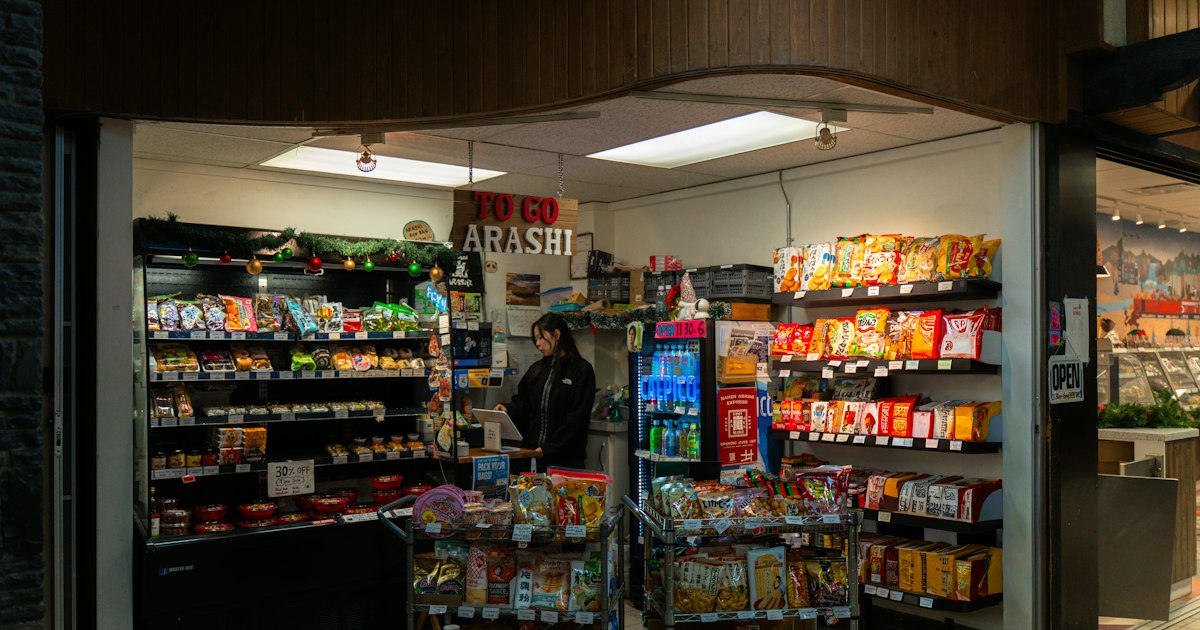
Photo by Josh Marty on Unsplash
If you’ve wandered down a Japanese convenience store’s snack aisle, you’ve probably seen bags of small, curved orange crackers mixed with peanuts and wondered what they were. That’s kaki no tane — “persimmon seeds” — one of Japan’s most ubiquitous bar snacks and a genuinely good souvenir that costs almost nothing and survives a long flight home. This guide covers what it actually is, where to find the best versions, how much to budget, and which flavors are worth the suitcase space.
What Kaki no Tane Actually Is
Kaki no tane is a crescent-shaped rice cracker, usually spiced with soy sauce, chili, or a sweet-spicy glaze, mixed with roasted peanuts in a set ratio — classically about 6 parts cracker to 4 parts peanut. The shape is said to resemble a persimmon seed, hence the name. It was invented in Niigata Prefecture in the 1920s by Osamaya (now Osama Senbei), reportedly after a worker accidentally stepped on an oval-shaped rice cracker mold and deformed it into the now-iconic crescent. Niigata remains the spiritual home of kaki no tane, and several major brands — Kameda Seika and Echigo Seika among them — are still headquartered there.
The texture is the whole point: a hard, crunchy, almost brittle cracker with a sharp savory-spicy kick, balanced by the fattiness and crunch of the peanuts. It’s built as a beer snack, which is why you’ll see it stacked near the alcohol section in supermarkets and convenience stores, and why most bags are sold in multi-pack pouches meant for sharing over drinks.
Where to Buy It and What to Expect to Pay
You don’t need to seek out a specialty shop — that’s part of the appeal. Kaki no tane is sold everywhere:
- Convenience stores (7-Eleven, Lawson, FamilyMart): small single-serve bags, roughly ¥150–¥250.
- Supermarkets (Aeon, Ito-Yokado, Life): the cheapest option, with multi-bag value packs (6–12 individual pouches) running ¥300–¥600.
- Drugstores (Don Quijote, Matsumotokiyoshi): similar pricing to convenience stores, often with tax-free checkout for tourists spending over ¥5,500 pre-tax in one transaction.
- Department store food halls (depachika): premium and gift-boxed versions, ¥800–¥2,000, nicely packaged for giving as omiyage.
- Airport shops: convenient for a last-minute grab, but typically 20–30% more expensive than a supermarket in town.
Budget travelers should buy the supermarket value packs — they’re the same crackers as the premium versions, just without the gift wrapping. If you’re stuck with very little time before a flight, see our guide to killing time at Narita, Haneda, and Kansai during a long layover — all three airports have well-stocked snack sections past security where you can pick up kaki no tane along with other last-minute omiyage.
The Brands and Flavors Worth Seeking Out
Kameda Seika’s “Kaki no Tane” is the market leader and the benchmark flavor — soy sauce forward with a moderate chili kick. It’s sold almost everywhere and is the safest first try.
Echigo Seika (also Niigata-based) makes a slightly thicker, crunchier cracker that fans argue has better snap than Kameda’s version.
Kaki no Tane “Wasabi” and “Ume” (pickled plum) variants show up seasonally and are worth grabbing if you see them — they’re sharper and more aromatic than the standard soy-chili mix and don’t always make it to export shelves.
Kabigon (Snorlax) collaboration bags and other Pokémon or regional-mascot tie-ins pop up as limited runs, particularly around convenience store chains — fun if you want a conversation piece rather than just a snack.
For a genuinely different take, look for no-peanut, all-cracker bags sold as “kaki no tane only” — useful if you’re traveling with someone who has a peanut allergy, though always check the package for cross-contamination warnings, since most factories process peanuts on shared lines.
Regional and Limited Editions
Because kaki no tane is cheap to produce and brand, local tourism boards and regional snack makers constantly spin off area-specific versions sold only in that prefecture: wasabi versions in Nagano, yuzu citrus versions in Kochi or Ehime, miso versions in Nagoya. These are almost never available outside the region, so if you’re traveling beyond Tokyo and Osaka, check a local supermarket or station kiosk rather than assuming you’ll find the same flavor later. It’s the same logic that applies to other hyper-regional Japanese snacks — the pickled mustard greens behind Kyushu’s takana zuke and takana chahan are a similar story of a local ingredient that barely travels past its home prefecture.
Best Time to Buy and Common Mistakes
There’s no real seasonality to kaki no tane itself — it’s a year-round shelf-stable snack — but gift-box versions get a packaging refresh around New Year (oshogatsu, early January) and Obon (mid-August), which is a good window if you want nicer presentation for giving as gifts. Outside of that, buy it whenever you see a flavor you haven’t tried.
The most common mistake visitors make is buying only at the airport on the way out, where selection is thinner and prices are higher than a neighborhood supermarket. The second is assuming all kaki no tane is spicy — the standard Kameda version has only a mild chili note, closer to a seasoned soy cracker than anything hot, so don’t avoid it if you’re spice-averse. The third is over-packing: the crackers are sturdy, but a full suitcase of value packs weighs more than people expect, and customs in some countries (Australia, in particular) restrict bringing in peanut products, so check your destination’s import rules before loading up.
How to Eat It Like a Local
Kaki no tane is a beer snack first and foremost — it’s eaten straight from the bag, in handfuls, alongside a cold beer or highball rather than as a standalone treat. If you want to replicate the full experience at home, pair it with a Japanese lager and resist the urge to put it in a bowl — eating from the bag is normal and expected, even in someone’s living room.
For a souvenir that’s light, cheap, doesn’t need refrigeration, and genuinely represents an everyday piece of Japanese snack culture rather than a tourist-shop gimmick, kaki no tane is hard to beat. Grab a few different brands and at least one regional flavor, and you’ll have a decent cross-section of what Japan actually snacks on.