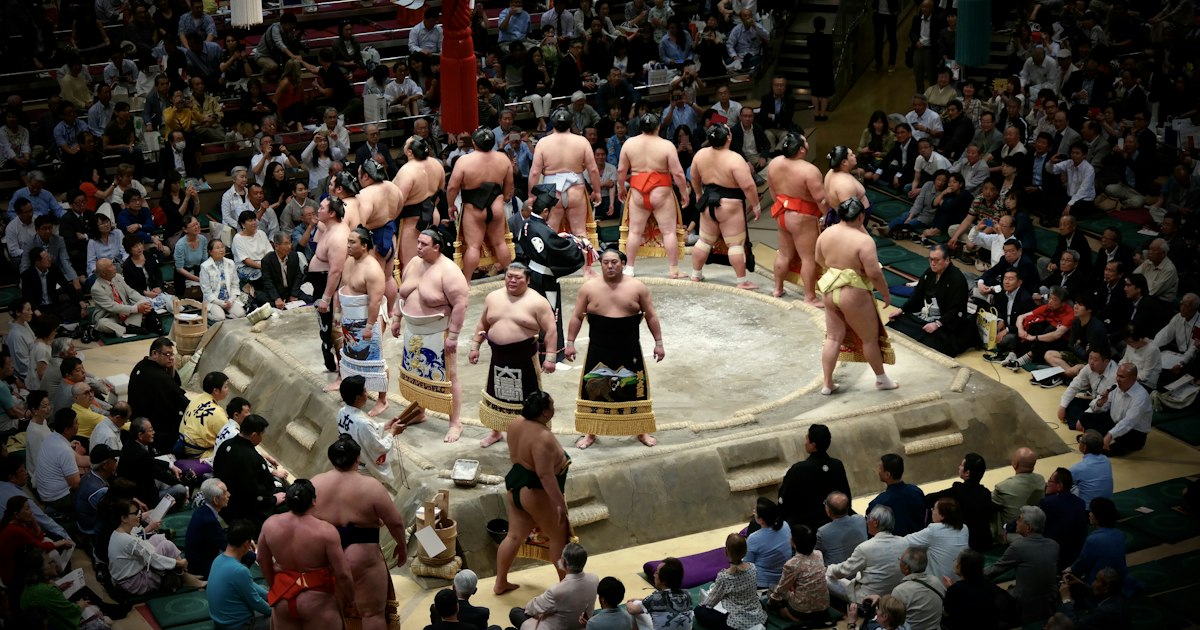
Photo by Alessio Roversi on Unsplash
Long before the first tourist steps into Ryogoku Kokugikan, sumo wrestlers are already at work. Asa-geiko, or morning practice, is where the sport actually happens — hours of drilling, sparring, and conditioning that start as early as 5:30 or 6:00 AM and wrap up by mid-morning. Watching it is one of the few ways to see sumo up close, in near silence, without a ticket to a tournament. Here’s how to actually do it in Tokyo, what it costs, and how not to get politely thrown out.
What Is Asa-geiko, and Why Watch It
Every sumo stable (heya) runs its own training schedule, but the general rhythm is the same: junior wrestlers arrive first and drill basic movements, then senior and top-division wrestlers join for bout-style sparring on the clay dohyo, all under the eye of the stablemaster. There’s no music, no announcer, no crowd noise — just the slap of hands on skin, bare feet on clay, and the occasional short correction shouted by the coach. It’s a completely different experience from the pageantry of a tournament day, and for many visitors it’s the more memorable of the two because you’re watching training, not performance.
The Free Option: Arashio Stable’s Street-Side Window
Arashio-beya, in Nihonbashi-Hamacho (Chuo-ku), is the one stable in Tokyo that welcomes the general public without a reservation, a fee, or an introduction. The stable has a floor-to-ceiling window facing the street, and on training mornings you can simply stand on the sidewalk and watch. Practice generally runs from around 7:30 or 8:00 AM, though exact times shift with the stable’s schedule, and there’s no charge at all.
The catch: it’s first-come, first-served, standing-room, and entirely dependent on whether the wrestlers are actually in Tokyo and training that day (more on timing below). There’s no printed schedule for tourists, so check the stable’s own website or ask your hotel concierge the same week you plan to go. Keep quiet, don’t use flash photography, and don’t block the sidewalk for residents — this is a public street, not a designated viewing area.
Booking a Guided Morning Practice Tour
Most other stables don’t take walk-in foreign visitors — stablemasters are training athletes, not running a tourist attraction, and few speak English. The practical way in is through a small-group tour operator that has an existing relationship with a specific stable. These run in a few tiers:
- Budget: The Arashio window above — 0 JPY, no booking needed.
- Mid-range: Small-group guided tours to a cooperating stable, typically around 8,000–12,000 JPY per person, usually including an English-speaking guide, a background briefing on sumo culture, and transport logistics from a meeting point near Ryogoku Station.
- Splurge: Tours bundled with a chanko nabe lunch, sometimes at a restaurant run by a retired wrestler, or private/small-private tours with a dedicated interpreter — these commonly run 15,000–25,000 JPY per person.
Group sizes are small by design (often 4–8 people), so book at least a week or two ahead — longer if your trip falls near a tournament, when demand spikes and some stables reduce visitor access altogether.
When to Go: Timing Around the Tournament Calendar
Tokyo hosts three of sumo’s six annual grand tournaments (honbasho) at Ryogoku Kokugikan: January, May, and September. This calendar matters enormously for asa-geiko: during the 15 days of a tournament itself, wrestlers compete at the Kokugikan and don’t hold practice at the stable, so there’s nothing to see. Right after a tournament ends, many stables give wrestlers several days of rest, and practice can be light or paused.
The best window is the run-up to a tournament — roughly the three to six weeks before a Tokyo honbasho — when training intensifies and stables are in full keiko mode. If your trip lines up with early-to-mid December, April, or August, you’re timing it well. Outside of the three Tokyo tournaments (the other three are held in Osaka, Nagoya, and Fukuoka), some Tokyo stables still train but on a lighter schedule, so confirm before building your morning around it.
Getting to Ryogoku and Nihonbashi-Hamacho
Ryogoku Station, served by both the JR Sobu Line and the Toei Oedo Line, is the anchor for the sumo district — about 10 minutes from Akihabara and 25–30 minutes from Shinjuku. Most sumo stables cluster within a 10–15 minute walk of the station in Sumida ward. Arashio Stable is the exception: it’s across the Sumida River in Chuo ward, closer to Ningyocho Station (Hibiya Line or Toei Shinjuku Line) than to Ryogoku, roughly a 15-minute walk between the two if you want to combine both areas in one morning.
Because practice starts so early, plan your route the night before — trains before 7 AM in Tokyo are reliable but infrequent compared to rush hour, and there’s no recovering a missed morning session; stables don’t repeat practice later in the day.
Etiquette Rules and Common Mistakes
The single biggest mistake visitors make is treating this like a show. It isn’t — you’re a guest observing a professional athlete’s training session, and stablemasters will end a visit early if visitors are disruptive. Ground rules that apply almost everywhere:
- Total silence. No talking, no phone sounds, during active practice.
- No flash photography and, at many stables, no video at all — confirm with your guide or check signage.
- No eating or drinking while observing.
- Remove hats if you’re seated indoors at a stable.
- Sit where you’re told and don’t point your feet toward the dohyo — follow your guide’s seating instructions exactly.
- Arrive 15–30 minutes early. Doors or the best window spots fill up, and latecomers can be turned away.
The second most common mistake is assuming asa-geiko happens every single day of the year — it doesn’t, for the calendar reasons above — and showing up to a dark, empty stable window.
After the Practice: Chanko Nabe and More
Once practice wraps up, the Ryogoku area is full of chanko nabe restaurants, many run by former wrestlers, serving the same hearty hot-pot stew that fuels sumo training. Lunch sets typically run 1,500–3,000 JPY, and quite a few restaurants display plastic food models in the window so you can choose your bowl before sitting down — a good moment to recognize the craft behind those displays, covered in our guide to Sampuru: Japan’s Plastic Food Replicas and Where to Buy Them. If a chanko lunch stretches into an evening out, a set of traditional cups is a nice way to keep the trip going at home — see our guide to sake cups and tokkuri. And if the disciplined, ritual side of sumo appeals to you, it pairs well with another slow, tradition-bound Japanese pastime — our guide to shogi and go sets is worth a look before you leave the neighborhood.